
Sky Blue Media UAE pushes portrait screens for outdoor ads
The company wants vertical digital out-of-home formats to become a bigger part of ad inventory in the UAE and Malaysia.
By Hana Yoshida · Markets Reporter
3 min read
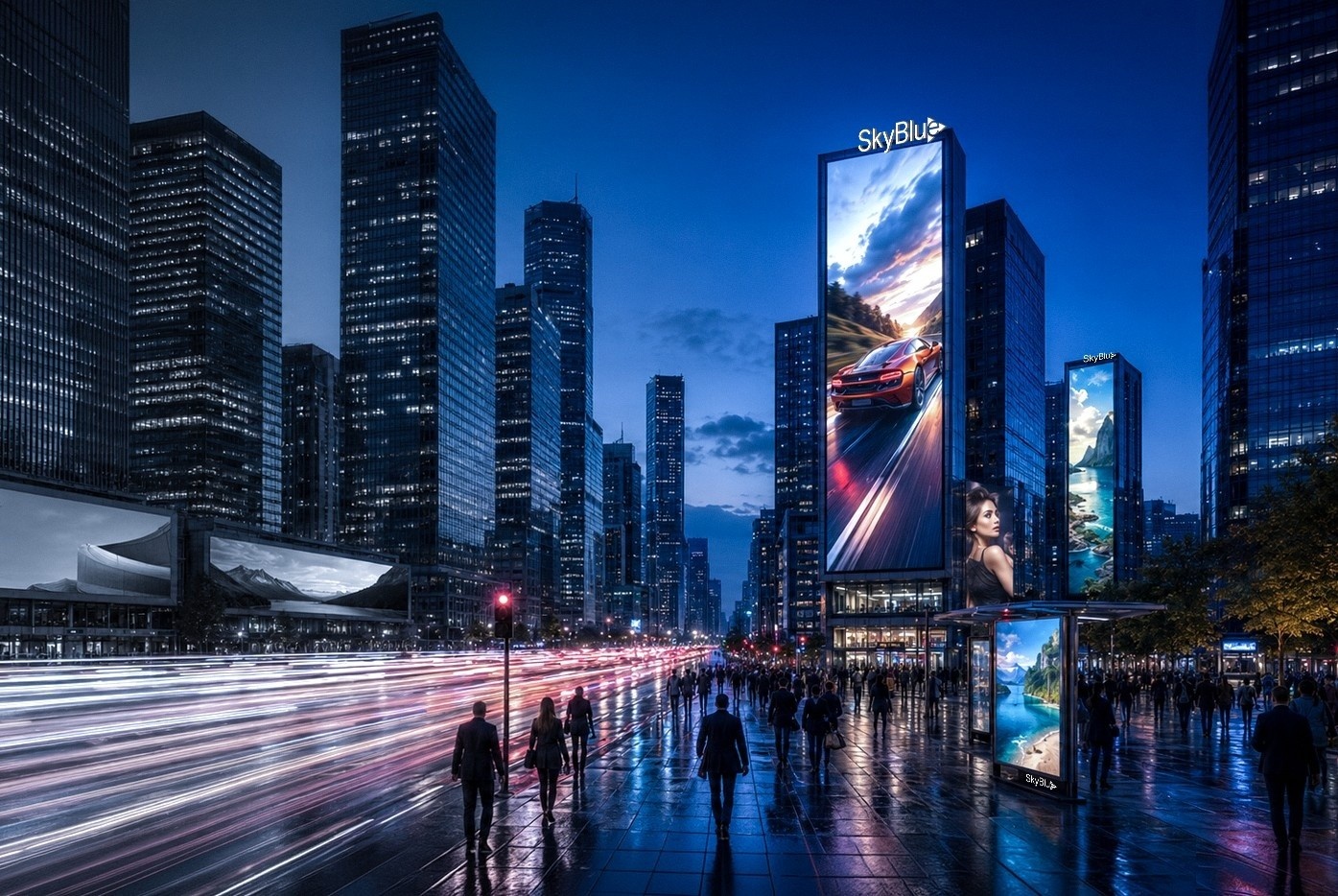
Sky Blue Media UAE is making a case for vertical digital out-of-home advertising across its UAE and Malaysia operations, arguing that outdoor media needs to reflect how consumers now watch video on phones.
The push matters for media owners because portrait-format screens could take a larger share of outdoor ad inventory as digital out-of-home networks expand in malls, transit systems, roadsides and commercial buildings across MENA and Asia.
Sky Blue Media UAE is the advertising arm of Sky Blue Group and the exclusive out-of-home and transit advertising partner for Dubai’s RTA. The company is positioning vertical formats for screens including elevators, vertical unipoles, minipoles, mall pillars, transit platforms and freestanding kiosks.
Dato' Manikandamurthy Velayoudam, chairman of Sky Blue Group, said the industry has spent decades building around the horizontal billboard while audiences have shifted toward portrait-first media. Citing third-party industry research, he pointed to data showing 81% of Gen Z video viewers watch vertical video every week.
Digital out-of-home advertising sits between traditional outdoor billboards and online video advertising: it uses networked screens in public places, often with changing creative and location-specific campaigns. The vertical argument is that a screen shaped like a phone may reduce the visual adjustment required from people who spend hours each day scrolling portrait-format content.
The company also cited research saying Gen Z spends an average of 3.2 hours a day on social media, compared with 1.5 hours for Baby Boomers, and that users aged 13 to 24 spend 89 minutes a day on a vertical-only platform. It also referred to data showing vertical videos on major short-form platforms have a 90% higher completion rate than comparable horizontal videos.
Sky Blue’s pitch extends beyond creative preference. It sees portrait panels as a way to expand usable advertising space in dense cities, especially at pedestrian eye level in lifts, retail corridors, metro platforms and roadside locations where a wider structure may be harder to place.
In Asia, the company pointed to lift lobbies and elevator corridors in China, portrait-format transit panels in South Korea and Japan, and vertical screens in Singapore, Indonesia and Malaysia as examples of markets where the format has moved into routine use. It said vertical digital out-of-home screens in close-proximity settings can deliver 70% brand recall, compared with 30% to 60% for general outdoor formats.
The UAE is central to the company’s regional argument. Sky Blue Media UAE said the UAE digital out-of-home market is projected to grow at a 16.4% compound annual rate through 2030, which it described as the fastest pace in MENA.
That growth forecast is being used to frame vertical digital out-of-home advertising in the UAE as a potential standard for the next phase of outdoor media, rather than a niche screen format. The company also cited the UAE’s near-99% smartphone penetration as a reason advertisers should expect portrait-oriented creative to become more common.
For advertisers, the shift would affect both media planning and production. Campaigns designed for horizontal roadside billboards often need different layouts, motion cues and text treatment than portrait screens in lifts, malls and transit areas.
Sky Blue Group operates across media and entertainment businesses in several markets, including Malaysia and the UAE. Its chairman said the group is already committing to vertical out-of-home formats across both markets as it expects mobile-first viewing habits to influence how outdoor advertising is bought and built.