
Sinokor tankers helped UAE move oil through Hormuz during war
Bloomberg reported that ships tied to Ga-Hyun Chung’s Sinokor became central to UAE crude shuttle runs through the Strait of Hormuz.
By Hana Yoshida · Markets Reporter
3 min read
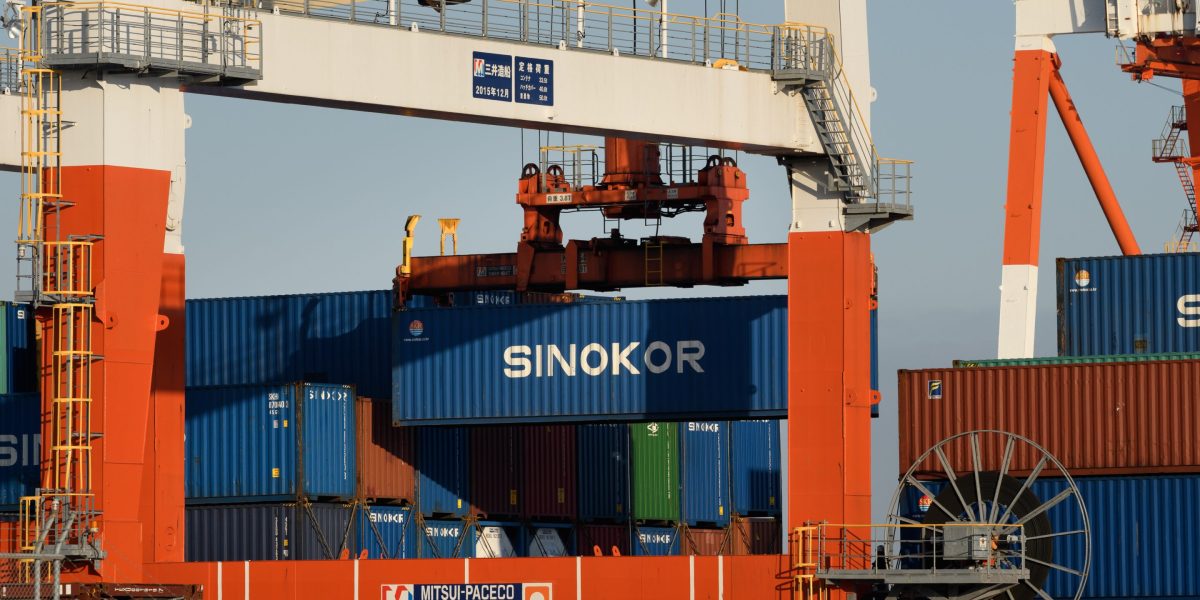
South Korea’s Sinokor Group became a major player in moving Emirati crude through the Strait of Hormuz during the Iran war, according to reporting by Bloomberg. The role matters because those voyages helped the United Arab Emirates restore exports through a key oil route while tanker rates surged.
Bloomberg, citing vessel-tracking data, analytics firms Vortexa and Kpler, and more than a dozen industry participants, reported that Sinokor-controlled supertankers began working for Abu Dhabi National Oil Co. on shuttle runs from at least mid-April. By June, nearly half of UAE crude shipments were carried on vessels controlled by Sinokor, Vortexa data showed, according to Bloomberg.
The operation involved tankers moving through the Persian Gulf and Strait of Hormuz with transponders turned off, then transferring crude to other vessels outside the waterway, Bloomberg reported. Such “dark” voyages are more commonly linked to sanctioned oil trades, but the UAE used them during wartime to keep crude moving through a route central to global energy supply.
High-risk voyages, high freight rates
Sinokor did not respond to Bloomberg’s requests for comment. Adnoc L&S, Adnoc’s shipping and logistics arm, told Bloomberg it does not comment on vessel positions, movements or routes, and said it has a large fleet made up of owned and chartered ships.
Bloomberg reported that Adnoc also used its own tankers and vessels from other owners. The Sinokor leases, however, were a key part of the UAE’s ability to increase exports through Hormuz faster than neighboring Gulf producers, according to the report.
Shipbrokers told Bloomberg that wartime premiums for entering the Gulf may have reached three to four times prewar levels. While the contract terms were not disclosed, brokers estimated that three Sinokor tankers making shuttle runs since mid-April could have generated about $60 million to $120 million.
The shipments also placed Ga-Hyun Chung, Sinokor’s private Korean owner, among the beneficiaries of the disruption in oil markets, Bloomberg reported. MSC Group, the Italian container-shipping company, has also become a co-owner after buying a 50% stake in Sinokor Maritime Co., according to Bloomberg.
A large bet on supertankers
Sinokor, based in Seoul, began as a container shipping company before expanding into crude tankers. Bloomberg reported that the company moved sharply into very large crude carriers late last year, buying and chartering ships with backing from MSC.
By late February, Sinokor controlled about 150 very large crude carriers, according to industry estimates cited by Bloomberg. That represented nearly 40% of the global fleet not under sanctions, locked into long-term leases or committed to regular routes.
Bloomberg reported that Sinokor ships have carried at least 680,000 barrels a day from UAE ports inside the Persian Gulf since April, based on loadings detected by both Kpler and Vortexa. The figure rose to 1.4 million barrels a day in June, according to those data sets, though Bloomberg said actual volumes could be higher.
At least 10 Sinokor vessels have been involved in shuttles from UAE oil terminals to discharge points in the Gulf of Oman, Bloomberg reported. Three had been operating on the route since mid-April.
After an interim peace agreement between the United States and Iran, more tankers began moving through Hormuz with transponders on, Bloomberg reported. Sinokor then sent more ships into the Persian Gulf to collect crude, including vessels that had already completed earlier runs.
In the most recent week covered by Bloomberg’s report, Sinokor sent at least 18 supertankers into the Gulf, enough capacity for 36 million barrels of crude. A late-June message from Sinokor to shipbrokers said its ships could pass the Strait of Hormuz after loading and asked brokers to send available cargoes, Bloomberg reported.
This story draws on original reporting from Fortune.