
Singapore draws AI firms from both sides of U.S.-China divide
OpenAI, DeepMind and Chinese tech companies are expanding in Singapore as geopolitics raises the value of trusted regional bases.
By Hana Yoshida · Markets Reporter
4 min read
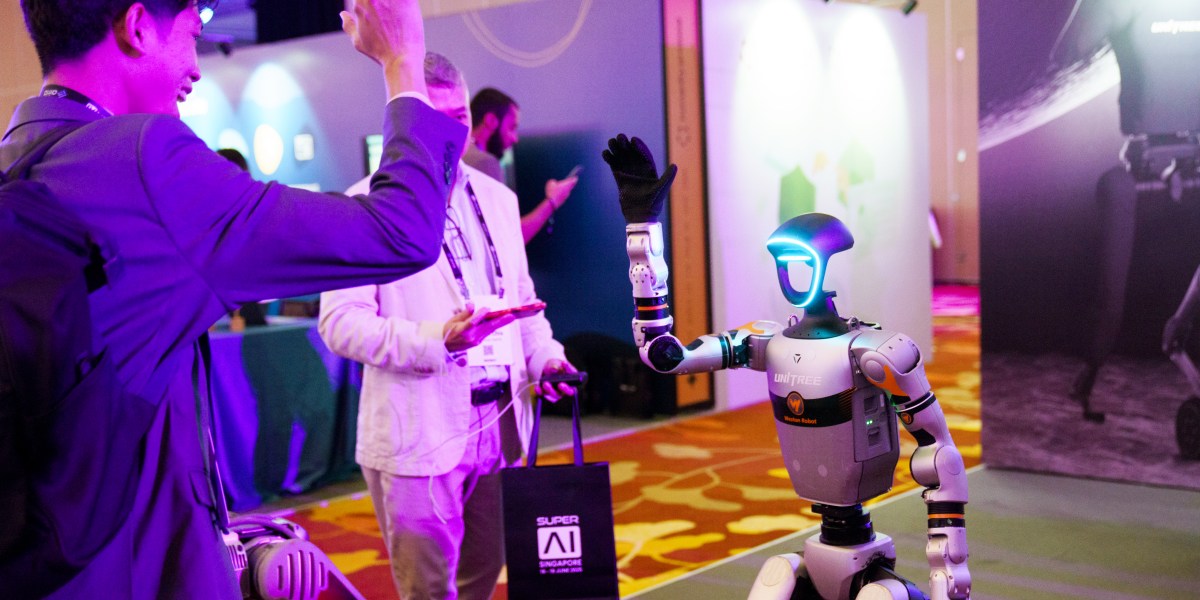
AI companies from the U.S., China and other markets are building larger operations in Singapore, Fortune reported. The rush matters because the city-state is trying to turn its reputation for political steadiness and clear rules into a central role in Asia’s AI market.
Fortune reported that OpenAI and Google DeepMind opened applied AI labs in Singapore over the past year. Anthropic has advertised jobs there in finance, product support and economic research, while Chinese firms including Tencent have increased their local investment, according to Fortune.
Gunja Gargeshwari, chief revenue officer of Bright Data, told Fortune that AI companies she works with from China, Korea and Japan use Singapore as a regional base. Bright Data, which is headquartered in Israel, has made Singapore its Asia-Pacific headquarters even though Fortune reported that 60% of its Asian customers are in China and India.
Why Singapore is attractive
Fortune reported that Singapore’s draw is tied to both business and geopolitics. The country has long promoted itself as a dependable place to operate, with stable governance and predictable regulation.
Prime Minister Lawrence Wong said at a policy conference last July that Singapore may lack the appeal of cities such as New York and Paris, but offers stability, predictability and trust, according to remarks cited by Fortune. Those qualities have become more valuable as AI companies face tighter scrutiny across borders.
Executives also point to Singapore’s universities. Plaud CEO Nathan Xu told Fortune that recruiting top engineers is one of his company’s hardest problems and that Singapore has strong talent in software engineering, computer science, AI, data science and operations. Fortune cited the latest QS World University Rankings, which placed the National University of Singapore at No. 8 and Nanyang Technological University at No. 12.
Plaud hired its first Singapore-based employee in 2024, Fortune reported. On June 10, the San Francisco-based AI notetaking company said it would invest 10 million Singapore dollars, or $7.8 million, to expand in the country and planned to raise headcount from 100 to 150 by year-end.
AI firms look for customers
The Singapore push comes as AI companies try to turn heavy model-building costs into revenue. BNY wealth analysts wrote in a March report cited by Fortune that the AI cycle through 2025 was marked by capital spending, but investor attention has shifted toward returns.
For Chinese-origin companies such as Manus AI, Tencent and Alibaba, Fortune reported that Singapore can be a first step toward international expansion. Chinese tech groups have offered Singapore-based AI PhD holders annual pay packages ranging from $150,000 to $273,000, according to figures cited by Fortune.
U.S. firms are also using Singapore to reach business customers across Asia. OpenAI opened a regional office there in 2024 and last month pledged 300 million Singapore dollars, or $234 million, to Singapore’s AI ecosystem, Fortune reported. The company also announced an applied AI lab there, its first outside the U.S., and plans to use Singapore as a hub for engineers who work inside customer organizations.
Notion opened a Singapore office in mid-2025, according to Fortune. Randy Hunt, the company’s head of design, told Fortune that meeting current and potential customers in person is a top priority.
Limits to neutrality
Singapore’s position does not shield companies from foreign regulators. Fortune reported that Manus AI and its parent, Butterfly Effect, moved their global headquarters to Singapore in mid-2025, later sold to Meta for $2 billion, and then saw Beijing order the deal unwound in April.
Sebastian Wiendieck of law firm ROEDL told CNA, in comments cited by Fortune, that Chinese regulators looked past the Singapore structure to the technology’s Chinese origins. Fortune also reported that the U.S. recently barred non-U.S. individuals from using Anthropic’s Mythos model, a move that could limit access to some frontier AI systems in Singapore.
Singapore is still spending to support the sector. Fortune reported that the government released a national AI research and development plan in January with more than 1 billion Singapore dollars for AI infrastructure and capabilities, and plans to open an AI industrial park called Kampong AI in 2028.
This story draws on original reporting from Fortune.