
Robert Wright warns AI upheaval will reach far beyond jobs
The author says AI will test whether societies can cooperate globally before the technology reshapes work, politics and private life.
By Maya Lindqvist · Senior Technology Correspondent
3 min read
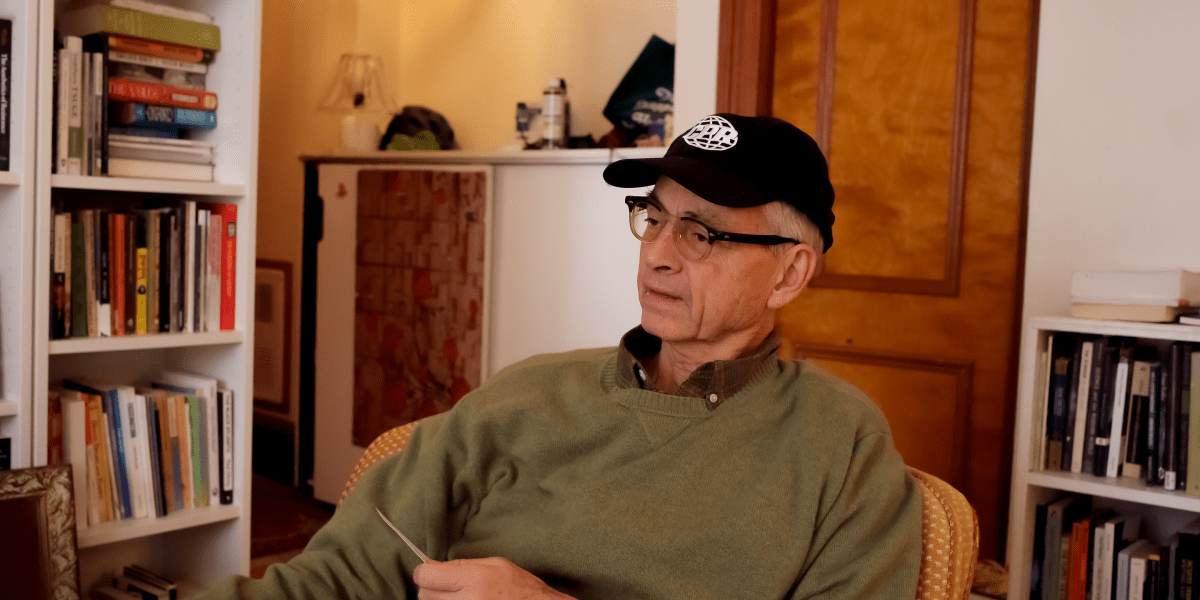
Robert Wright says artificial intelligence is poised to disrupt far more than employment, warning that its effects will cut across politics, culture, family life and psychology. In an interview with Fortune, the journalist and author said the technology amounts to an “earthquake” and argued that governments and companies are not preparing with enough urgency.
Wright, whose new book is titled The God Test: Artificial Intelligence and Our Coming Cosmic Reckoning, frames the AI moment as a test of whether humans can responsibly create a new form of intelligence. Fortune reported that Wright is drawing on themes from his long-running NonZero newsletter and podcast, where he often argues that cooperation can produce outcomes in which one side’s gain does not require another side’s loss.
From early skepticism to alarm
Wright told Fortune he first interviewed Geoffrey Hinton in 1983, long before Hinton became widely known for his work on neural networks. Wright said he did not grasp then how important the technology would become.
His view changed in 2023 while using GPT-4, according to Fortune. Wright said he gave the model a layered hypothetical involving a student and professor and asked what the student would feel. The model answered with one word: “schadenfreude.”
Wright said that response convinced him the system could model human perspective in a way he had not expected. He connected that moment to Hinton’s work on neural networks and said he had once assumed machines would need humans to explicitly encode meaning before they could handle language well.
Fortune also reported that Wright used chatbots while trying to understand a medical report after treatment for throat cancer. Wright said his cancer had spread to his lymph nodes but has not returned since surgery in 2025. In one case, he said Anthropic’s Claude identified that a radiologist likely omitted the word “no” from a sentence, changing how the report should be read.
Wright used that episode to argue that AI systems do not need to be flawless to replace or outperform humans in some tasks. He told Fortune that humans also make mistakes, including trained professionals, and said AI’s speed and cost could accelerate its adoption.
A warning on rivalry with China
Wright’s sharpest criticism, according to Fortune, is aimed at the idea that the United States must treat AI as an existential race against China. He singled out Anthropic CEO Dario Amodei’s framing of U.S.-China competition and called that mindset a “suicidal ideology.”
Wright said he views Amodei as sincere but believes an arms-race approach works against the global cooperation needed to reduce the risks of advanced AI. Fortune said Anthropic declined to comment.
He also criticized Anthropic over what he described as a lack of concrete planning for recursive self-improvement, a scenario in which AI systems improve themselves. Wright argued that companies expecting such developments should be putting more resources into international coordination.
The “God test”
Wright told Fortune he does not see himself as only a doom forecaster. He said the title of his book is partly a biblical metaphor: disaster can be avoided, but only if people change course.
He cited two developments as limited reasons for optimism: renewed U.S.-China discussion of AI safety and the Trump administration’s reversal on reviews of powerful AI models, which Fortune said the administration had previously mocked under Biden.
Wright said passing the test will require what he calls “enlightenment,” meaning clearer perception and a greater ability to see beyond one’s own viewpoint. He argued that influential people need to get better at viewing the world from outside their own perspective if AI is to produce more benefit than harm.
This story draws on original reporting from Fortune.