
Rivian starts R2 deliveries as it chases a broader EV market
Rivian says its smaller R2 SUV can widen its customer base, lift margins and compete with Tesla as well as mainstream gas-powered SUVs.
By Daniel Okafor · Business Editor
3 min read
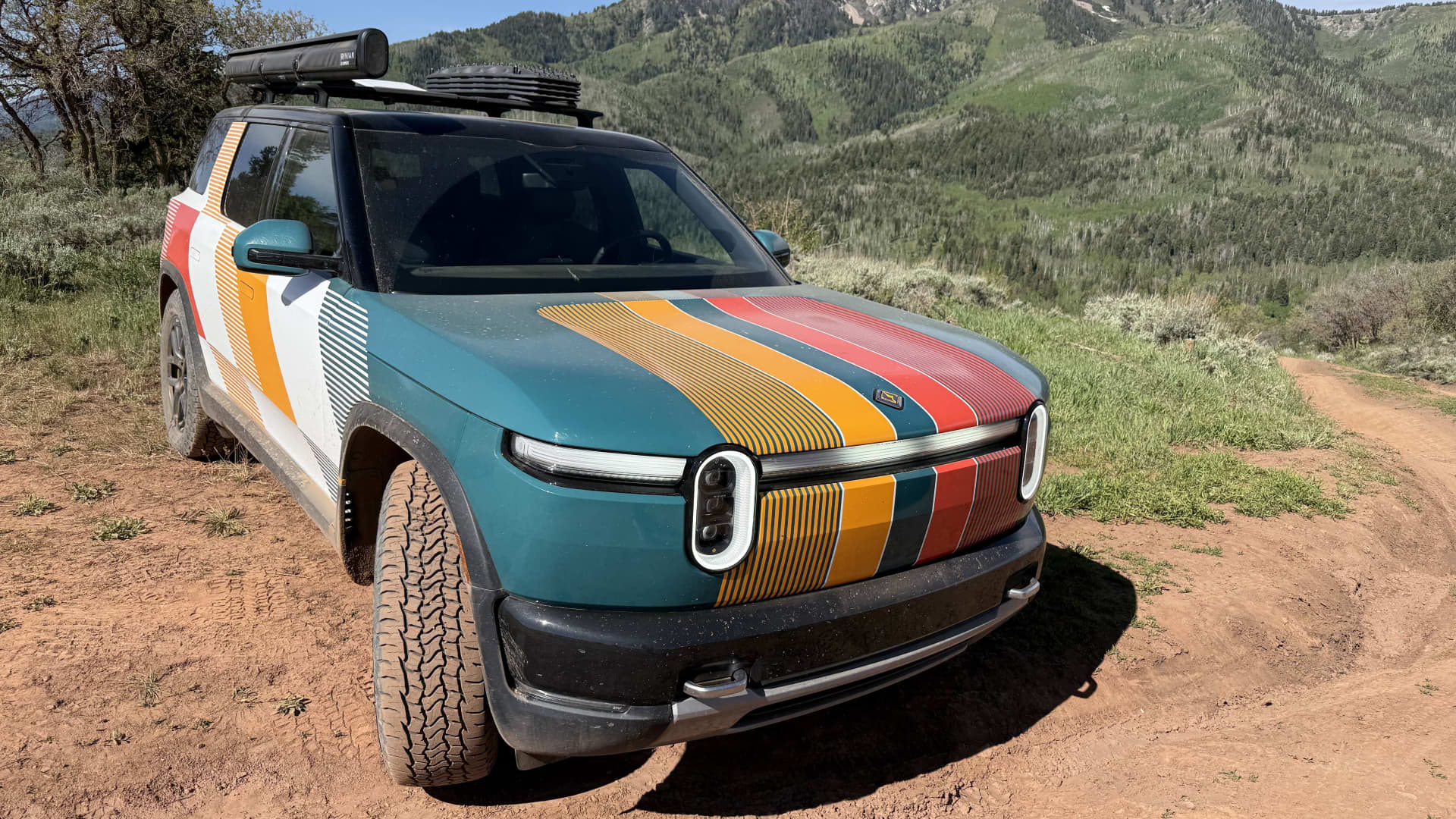
Rivian has begun customer deliveries of its R2 electric SUV, a model CEO RJ Scaringe is counting on to move the company beyond a small base of premium EV buyers. CNBC reported that Rivian also moved up the launch of its roughly $45,000 entry version from late 2027 to next summer.
The R2 is central to Rivian’s push to become a larger consumer brand. Scaringe told CNBC the vehicle is intended for higher volume and could attract some Tesla buyers, while the bigger opportunity is among shoppers who have not bought Teslas.
Rivian, founded by Scaringe in 2009, has built a market value of about $22 billion, according to CNBC. The company ranked first in Consumer Reports’ most recent customer satisfaction survey, CNBC reported, though it ranked last in predicted reliability because of owner-reported issues with earlier vehicles.
Analysts on Wall Street have described the R2 as a critical test for Rivian, CNBC reported, comparing it with Tesla’s shift from early premium vehicles to the Model 3 and Model Y. Scaringe told CNBC that building a company from nothing makes each major step a test of survival.
Profitability remains the main test
Rivian lost $3.6 billion last year while delivering 42,247 vehicles, according to CNBC. Earlier this year, the company dropped a target to reach adjusted profitability by 2027 and did not give a replacement timetable.
Scaringe told CNBC that Rivian still expects to hit that goal after its planned Georgia factory ramps up. The plant is scheduled to start production in late 2028 and could reach full capacity by the end of the decade, CNBC reported.
Rivian plans to build 160,000 R2 vehicles at its existing plant in Normal, Illinois, according to CNBC. Scaringe said the R2 will be profitable on a vehicle-level basis this year, but that Rivian needs the additional scale from Georgia to cover its broader costs.
The company says it has cut the R2’s material costs in half compared with the larger R1S SUV, which starts near $80,000, CNBC reported. R2 starting prices are expected to run from about $45,000 to $58,000.
Scaringe said every R2 version, including the entry model, will be gross-margin positive. He told CNBC the company advanced the lower-priced version partly because of concern that buyers would view the R2 as more expensive than intended.
R2 enters a crowded SUV market
Scaringe told CNBC that Rivian expects the strongest R2 demand to be in the low $50,000 range. Cox Automotive reports the average U.S. vehicle sold for about $49,000, while the average EV sold for more than $55,000.
Cox Automotive also reports that compact and midsize SUVs made up 45% of U.S. vehicle sales last year. In EVs, Cox estimates Tesla sold more than 357,500 Model Y vehicles in the U.S. in 2025, equal to about 40% of the EV market.
Stephanie Valdez Streaty, director of industry insights at Cox Automotive, told CNBC that Rivian has a strong brand and room to compete in the midsize segment. She said Rivian also has to win buyers from gasoline vehicles, while proving it can increase output without quality problems.
Rivian is also leaning on software. CNBC reported that the R2 will launch with an advanced driver-assistance system that can handle some driving tasks under certain conditions with driver monitoring, while an AI voice assistant is expected later this year.
Volkswagen has agreed to a $5.8 billion deal involving Rivian’s software and electrical architecture for future EVs, according to CNBC. CNBC reported that Volkswagen is now Rivian’s largest shareholder, followed by Amazon, which remains Rivian’s biggest delivery-van customer.
This story draws on original reporting from CNBC.