
Risk firms adapt catastrophe models to forecast wars
Banks, insurers and investors are turning to new geopolitical risk tools as conflicts disrupt markets, shipping and insurance pricing.
By Maya Lindqvist · Senior Technology Correspondent
3 min read
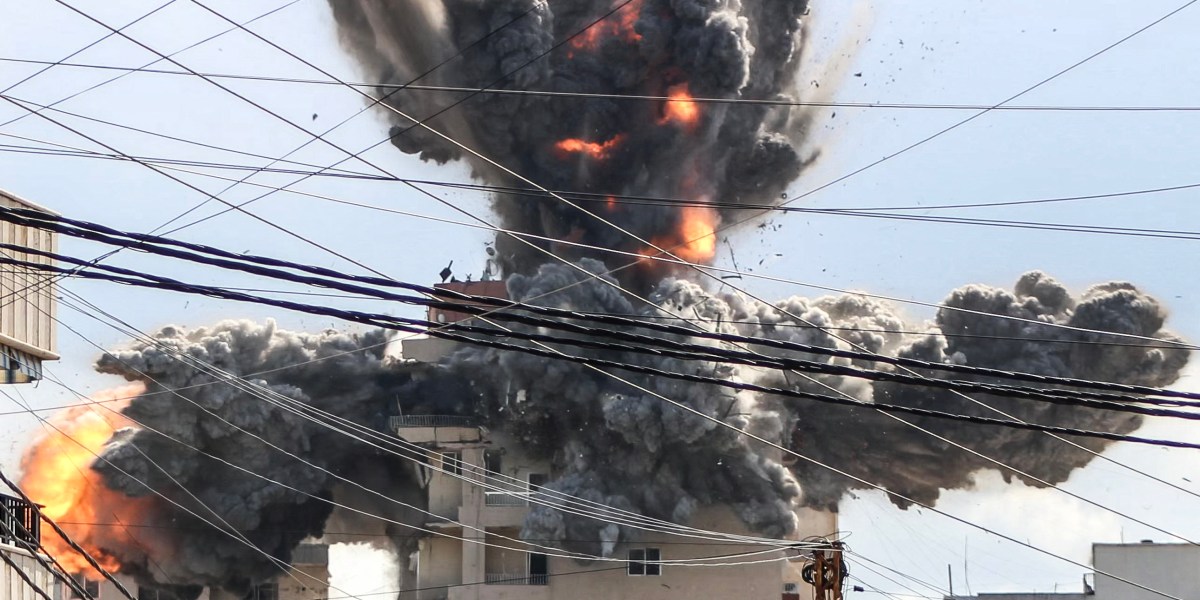
Financial firms are getting new tools built to estimate the odds of war, regime change and geopolitical disruption. The push matters because conflicts are now affecting market assumptions behind oil prices, insurance premiums, trade routes and lending costs.
The Institute for Economics and Peace said the number of countries involved in external conflicts has nearly doubled since 2008 to just over 100. The institute put the economic cost of violence at almost $22 trillion, or more than 10% of global gross domestic product.
Banks have begun warning that older risk systems may miss the scale of current shocks. Citigroup has cautioned against relying on models that look mainly backward at historical patterns, while Morgan Stanley has said investors need to reconsider how they assess geopolitical risk.
Verisk Maplecroft, a global risk consultancy whose parent company is known for natural-catastrophe modeling used by insurers and catastrophe-bond investors, has released a Predictive War Index for clients. Sam Haynes, Verisk Maplecroft’s head of data and analytics, said insurers and investors want forecasts that show where conflict may emerge rather than assessments based only on past events.
Verisk said the index uses machine learning to estimate the probability that war will occur in a country over the next 12 months. The company said it trained the model on political, economic and social data from 1995 through 2022, meaning the current Iran war was not included in the training set.
In back-testing, Verisk said the model would have assigned Iran a 66% chance of war about a month and a half before the conflict began, had the tool been available in early January. The firm also introduced a Geopolitical Relations Index, which measures tension between pairs of countries using factors such as prior military clashes, government similarity and geographic proximity.
Verisk has also used related modeling to assess government stability. The company said a model launched in October 2023 correctly forecast six of seven government collapses since then, including the 2024 ouster of Bashar al-Assad in Syria and the removal of Venezuela’s Nicolas Maduro in January. Chris Boylan, a data science expert at Verisk Maplecroft, said Venezuela’s risk rose because economic strain combined with a record of political instability.
Rand Corporation is also applying artificial intelligence to geopolitical forecasting. Anthony Vassalo, director of the RAND Forecasting Initiative, said its model converts uncertain questions, including regime survival, into probability estimates and can show how policy choices might shift those odds. Rand said a mid-May run of the model put the chance that Iran’s regime would not last into 2027 at 20%.
Krishan Sharma, senior vice president for model risk management at Citi, said events such as sanctions or trade blockades can change the distribution of outcomes rather than behave like a normal market move. That problem has become more visible in shipping, especially around the Strait of Hormuz.
Moody’s said Lloyd’s of London quoted marine war-risk premiums for the Strait of Hormuz as high as 1% of a vessel’s value per trip shortly after the Iran war began on Feb. 28, up from a fraction of a percent before the fighting. Iran on Sunday disputed U.S. President Donald Trump’s statement that the warring countries were close to signing an interim peace deal to reopen the strait.
Gordon Woo, a catastrophe risk specialist at Moody’s, said analysts are treating some conflict scenarios more like terrorism risks, where low-cost actions can create large economic losses. He said newer models can help insurers assess disruption across shipping lanes and supply chains, not only damage to individual assets.
Allianz said in a May risk assessment that war has overtaken civil unrest as the political-violence risk that companies most worry about when buying insurance. Morgan Stanley’s institute said such tools are becoming more important as globalization-driven efficiency gives way to a more fragmented world.
This story draws on original reporting from Fortune.