
Republicans revive communism attacks as socialist primary wins mount
Trump and GOP leaders are testing an old attack line against Democrats as the party’s left wing posts new primary victories.
By Sofia Marchetti · World Affairs Correspondent
4 min read
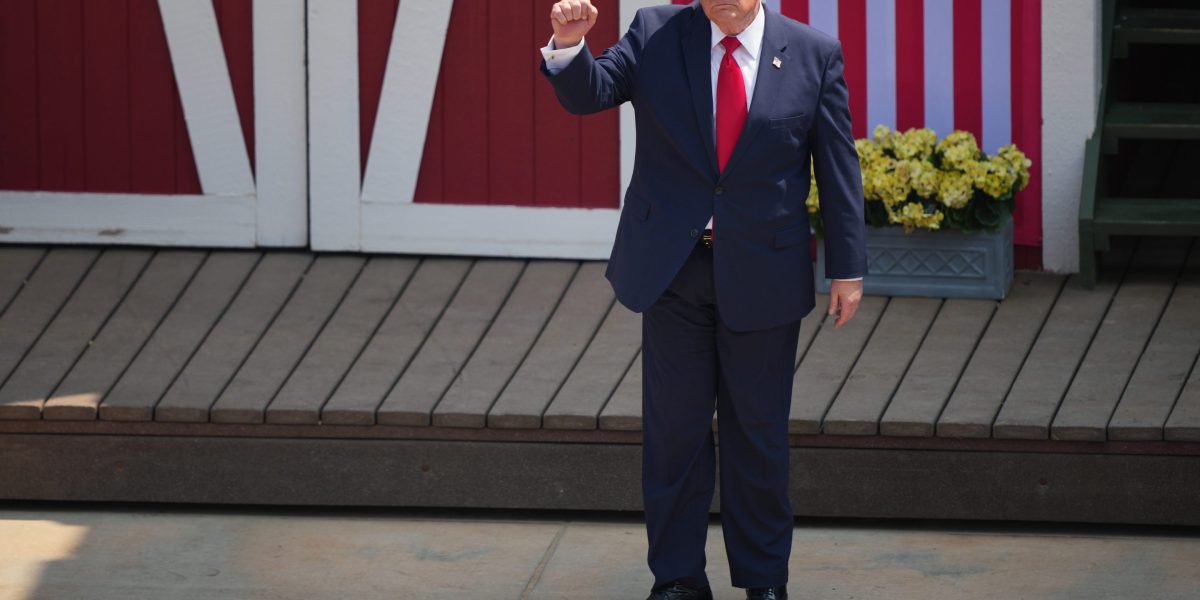
President Donald Trump and senior Republicans are again branding Democrats as communists ahead of the midterm elections, the Associated Press reported. The message comes after democratic socialists won several recent primaries, giving Republicans a sharper target as they defend narrow congressional majorities.
Trump has warned in recent days that rising figures on the Democratic left are communists who want to destroy American traditions and, according to the AP, has accused them of links to political violence. Vice President JD Vance has described communism as a political shift he said the United States has not seen, while House Speaker Mike Johnson has criticized “radical candidates” he called self-described Marxists.
The Republican argument blurs a distinction between democratic socialism and communism, according to the AP. Democratic socialists often call for policies such as universal health care, higher taxes on wealthy people and tighter rules for corporations, while communism largely abolishes private ownership.
Primary wins give GOP a target
The attacks gained force after Zohran Mamdani, a democratic socialist, won the Democratic nomination for New York City mayor last year, the AP reported. They intensified after democratic socialists won several New York City congressional primaries last week and after Melat Kiros, another democratic socialist, won a Democratic primary Tuesday for a Denver congressional seat.
Rep. Richard Hudson of North Carolina, who leads House Republicans’ campaign and fundraising arm, told the AP that Democrats are “making this easy” by nominating candidates he described as extreme liberals and leftists. Ralph Reed, a longtime conservative activist who hosted Trump at a Faith and Freedom Coalition conference last week, told the AP the victories help Republicans draw a contrast between what he called “common sense and crazy.”
Republicans are trying to shift debate onto more favorable ground after spending much of the year defending Trump’s decision to launch a war against Iran, which the AP reported contributed to price increases. The party is also trying to protect slim House and Senate majorities in November.
Democrats split over the left’s rise
The Republican message also lands amid Democratic divisions over the party’s direction. Joseph Geevarghese, executive director of Our Revolution, a group founded by Sen. Bernie Sanders, told the AP that anger within the party has been building and is now surfacing in a powerful way.
Centrist Democrats have pushed back. Rep. Josh Gottheimer of New Jersey told the AP that the wins in Colorado and New York were “aberrations” and said Democrats must keep the party from being “hijacked by socialists.” Nevada Attorney General Aaron Ford, who defeated a more progressive rival in his Democratic campaign for governor, told the AP that the Democratic Socialists of America is not the face of the party.
Rep. Suzan DelBene of Washington, who chairs the House Democratic campaign committee, said in a statement cited by the AP that Republicans are using attacks that are not focused on household economic concerns.
Polling suggests a changing electorate
The communism attack may not carry the same force with younger voters as it did in earlier eras. A Gallup poll from August found 54% of U.S. adults viewed capitalism positively, down from 61% in 2010.
Gallup found 42% of Democrats viewed capitalism favorably, while 66% had a positive view of socialism. The poll also found Democrats under 50 were much less likely than older Democrats to view capitalism favorably, while older Democrats had not shifted meaningfully since 2010.
Geevarghese told the AP that younger voters came of age after the Soviet era, making anti-communist attacks less potent for them. Hudson acknowledged to the AP that the message may not work the same way with every group and said Republican campaigns need to fit their districts.
Trump returned to the theme Wednesday during a visit to the Theodore Roosevelt Presidential Library in North Dakota, calling Roosevelt a fierce opponent of communism and describing communism as a potential threat greater than major wars and attacks on the United States. Beverly Gage, a Yale history professor who has written about Sen. Joe McCarthy, told the AP that anti-communist politics once drew strength from an active U.S. Communist Party and the Soviet Union’s role as America’s chief adversary.
California Gov. Gavin Newsom, a potential Democratic presidential contender, dismissed Trump’s focus as “bunk” in an AP interview and said Democratic debates over progressives are familiar from California politics.
This story draws on original reporting from Fortune.