
Press freedom concerns shadow North America’s World Cup
The Committee to Protect Journalists says reporters covering the 2026 World Cup face risks from immigration scrutiny, policing and surveillance.
By Hana Yoshida · Markets Reporter
3 min read
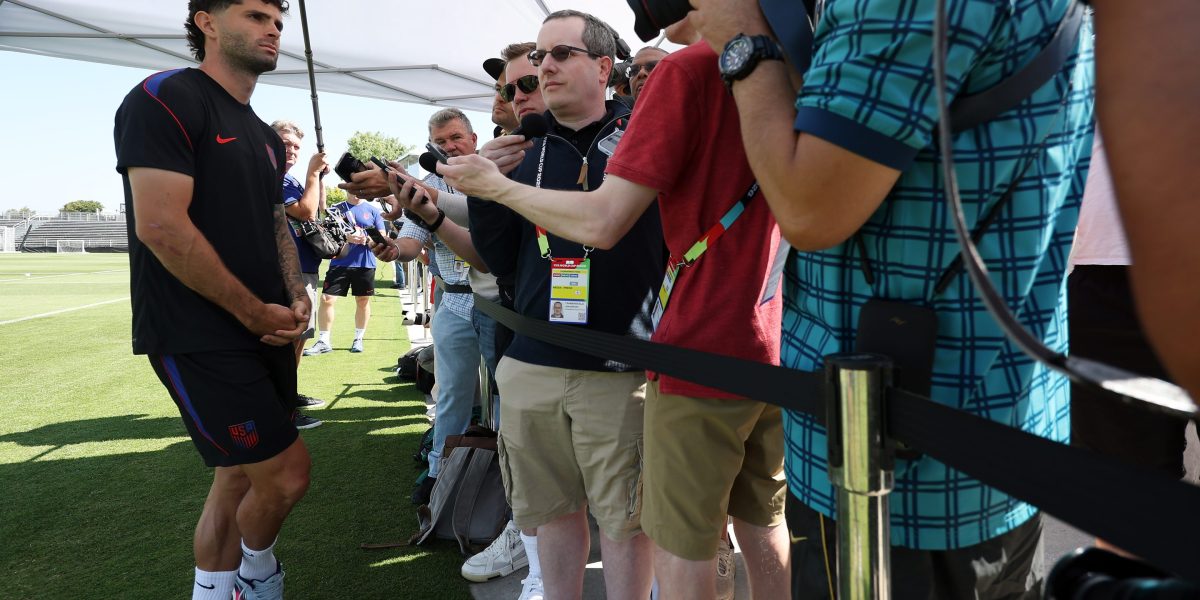
The Committee to Protect Journalists is urging stronger protections for reporters at the 2026 men’s World Cup, warning that the tournament will test whether press freedom commitments hold during one of the world’s most watched events. Gypsy Guillén Kaiser of CPJ, writing in Fortune, said journalists covering matches and related issues in the United States, Canada and Mexico could face threats that extend well beyond routine sports reporting.
The United States is hosting most of the tournament’s matches, according to Kaiser. She said journalists in the country are working amid aggressive law enforcement, scrutiny from U.S. Immigration and Customs Enforcement and potential deportation risks.
Kaiser also said some journalists from Iran and African countries have faced limits on entry despite FIFA accreditation. She added that the World Cup is likely to involve unusually broad AI-assisted surveillance, a concern CPJ and other press freedom advocates have been raising while distributing safety resources.
CPJ’s argument is that World Cup coverage cannot be limited to what happens on the field. Kaiser said reporters also investigate labor conditions, corruption, human rights issues and the social effects of major sporting events, subjects that can bring retaliation from governments, institutions, fans or sports officials.
FIFA’s record under scrutiny
FIFA, which runs the World Cup through its network of national associations, has long drawn investigative scrutiny because of its money and influence, Kaiser wrote. She cited reporting that exposed sports corruption and human rights abuses tied to major events, including Russia’s state-run doping scheme and bribery scandals around international soccer.
Kaiser pointed to the 2014 Winter Olympics in Sochi, Russia, as a moment when restrictions on journalism and human rights drew intense criticism. She said that episode helped lead to a press freedom complaints mechanism, which CPJ supported.
She also cited events in 2015, when two international news crews reporting on corruption and workers’ rights before the 2022 Qatar World Cup were detained and questioned by Qatari authorities. Kaiser said Qatar also censored reporting on LGBT issues.
That same year, nine FIFA officials and five corporate executives were indicted in a global racketeering and corruption case, according to Kaiser. She credited part of the exposure of FIFA wrongdoing to the late British journalist Andrew Jennings, who she said was banned from FIFA and faced legal threats over his reporting.
Risks for sports journalists
CPJ has documented deadly violence against journalists who covered sports-related issues, Kaiser wrote. She cited John McNamara of the Maryland Capital Gazette, who was killed in 2018, and Ghanaian investigative reporter Ahmed Hussein-Suale Divela, who was murdered in January 2019 after threats linked to his reporting on alleged corruption among African football officials.
Kaiser said no one has been held accountable in Divela’s killing, calling it part of a broader pattern of impunity for crimes against journalists in Ghana. She also said women sports journalists face harassment both online and while reporting in person.
At the 2018 FIFA World Cup in Russia, female sports journalists from global outlets were physically harassed and assaulted by fans on camera, Kaiser wrote. She also cited the Brazilian campaign #deixaelatrabalhar, or “Let her do her job,” as a response by women journalists to harassment in sports media.
Kaiser said FIFA and host governments should be judged by whether they protect journalists’ ability to report on every aspect of the tournament. She said FIFA’s human rights complaints process, which CPJ advocated for with other groups, will face a significant test during the 2026 World Cup.
This story draws on original reporting from Fortune.