
Perplexity CEO says fear of failure limits ambition
Aravind Srinivas told the 20VC podcast he treats his career as upside after exceeding his family’s original goal of a Google job.
By Daniel Okafor · Business Editor
3 min read
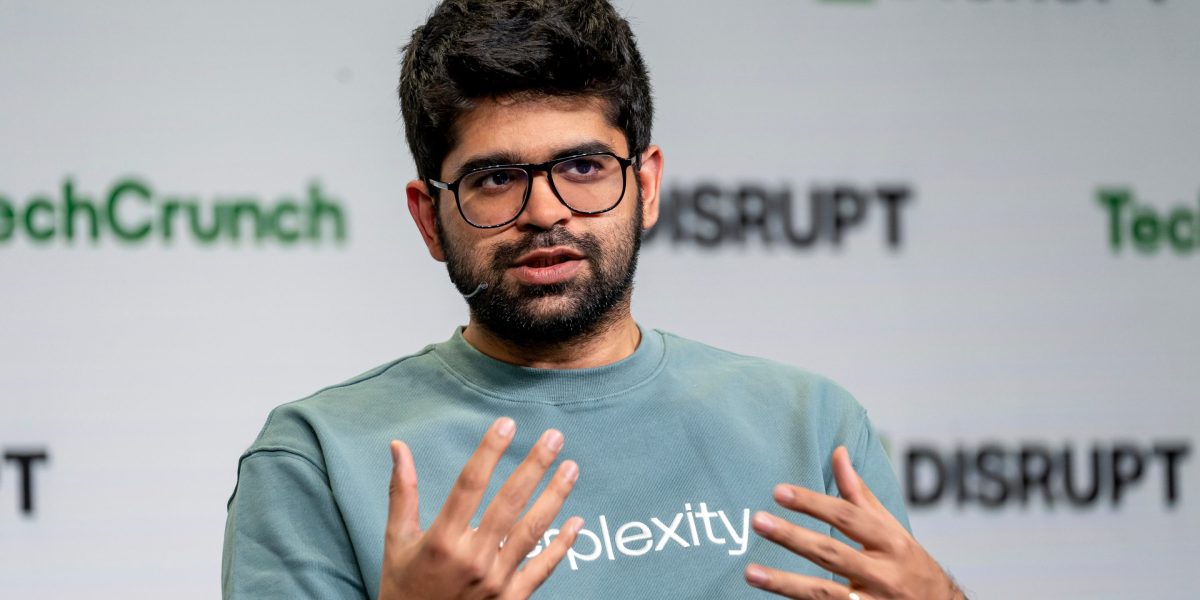
Perplexity CEO Aravind Srinivas said fear of failure is one of the main forces that can restrain people from taking bigger career risks. His comments come as Fortune reported that workers are weighing layoffs, AI-driven change and pressure to keep proving their value.
Srinivas told the 20VC with Harry Stebbings podcast that he reminds himself he has “nothing to lose” because his current career already exceeds what he once imagined. He said he came “from nothing” and described his life as far beyond his earlier expectations.
Fortune reported that Srinivas co-founded Perplexity in 2022. TechCrunch has reported the AI search company has raised at least $1.5 billion in total funding, while Bloomberg reported a valuation around $18 billion in 2025 and The Information reported a possible $20 billion valuation.
A low original bar for success
Srinivas grew up in Chennai, India, in what he described as a financially lower-middle-class family, according to Fortune. He said that, in that setting, getting a job counted as success.
Fortune reported that Srinivas earned a bachelor’s degree in electrical engineering from the Indian Institute of Technology. After graduating, he went on to research internships at OpenAI and Google DeepMind, according to the same report.
On the podcast, Srinivas said his family’s goal had been for him to work at Google. Because he already passed that benchmark, he said, he tries to reject defensive thinking when he senses himself acting to avoid failure.
His preferred posture, he told Stebbings, is to be aggressive about trying. Srinivas said it is better to commit fully and stay on offense rather than let fear drive decisions.
Other executives have made similar arguments
Fortune also pointed to other executives who have linked career growth to risk-taking. Ryan Smith, founder and former CEO of Qualtrics, wrote for Fortune in 2016 that his biggest fear as a CEO was that employees would stop testing limits.
Smith wrote that some of his largest regrets came from having a strong idea and failing to move quickly or fully because he worried about falling short. Fortune reported that Smith saw “safe” hiring, products and acquisitions as signs that a company was unlikely to create something new.
Amit Walia, CEO of Informatica, told Fortune that his earlier time at McKinsey was demanding but useful. Walia said being placed in difficult situations around other capable people sharpened his ability to analyze problems and helped him grow as a leader.
Joanna Griffiths, CEO of Knix, told Fortune she had worked with a hypnotherapist to address fear of failure. Griffiths said the process helped her think through worst-case outcomes and make decisions from optimism rather than fear.
For Srinivas, the argument rests on perspective. He told the podcast that because his original goal was far smaller than what he has already reached, protecting against failure can be a worse choice than taking the risk.
This story draws on original reporting from Fortune.