
Nvidia CEO urges wider AI use as political scrutiny grows
Jensen Huang told The Associated Press that AI needs new social norms, more U.S. energy capacity and clear national security rules.
By Maya Lindqvist · Senior Technology Correspondent
3 min read
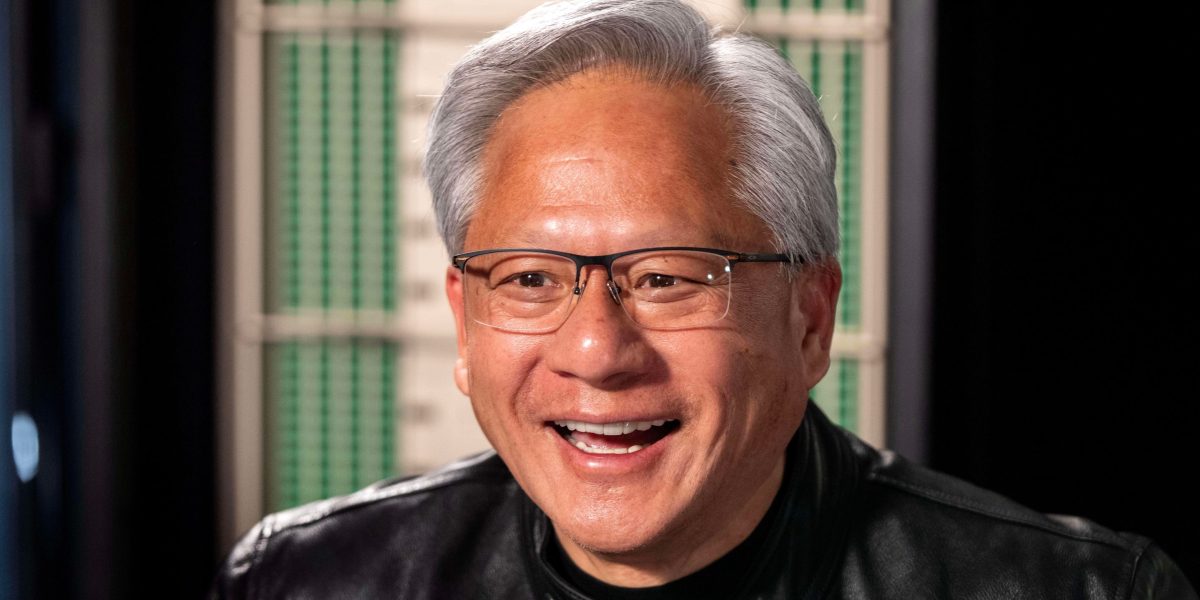
Nvidia CEO Jensen Huang said Americans should use artificial intelligence more widely even as the technology faces rising political resistance over jobs, safety and energy demand. In an interview with The Associated Press in Sherman, Texas, Huang argued that society should adjust its habits around AI rather than hold back adoption.
Huang, whose company has become central to the AI boom, said people should engage with the technology and that new social norms are needed. He told AP that AI can help people build websites, review difficult documents, support research and plan projects such as kitchen renovations without requiring software skills.
He compared the transition to the way society adapted to automobiles, saying norms changed through measures such as sidewalks and crosswalks. Huang also said some regulation and safety standards are needed, with national security treated as a priority.
Government role and public stake
Nvidia’s rise has made Huang a leading voice in debates over AI policy. AP reported that Nvidia has a market value of roughly $5 trillion, making it the world’s most valuable company, while AI model developers OpenAI and Anthropic could eventually be valued above $1 trillion if they go public.
Those valuations have added to concern about wealth concentrating in a small number of AI firms. President Donald Trump has floated the idea of U.S. government ownership stakes in AI companies, an idea also backed in some form by Sen. Bernie Sanders and OpenAI CEO Sam Altman, according to AP.
Huang questioned what such a policy would add. He told AP that American companies already benefit the public through stock ownership, taxes and employment, and said AI growth could also lift businesses in energy, construction and hardware.
Security rules and China competition
Huang said the federal government is right to focus on national security risks but should define those risks clearly before setting export-control policy. AP reported that the Trump administration recently moved toward tighter AI oversight, including export controls on Anthropic’s latest models and voluntary government screening of new AI models before release.
Nvidia opposed Biden-era export restrictions that limited some chip sales to China. Huang warned at the time that such limits could hurt America’s role in shaping the global AI system if China responded by building advanced chips of its own, according to AP.
Huang also framed AI as part of a broader contest with China. He told AP he believes the United States is better positioned to win that race if it remains open to global competition in AI.
Energy demand and Trump ties
Huang said U.S. energy supply is a weak point for AI development because data centers require large amounts of electricity. He told AP the country has fallen behind in energy production and praised Trump’s push for more domestic energy, while AP noted that Trump has favored oil, coal and natural gas and criticized wind and solar power.
Huang spoke during an event tied to Coherent’s factory expansion in Sherman. AP reported the facility is developing a laser to move data among chips, a technology that could reduce AI system power use by up to 50%.
The Nvidia chief also described his relationship with Trump, saying it began with a dinner invitation at Mar-a-Lago while Huang was in Florida to receive the Edison Achievement Award. Huang told AP that Trump asks about jobs, U.S. manufacturing, national security and winning, and said the president sometimes calls him late at night to discuss those subjects.
That access has drawn criticism from Democrats. AP cited Sen. Elizabeth Warren, who objected to Huang skipping Senate testimony while attending a $1 million-a-head dinner at Mar-a-Lago. Huang said he wants U.S. presidents and officials of either party to succeed because the country benefits when they do.
This story draws on original reporting from Fortune.