
New York ghost gun law puts 3D printer makers on uncertain ground
New York will study requiring 3D printers to detect and block gun designs, but industry and rights groups question whether the idea can work.
By Daniel Okafor · Business Editor
3 min read
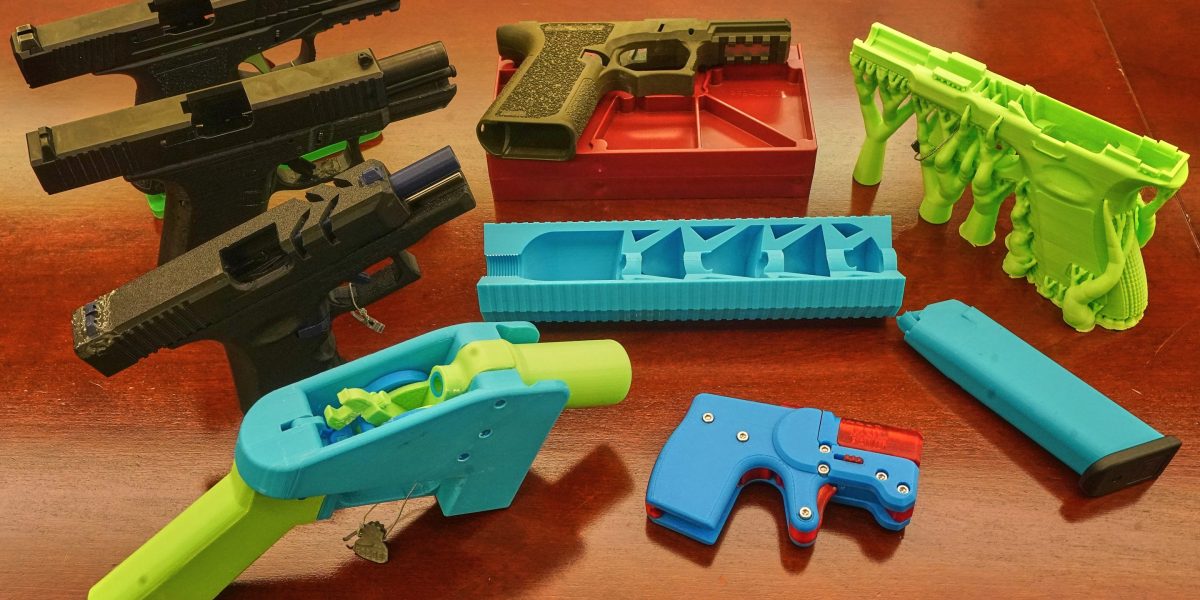
New York has enacted a first-in-the-nation law that could require consumer and business 3D printers to block firearm designs before they are printed. The measure targets the machines behind some homemade “ghost guns,” a growing concern for police because the weapons can lack serial numbers and be difficult to trace, according to The Associated Press.
The law, signed last month, does not impose an immediate hardware requirement. AP reported that New York will first assign experts to develop standards for software that can identify firearm blueprints, with any mandate for built-in blocking technology delayed until 2029 or later if the panel finds the approach is not ready.
California lawmakers are considering a similar proposal, AP reported. Together, the two states could influence how 3D printer makers design products for the U.S. market, especially if other Democratic-led states follow with related rules.
How the proposal would work
The proposed technology would review a file submitted to a 3D printer, compare it with a database of firearm parts and reject designs that appear too similar, according to AP. Dartmouth engineering professor Solomon Diamond compared the concept to apps that identify plants from uploaded images during an online seminar on the legislation.
One possible approach would analyze a design’s geometry, measurements and structural features. Julian Chultarsky, a technical account manager at Physna, told AP that geometric search tools are already developed and can be applied to the problem.
The Association of 3D Printing supports the New York and California measures, but its executive chairman, Bill Decker, told AP he doubts they will stop illegal gunmaking. Decker said people seeking to make guns could alter designs or use different printing channels.
Ghost guns have drawn wider state action
About one-third of U.S. states have banned or regulated privately made firearms that lack serial numbers and bypass background checks required for sales by federally licensed dealers, AP reported. New York’s approach is different because it focuses on the equipment rather than only the maker or the weapon.
The 3D printing industry has expanded sharply. Decker told AP that the number of 3D printers worldwide has risen from an estimated 30,000 in 2012 to more than 3 million, while annual industry value has grown from about $2 billion to $26 billion. Some lower-end printers now sell for several hundred dollars, while more advanced models can cost thousands.
Those machines can produce ordinary goods such as toys, prosthetics and aircraft components, AP reported. They can also produce firearms or parts used to assemble them from digital files available online.
A U.S. Department of Justice report released last year found that privately made firearms recovered in crimes and submitted to federal authorities increased from about 1,600 in 2017 to nearly 27,500 in 2023, according to AP. The report did not say how many of those weapons were made with 3D printers.
In New York, police have said a 3D-printed gun likely was used in the 2024 killing of UnitedHealthcare’s chief executive, AP reported.
Privacy and gun rights concerns
Digital rights advocates warn that detection software could block lawful designs. Rory Mir of the Electronic Frontier Foundation told AP that aggressive filters could mistake harmless objects, such as pipes or certain wall hangers, for gun components.
Mir also told AP that cloud-based review of print files could expose private artwork or proprietary designs. Gun rights advocates raised a separate objection, arguing that homemade firearms are protected activity.
John Commerford, executive director of the National Rifle Association Institute for Legislative Action, told AP in a statement that the measures would restrict law-abiding Americans. Samuel Levy, policy advocacy director at Everytown for Gun Safety, told AP that 3D printing has become a new front in efforts to curb ghost guns.
This story draws on original reporting from Fortune.