
Musk’s companies draw closer after SpaceX listing
SpaceX’s public debut put new focus on Elon Musk’s expanding network of companies, from Tesla and X to Neuralink and The Boring Company.
By Daniel Okafor · Business Editor
3 min read
Elon Musk’s business holdings drew fresh attention after SpaceX began trading publicly Friday, capping a year in which more of his companies were brought under one corporate roof. The Associated Press reported that Musk, described as the world’s richest person and first trillionaire, still holds the chief executive title at several major ventures.
AP reported that Musk merged SpaceX with his artificial intelligence company xAI earlier this year. That combination added to a corporate structure already tied to electric vehicles, rockets, satellites, brain implants, social media and tunnel construction.
SpaceX becomes the center of a wider group
Musk founded SpaceX in 2002 and remains its CEO, according to AP. The company now includes Starlink, the satellite internet business that AP said generated $4.4 billion in operating income last year.
AP reported that SpaceX also houses X, the social media platform formerly called Twitter, which Musk bought for $44 billion in 2022. X had been placed under xAI, the company behind the Grok chatbot, before the SpaceX-xAI merger, according to AP.
The combined picture is financially mixed. AP reported that both X and xAI lose money, with xAI posting a $6.4 billion operating loss last year, while SpaceX recorded a $2.6 billion operating loss overall.
Despite those losses, AP reported that SpaceX completed the largest initial public offering on record Friday. Shares closed just under $161, giving the company a market value of $2.1 trillion, according to AP.
AP also reported that some analysts view that valuation as too high. SpaceX has told investors it aims to lead in artificial intelligence and support a future in which humans live on more than one planet, but AP noted that many of those plans depend on technology that has not been proved and would require large amounts of capital.
Tesla, Neuralink and tunnels
Musk has led Tesla as CEO since 2008, according to AP. The electric vehicle maker went public in 2010 and later reached the trillion-dollar tier on the S&P 500; AP reported that its market value is now about $1.5 trillion.
Tesla has faced tougher competition in electric vehicles, AP reported. China’s BYD overtook it last year as the world’s largest EV maker, and Tesla sales were hurt by boycotts tied to Musk’s politics before partially recovering, according to AP.
AP reported that Musk has pointed to robotaxis rather than conventional car sales as a major part of Tesla’s future. The company has also increased production of robots for homes and businesses and has been in solar energy for about a decade through its purchase of SolarCity, which AP said was founded by Musk and two of his cousins.
Musk is also CEO of Neuralink, a brain-computer interface company he co-founded in 2016, according to AP. Neuralink has run clinical trials involving people with spinal cord injuries, ALS and other conditions, and the company said in January that it had 21 trial participants worldwide, AP reported.
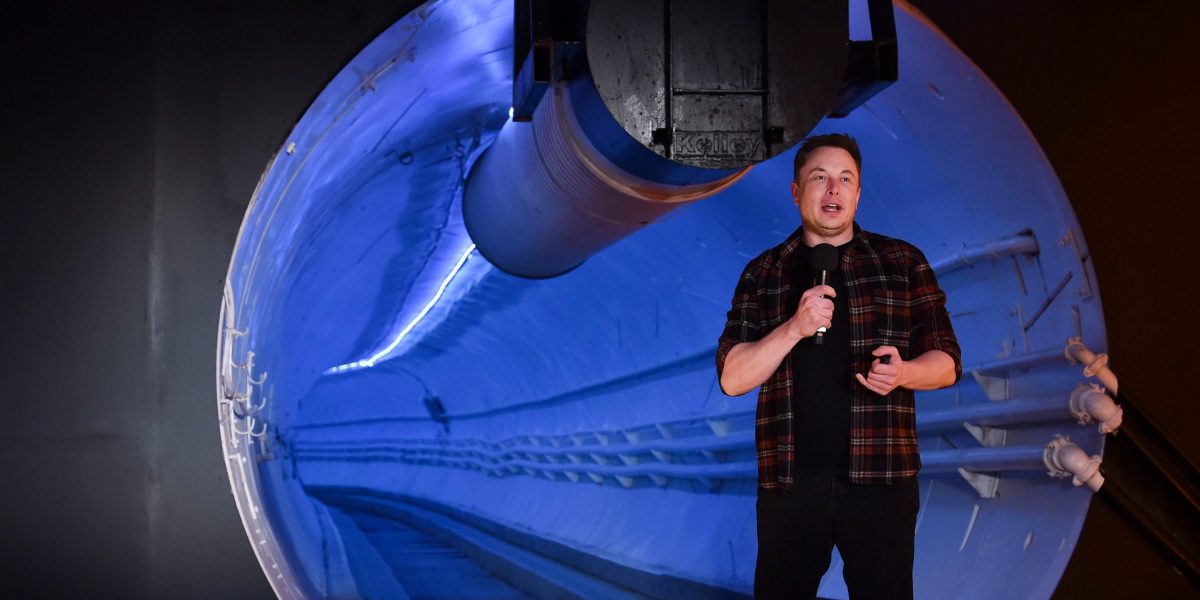
The Boring Company, another Musk-founded business, builds tunnels and underground transportation systems, according to AP. Its Vegas Loop opened around the Las Vegas Convention Center in 2021, but AP reported that the company has faced safety and environmental allegations in Las Vegas and criticism from some officials in Nashville.
AP reported that Musk’s early fortune came from Zip2 and PayPal, formerly X.com. Those companies were sold years ago and brought Musk about $200 million, money AP said he later used to start SpaceX and invest in Tesla.
This story draws on original reporting from Fortune.