
Mega-IPO wave divides Wall Street over market peak risk
SpaceX’s $75 billion IPO and more expected AI listings have analysts debating whether heavy stock issuance is a warning sign or a bull-market feature.
By Daniel Okafor · Business Editor
3 min read
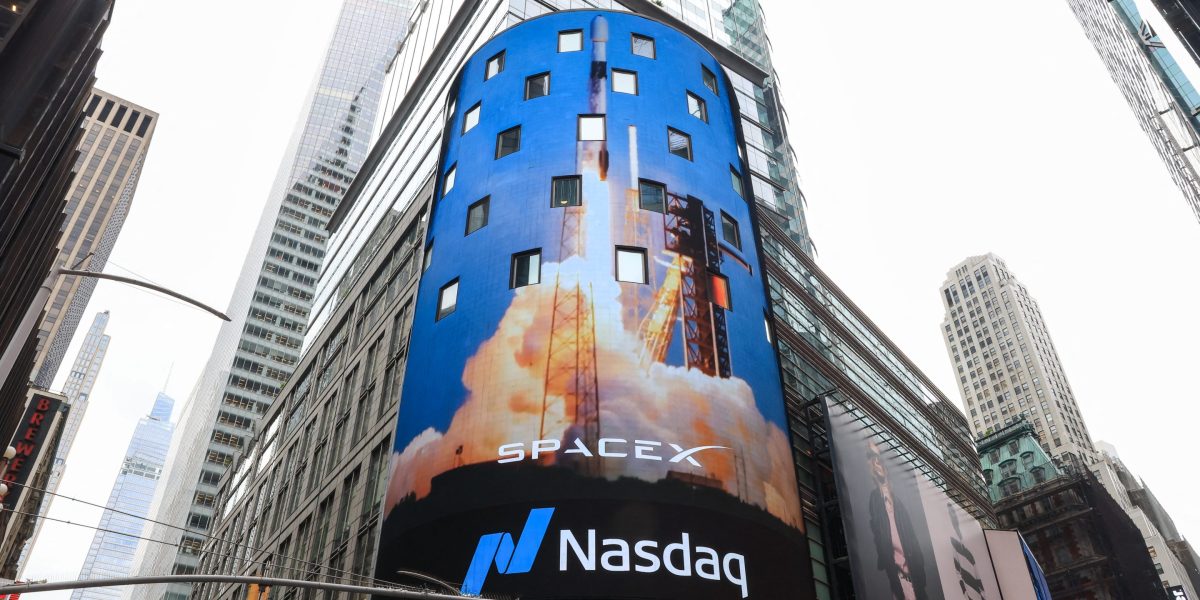
A burst of large stock offerings is splitting Wall Street over whether the U.S. equity rally is nearing danger or showing continued strength. Fortune reported that SpaceX’s $75 billion IPO, Alphabet’s $85 billion secondary stock sale and expected offerings from OpenAI and Anthropic have put new share supply at the center of the market debate.
The concern is that companies often sell stock aggressively when investor demand is strong, which can happen late in a cycle. The counterargument from Deutsche Bank is that issuance waves have usually come alongside strong returns, rather than causing market weakness.
Jonas Goltermann, chief markets economist at Capital Economics, told clients Friday that the history of large IPOs and elevated equity issuance argues for caution, according to Fortune. He pointed to surges in U.S. gross equity issuance in 1999, 2007 and 2021, each of which was followed by a bear market.
Capital Economics also noted that recessions followed the tech bubble and the housing bubble, Fortune reported. Goltermann said net equity issuance by U.S. non-financial companies had already moved into positive territory by the first quarter of this year, even before the SpaceX IPO and Alphabet offering.
More issuance may be coming. Fortune reported that Anthropic and OpenAI are expected to seek tens of billions of dollars from public investors later this year, which Goltermann said could make 2026 resemble earlier years marked by heavy issuance.
Goltermann did not say the current market is an exact replay of those periods. According to Fortune, he noted that earnings have helped drive the rally and that valuations do not look as stretched as they did near some past peaks. Still, Capital Economics said the current market has a growing number of features in common with earlier equity-market tops, raising the risk that the AI-driven rally is late in its run.
Deutsche Bank reached a different conclusion by studying issuance cycles another way. Fortune reported that analyst Jim Reid and his team examined upswings in new share supply and compared median issuance volumes with S&P 500 performance.
Deutsche Bank found that periods of heavy issuance typically lined up with solid market returns, Fortune reported. Reid said companies tend to sell shares when demand for equities is high, earnings trends are favorable and investors are willing to take risk, meaning strong markets often lead to issuance.
The bank’s data showed median equity returns of about 8% over three months and more than 20% over 12 months during issuance waves over the past three decades, according to Fortune. Deutsche Bank said the major exception was the Great Financial Crisis, when companies issued stock under pressure to raise capital.
The current upturn in issuance began before the latest mega-IPOs. Fortune reported that U.S. stock issuance has risen from a quarterly pace of about $30 billion in early 2023 to roughly $120 billion now.
Reid said current conditions remain favorable because equity demand is strong, inflows are rising, earnings growth is firm, overall equity positioning is still moderate and buybacks are elevated, according to Fortune. He also said household balance sheets still have room to absorb additional supply.
The divide leaves investors weighing two readings of the same signal. Capital Economics sees echoes of past peaks, while Deutsche Bank sees evidence that companies are taking advantage of a market with enough demand to handle new shares.
This story draws on original reporting from Fortune.