
Marketing chiefs say AI works best outside the creative core
Executives at Fortune’s Brainstorm Tech said AI can speed production, but human judgment still drives ideas that audiences remember.
By Daniel Okafor · Business Editor
3 min read
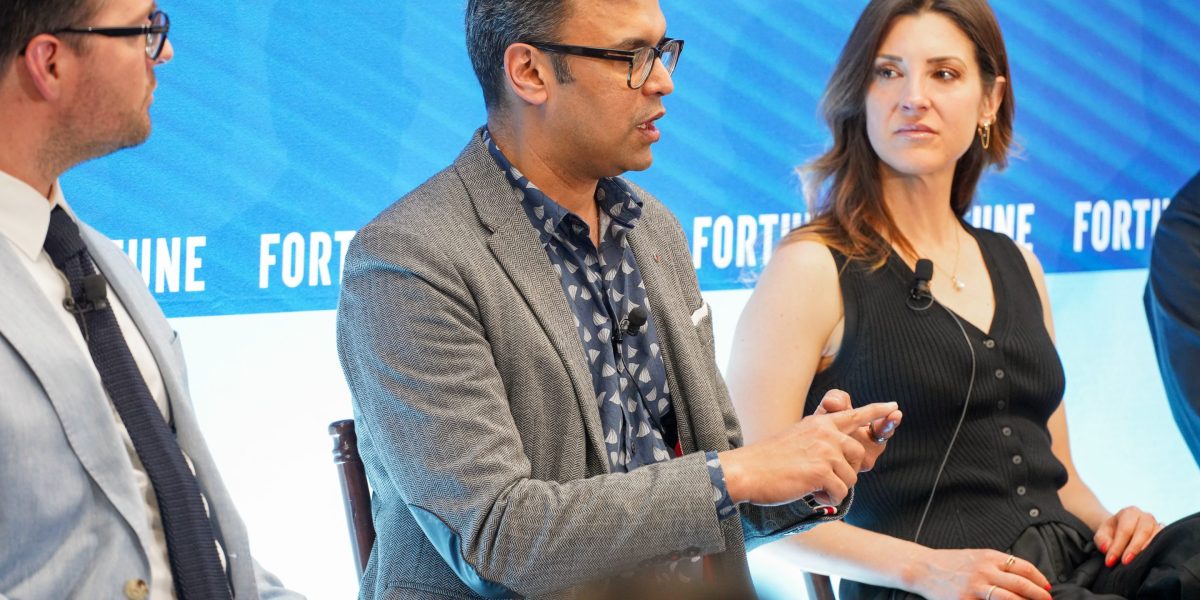
Business leaders are drawing a sharper line around where artificial intelligence helps marketing and where it falls short. At Fortune’s Brainstorm Tech conference in Aspen, executives said AI is proving useful for faster production and personalization, while original creative judgment remains difficult to hand over to software.
Dan Murphy, who leads marketing at Liquid Death, said many marketers are using AI to generate creative work with uneven results. He warned that companies can appear busy with marketing while wasting money on material that audiences dismiss almost instantly.
Murphy said Liquid Death uses AI heavily behind the scenes, including in day-to-day work discussed by employees on Slack. But he said the technology does not match human writers and artists at creating new concepts from scratch.
He pointed to Liquid Death’s campaign with Spotify as an example of the kind of idea he believes AI would struggle to produce. According to Murphy, the company’s artists and comedians, including people who had worked for The Onion and Adult Swim, created a Bluetooth-enabled urn so people could keep listening to music after death.
Murphy said the project cost a few hundred thousand dollars, paid by Spotify, and generated 6 billion earned media impressions. He said Liquid Death judges its content largely by whether people share it, because shares indicate that an idea is compelling enough to travel.
Vishal Sood, president of research and development at Typeface, said he agreed that AI is not yet a substitute for taste. He said people with a strong understanding of the brand and audience still need to decide what is good, citing AI researcher Andrej Karpathy’s point that people may outsource thinking but cannot outsource understanding.
Sood said AI is better suited to extending an existing idea than inventing one. In his view, the technology can create variations, images, storyboards and drafts, and it can handle repetitive production tasks that bog down marketing teams.
He said one Typeface customer increased its email click-through rate by two percentage points through AI-based personalization, nearly tripling the earlier rate. Sood also cited the common task of converting a campaign’s main visuals into the many formats required for digital media, work that he said can take months inside large companies.
Stacy Simpson, chief marketing officer of athenahealth, said her team uses AI across operational work to move campaigns more quickly and reduce delays between steps. She said the company uses AI in the creative process but not for creative ideation.
Simpson said her test is whether a tool solves a real business problem. She cautioned that the ability to use AI does not mean a company should apply it to every task.
Caitlin Allen, president of marketing at Simbe Robotics, said the spread of low-quality AI material reflects a mismatch between output and input. She said companies often focus too much on what they want to say and too little on what audiences want to hear.
Allen said AI may be more useful for automating repeated listening, helping marketers understand what people care about. Ben Gammell, president of fintech startup Brex, said his company sees AI as a way to speed the work of current employees, not as a trigger for job cuts or restructuring.
Simpson said the same AI model can produce weak or strong results depending on who uses it. She said the difference comes down to judgment, context, skill and experience in deciding what people should create themselves and what can be assigned to AI.
This story draws on original reporting from Fortune.