
Marbella courts founders as luxury boom strains the city
The Spanish resort town is trying to build a tech economy as wealthy newcomers push up prices and reshape daily life.
By Maya Lindqvist · Senior Technology Correspondent
4 min read
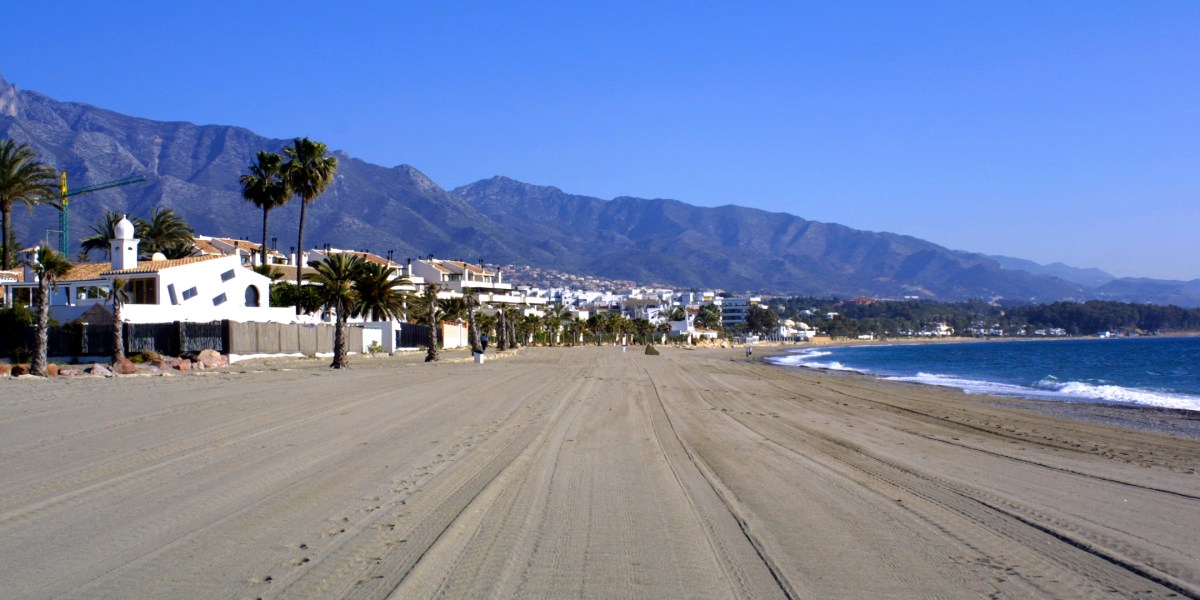
Marbella is trying to turn its reputation as a luxury resort into a base for technology founders and investors, Bloomberg News reported. The push matters because the Costa del Sol city is already being reshaped by wealth, remote work and rising property prices.
The city’s pitch casts the wider Costa del Sol as a European answer to Silicon Valley, with Marbella playing the role of a high-end coastal startup base. Bloomberg reported that co-working spaces and offices are appearing near the apartments, restaurants and resorts that have long defined the area.
The Pool, a business hub on Marbella’s Golden Mile, is one of the visible signs of that effort. Christian Rasmussen, its chief executive, told Bloomberg the goal is to change how people see Marbella, from a leisure spot to a place for modern professionals.
A new wave of buyers
Marbella has drawn foreign money for decades, especially from Britain and Scandinavia, Bloomberg reported. The city also acquired the nickname Costa del Crime because some international fugitives settled in the area.
Since the pandemic, the profile of property buyers has changed, according to Pure Living Properties’ 2025 Marbella market report cited by Bloomberg. Agents are seeing younger buyers who want homes they can use through the year while they work, rather than only as holiday properties.
British, Scandinavian, German and Dutch buyers remain prominent among international purchasers, the report said. Interest has also increased from the United States, Canada, Poland and Gulf states, according to Bloomberg.
Artur Loginov, chief executive of real estate firm Drumelia, told Bloomberg that the past several years brought new investors, hotels, gyms, restaurants and global brands to Marbella. He said the town has become more like a city than the smaller resort it used to be.
Luxury property meets startup ambition
Developers are also borrowing from Dubai and Miami by building branded residences, Bloomberg reported. Rafael Nadal and Giorgio Armani have partnered on a project of 33 ultra-luxury mansions, while Dolce & Gabbana, Fendi and Karl Lagerfeld have launched residential developments in the area.
Hotel-branded homes with private amenities and services are emerging as well, according to Bloomberg. Mary Dunne, founder and partner at MPDunne Properties, told Bloomberg that restaurant operators are also seeking space in Marbella, but suitable locations are scarce.
The population shift has brought more demand for schools. Richard Sutcliffe, director of the English International College in Marbella, told Bloomberg the area had about 11 international schools roughly 40 years ago and now has more than 50.
Rasmussen told Bloomberg that many of the new arrivals may initially be solo technology entrepreneurs with little local hiring. He said shared workspaces could help them meet local founders and eventually build companies with a larger effect on the city.
Bob van Winden, a former Google and Stripe employee who moved from Dublin to Marbella after the pandemic, told Bloomberg his family chose the city over Madrid because of quality of life, international schools and the expatriate community. He said artificial intelligence and access to capital make it easier for small teams to build companies from places such as Marbella.
Limits and local unease
Marbella’s city council has worked with The Pool on foreign-investment efforts, Bloomberg reported. Rasmussen traveled with the mayor to China to promote Marbella as a European entry point, and local authorities have launched Marbellup to teach residents how to use artificial intelligence.
Josemaria Siota, executive director of the Entrepreneurship and Innovation Center at IESE Business School in Barcelona, told Bloomberg that startup hubs need strong ties among entrepreneurs, investors, universities, companies and public institutions. He said Marbella has many useful elements but has not yet become a mature ecosystem.
The boom has also made Marbella harder for some residents. Idealista data cited by Bloomberg showed the average asking price in Marbella rose about 74% in five years, from €3,225 per square meter in June 2021 to €5,608 in June 2026. In Marbella Pueblo, prices rose 21.8% from a year earlier to €5,403 per square meter in June, according to the same data.
Some longtime residents told Bloomberg that luxury development and tourism have changed the city’s character. Juan Guerrero, who has lived in Marbella for 50 years, said vegetable gardens and fishermen have largely disappeared, while local shops have been replaced by chains, restaurants and small hotels.
Bloomberg also reported that Marbella has seen gang-related violence in recent years, including shootings at restaurants and nightclubs, along with drug interceptions at sea. Authorities have linked some incidents to transnational criminal networks operating in the region, according to Bloomberg.
This story draws on original reporting from Fortune.