
Larry Culp GE turnaround puts aerospace cash flow in focus
GE’s split into three public companies has lifted combined value near $700 billion, with GE Aerospace now driving investor attention.
By Hana Yoshida · Markets Reporter
3 min read
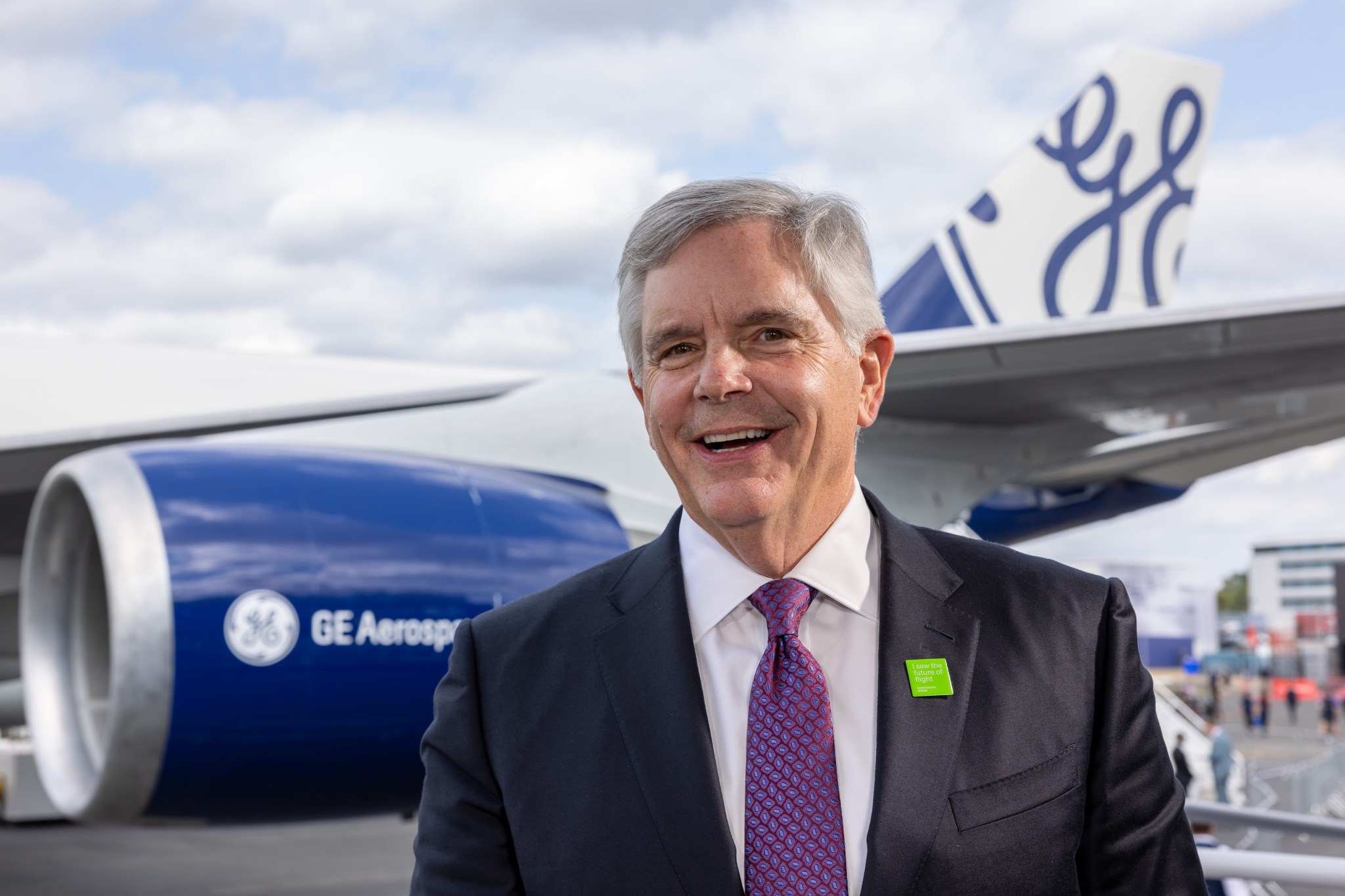
The Larry Culp GE turnaround has taken a company that was under heavy financial strain in 2018 and reshaped it into three public industrial businesses. Fortune’s Shawn Tully reported that the combined market value of GE HealthCare, GE Vernova and GE Aerospace is now approaching $700 billion.
The change matters because GE was once one of the best-known examples of a sprawling conglomerate under pressure. When Culp joined GE in 2018, the company’s market capitalization had fallen to about $96 billion, more than 80% below its 2000 peak, while debt stood near $150 billion, Tully reported.
How did Larry Culp turn GE around?
According to Tully, Culp’s early work centered on reducing debt and making the company less complex. That included cutting corporate overhead and stripping back GE’s large headquarters structure.
Those steps cleared the way for GE’s separation into three public companies during 2023 and 2024: GE HealthCare, GE Vernova and GE Aerospace. Tully reported that the combined equity value of the three companies has outpaced the S&P 500 during Culp’s tenure, with returns roughly double the index’s annualized gain over that period.
The operating approach behind the overhaul was lean management, Tully wrote, drawing on the Toyota Production System and Culp’s experience at Danaher. In this context, lean management means running operations with tighter process control, fewer inefficiencies and more focus on measurable execution.
GE Aerospace is now the main cash-flow story
Investor attention has shifted toward GE Aerospace, the jet-engine company that Culp now leads. In second-quarter 2026 results reported July 16, GE Aerospace generated $3 billion in free cash flow, a 43% increase from a year earlier, according to the company.
GE Aerospace said the cash-flow gain reflected higher earnings and lower working capital. Adjusted earnings per share were $2.02, above the consensus estimate of $1.86, while adjusted revenue rose 24% year over year to $12.63 billion.
That revenue result also topped forecasts of about $11.86 billion, according to the company’s earnings materials. GE Aerospace said it was the fifth straight quarter in which revenue grew at least 20%.
Morningstar raised its fair value estimate for GE Aerospace to $347 a share from $307, citing stronger profit growth in the company’s aftermarket business. The research firm said the stock is now trading near its estimate of fair value.
Morningstar also expects GE Aerospace to continue raising its dividend and repurchasing shares. Analyst Nicolas Owens said the company’s market position and operating discipline support its longer-term outlook, even with uncertainty in the broader environment.
The GE case now stands as a study in balance-sheet repair, simplification and tighter operations, as described by Fortune. For shareholders, the next test is whether GE Aerospace can keep turning that operating model into cash flow and profit growth.
This story draws on original reporting from Fortune.