
Landon Donovan says youth soccer costs are blocking U.S. talent
The former U.S. star said his family could not have afforded club soccer, warning that today’s pay-to-play model leaves gifted players behind.
By Daniel Okafor · Business Editor
3 min read
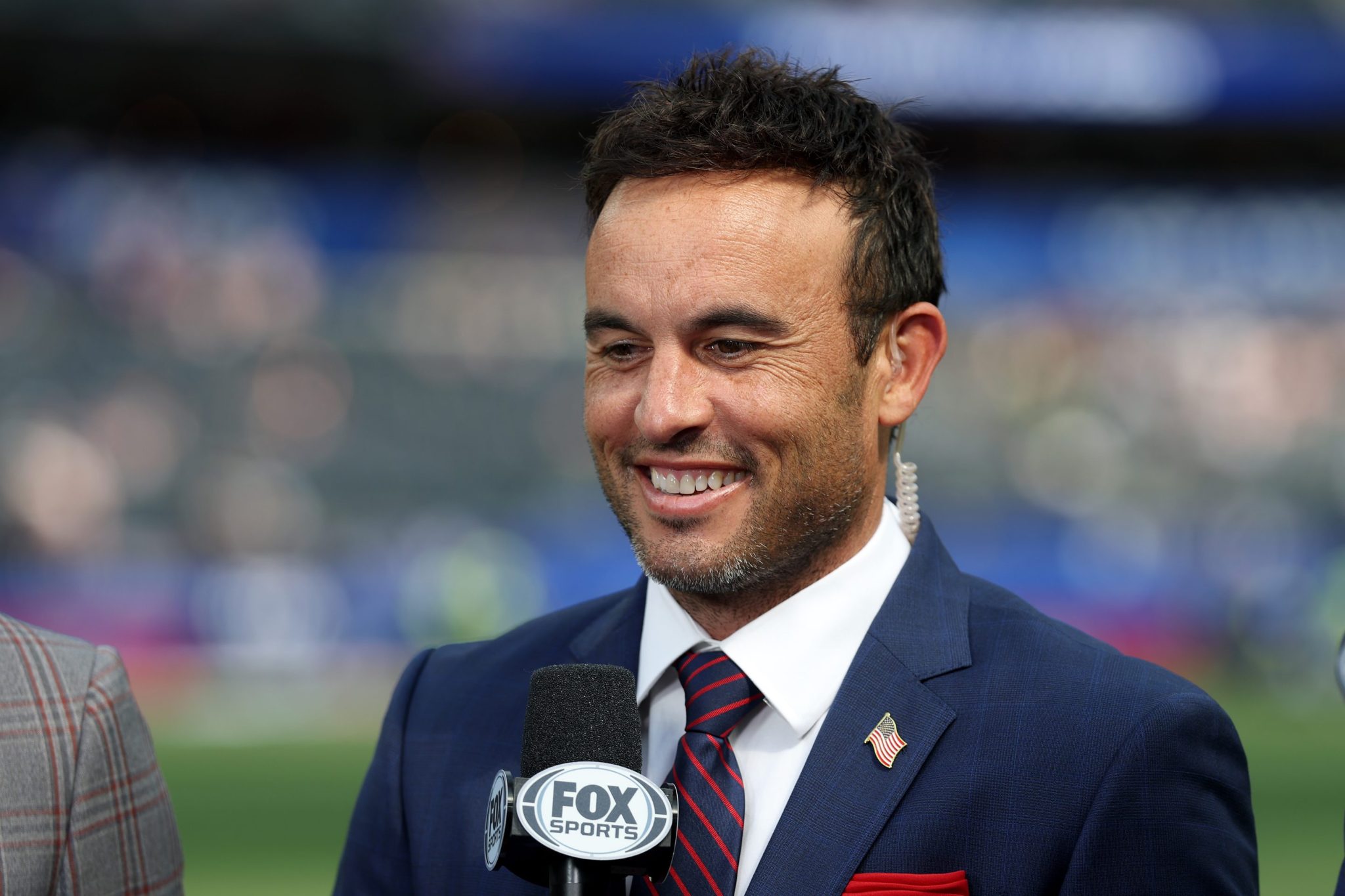
Landon Donovan said rising youth sports costs are keeping talented young players out of elite soccer in the United States. Speaking on The Late Run podcast, the former U.S. men’s national team star said his own path depended on others covering expenses his family could not afford.
Donovan, described as the all-time leading scorer for the U.S. men’s national team, played in three FIFA World Cups and was inducted into the National Soccer Hall of Fame in 2023. He said on the podcast that he would not have been able to play club soccer as a child without outside help.
“Growing up, there is zero chance I could have played club soccer,” Donovan said. “My mom made $34,000 a year as a single mom raising three kids. She couldn’t pay $4,000 for me to play club soccer—are you kidding? She couldn’t pay $400.”
Donovan said someone allowed him onto a team and paid the cost for him. He argued that a system built around high fees cannot reliably develop the best players, because it filters children by family income before it identifies ability.
Costs have climbed across youth sports
The Aspen Institute reported in its 2025 State of Play report that youth sports costs rose 46% from 2019 to 2025. Separate calculations cited by MyClubScout put the cost of year-round travel soccer, including coaching and travel, at as much as $15,000 for some families.
Tom Farrey, executive director of the Aspen Institute’s Sports & Society program, told The Athletic that travel is often the largest expense for families, on top of club dues, uniforms and other costs. Farrey said the U.S. sports system is “not a youth-centered or a talent-development system” and described it as one that uses children to generate money for adults.
Federal data cited in the discussion showed that youth sports participation has remained broad despite the expense, with about 55.4% of children ages 6 to 17 playing a sport in 2023. The structure of organized sports still leaves many families paying for equipment, referees and travel, with limited public support.
The Amateur Sports Act of 1978 bars the federal government from funding Olympic sports, according to the law’s text. The result, as described in the reporting, is that many amateur sports organizations grew in wealthier communities where families could absorb the costs.
Private investment adds another pressure
High demand for elite clubs has allowed leagues including MLS Next, USL, NPL and Girls Academy to charge families for access to better competition and coaching. The New York Times has also reported on private equity interest in youth sports.
In 2023, Swedish private equity firm EQT bought IMG Academy in Bradenton, Florida, for $1.25 billion, according to reporting cited on the deal. The school said the transaction would expand access to global athletes, including football and tennis prospects, while critics of the broader trend warn that high tuition and investor return targets can put such programs beyond the reach of many families.
Donovan’s own development included time at IMG Academy, then known as Bradenton Academy, through the U.S. under-17 national team residency program, according to the Bradenton Herald. At 16, he signed a six-year contract worth more than $1 million with Bayer Leverkusen, according to the LA Galaxy, before being loaned to the San Jose Earthquakes and beginning his MLS career.
Donovan said the current model leaves too many children outside the system. “Think about how many kids you’re missing out on in this country because they can’t afford to play the game,” he said. “The clubs are winning, and the kids are losing.”
This story draws on original reporting from Fortune.