
Lake exit narrows JPMorgan CEO race after years of female contenders
Marianne Lake’s retirement leaves Doug Petno and Troy Rohrbaugh as JPMorgan’s leading internal successors to Jamie Dimon, Fortune reported.
By Daniel Okafor · Business Editor
4 min read
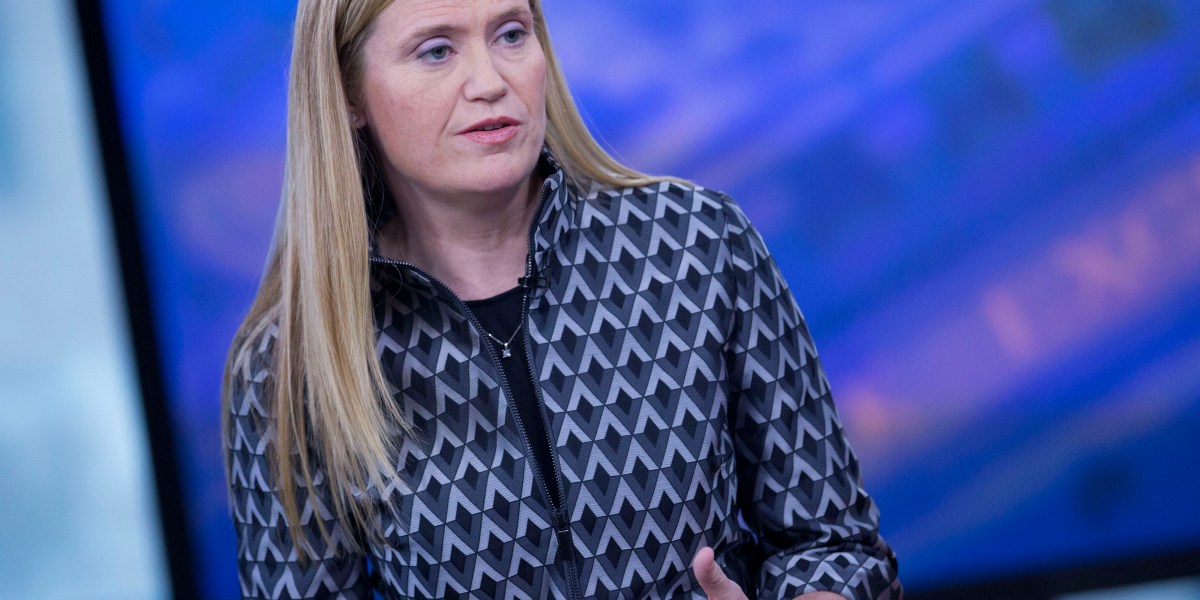
JPMorgan Chase’s succession race has shifted again after the bank said Marianne Lake, a longtime senior executive seen as a serious candidate to succeed Jamie Dimon, will retire after 25 years. Fortune reported that her departure reduces what had been one of Wall Street’s most visible pipelines of female CEO contenders.
The bank announced last week that Doug Petno and Troy Rohrbaugh would become co-presidents, while Lake, CEO of consumer and community banking, would leave the company. Bloomberg described Lake’s exit as abrupt, according to Fortune.
Lake’s move carries weight because JPMorgan has spent years preparing for a future after Dimon, whose eventual successor would take over one of the world’s most powerful banks. Fortune reported that Lake becoming CEO would have made her the first woman to lead JPMorgan and the second woman to run a major Wall Street bank after Citigroup named Jane Fraser CEO in 2021.
A leading candidate steps aside
Lake joined JPMorgan in 1999 and rose through senior finance and operating roles, according to Fortune. She served as chief financial officer, then led consumer lending, later becoming co-CEO and then sole CEO of consumer and community banking.
Fortune reported that the division generated $76 billion in revenue last year and served more than 86 million consumers. Lake ranked No. 23 on Fortune’s 2026 Most Powerful Women list.
Dimon praised Lake in JPMorgan’s announcement, calling her “an outstanding partner and friend” and citing her “unquestioned integrity,” Fortune reported. In a memo to employees shared with Fortune, Lake said the moment was “bittersweet” and said she was proud of what the consumer banking team had built.
The Wall Street Journal reported, according to Fortune, that Lake decided to leave after it became clear she was no longer in contention for the CEO job. Fortune also reported that she is expected eventually to take another senior executive role elsewhere.
JPMorgan’s succession field changes
For a period, JPMorgan had two women widely discussed as potential successors to Dimon, Fortune reported. Lake and Jennifer Piepszak became co-CEOs of consumer and community banking in 2021 after previously rotating through senior roles that included CFO and leadership of the consumer bank.
Piepszak left the CEO race in early 2025, according to Fortune. JPMorgan spokesperson Joe Evangelisti said at the time that Piepszak did “not want to be considered for the CEO position at this time” and preferred a senior operating role working with Dimon and top leadership. She became chief operating officer.
Daniel Pinto, long viewed as an emergency successor to Dimon, also announced plans to retire by the end of 2026, Bloomberg reported, according to Fortune. With Petno and Rohrbaugh now elevated from co-CEOs of the commercial and investment bank to co-presidents, Fortune described them as the last two men standing in the succession contest.
Dimon said in a memo shared with Fortune that the promotions reflected the board’s confidence in Petno and Rohrbaugh and marked “an important step” in the board’s succession planning. JPMorgan also disclosed $20 million bonuses for Piepszak and Mary Erdoes, CEO of asset and wealth management, while Petno and Rohrbaugh each received $30 million, Bloomberg reported, according to Fortune.
Broader implications for women in leadership
Fortune reported that about 55 women now run Fortune 500 companies, a record that represents 11% of the list. Lake’s exit follows other high-profile succession processes in which women considered strong candidates did not get the top job, including Kath McLay at Walmart and Dana Walden at Disney, according to Fortune.
Jane Stevenson, global vice chair at Korn Ferry, told Fortune that succession planning depends on timing, readiness and how long candidates are willing to wait. She said companies need to place more women in roles that prepare them for CEO transitions, a process she said can take as long as 15 years.
Stevenson also told Fortune that Lake and Piepszak could still become CEOs elsewhere in finance. Fortune cited JPMorgan alumni Thasunda Brown Duckett, now president and CEO of TIAA, and Charlie Scharf, now CEO of Wells Fargo, as examples of executives who left the bank for major leadership roles.
This story draws on original reporting from Fortune.