
Jurassic World: Dominion tops film budget rankings at $658.8 million
U.K. filings reviewed by Fortune put Universal’s dinosaur sequel ahead of Disney’s Star Wars: The Force Awakens on production cost.
By Daniel Okafor · Business Editor
3 min read
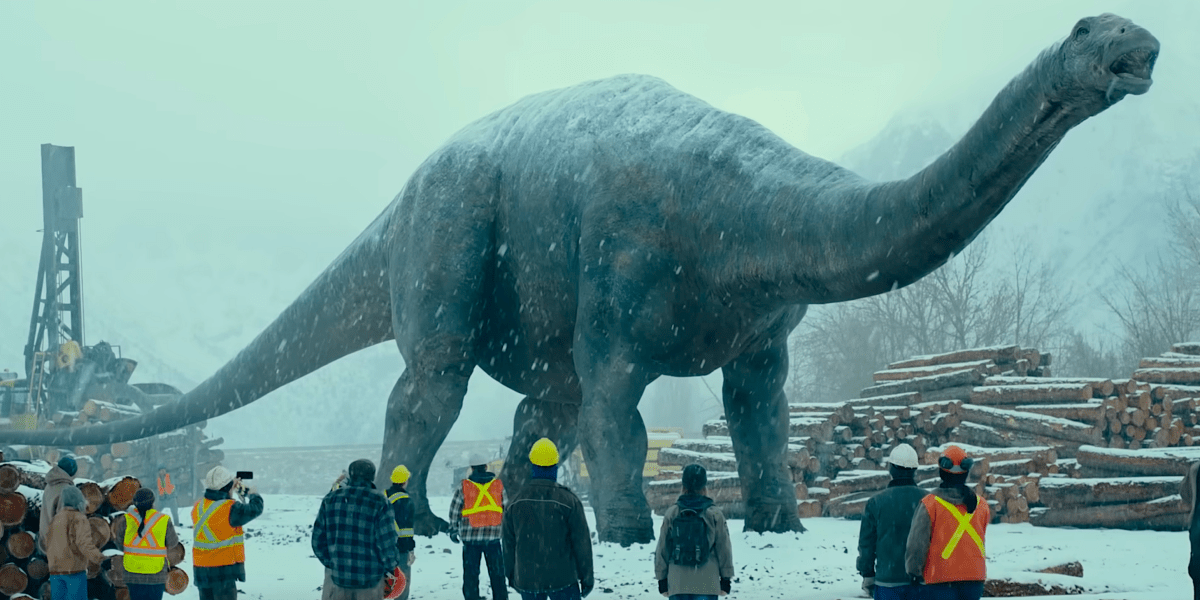
Universal’s 2022 film “Jurassic World: Dominion” cost $658.8 million to make, making it the most expensive movie on record, according to Fortune’s analysis of recently filed U.K. financial statements. The figure puts Universal ahead of Disney’s “Star Wars: The Force Awakens,” which Fortune said cost $638.9 million.
The ranking matters because studio movie budgets are usually hard to verify, especially in the U.S., where costs for individual films are often folded into broader corporate disclosures. Fortune said U.K. production filings for “Dominion” offered a rare look at the full cost of a single Hollywood tentpole.
“Dominion,” the third entry in Universal’s “Jurassic World” series, brought together Bryce Dallas Howard and Chris Pratt with Laura Dern, Jeff Goldblum and Sam Neill, stars associated with the original “Jurassic Park” films. Universal and Disney were contacted for comment, Fortune reported.
Pandemic production pushed costs higher
Fortune attributed part of the cost to the timing of filming, which took place in 2020 during the peak of the Covid-19 pandemic. The production faced safety protocols, delays and a postponed release, with the film eventually opening in June 2022, a year later than planned.
During shutdowns, studios still had to keep productions ready to restart, Fortune reported. That meant paying for access to soundstages and rented equipment, as well as security, senior producers and department heads needed to keep the project in place.
The cast also spent a long quarantine period near Pinewood Studios in the U.K., where much of the film was made, according to Fortune. The report said stars stayed at Marriott’s Langley Hotel, where rooms cost more than $600 a night.
How the U.K. filings revealed the bill
Both “Dominion” and “The Force Awakens” were made in the U.K., where studios can qualify for the Audio-Visual Expenditure Credit. Fortune said the program can reimburse up to 25.5% of qualifying local spending, provided productions meet tests tied to U.K. content, personnel and spending.
To claim the reimbursement, studios use U.K. film production companies that file financial statements. Fortune identified the Universal company behind “Dominion” as Arcadia Pictures, a code-named subsidiary tied to the film.
The latest Arcadia Pictures filings, covering the year to Dec. 31, 2024, showed $74.9 million in additional costs, bringing the total production cost to $658.8 million, according to Fortune. The filings also showed staff costs of $36.2 million and an average monthly employee count that peaked at 454, excluding freelancers, contractors and temporary workers.
Fortune said Universal received $127.8 million in U.K. reimbursement for “Dominion,” reducing its net cost to $531 million. The film’s worldwide box office was almost exactly $1 billion, and Fortune said the standard theater-studio split would have left Universal with about $500 million from ticket sales before other revenue such as home entertainment, streaming and merchandise.
U.K. incentives remain central to Hollywood
Fortune said Universal’s three recent “Jurassic World” films cost $606.3 million for “Fallen Kingdom,” $658.8 million for “Dominion” and $254.2 million for “Jurassic World Rebirth.” Combined reimbursements of $262.1 million lowered Universal’s net outlay to $1.3 billion, while its share of box office revenue was $1.6 billion, according to the analysis.
The British Film Institute said feature film production spending in the U.K. rose 31% last year to a record $3.8 billion. Gower Street Analytics forecast global box office revenue of $34.7 billion this year, which Fortune said would remain 18% below the 2019 peak.
Former President Donald Trump said on social media that he planned a 100% tariff on movies made outside the United States, Fortune reported. The policy has not been enacted, leaving U.K. incentives a major factor in where studios choose to shoot large films.
This story draws on original reporting from Fortune.