
Israeli strikes in Beirut put pressure on US-Iran deal talks
Israel said it hit Hezbollah targets in Beirut as mediators worked to close a deal aimed at ending the U.S.-Iran war.
By Hana Yoshida · Markets Reporter
4 min read
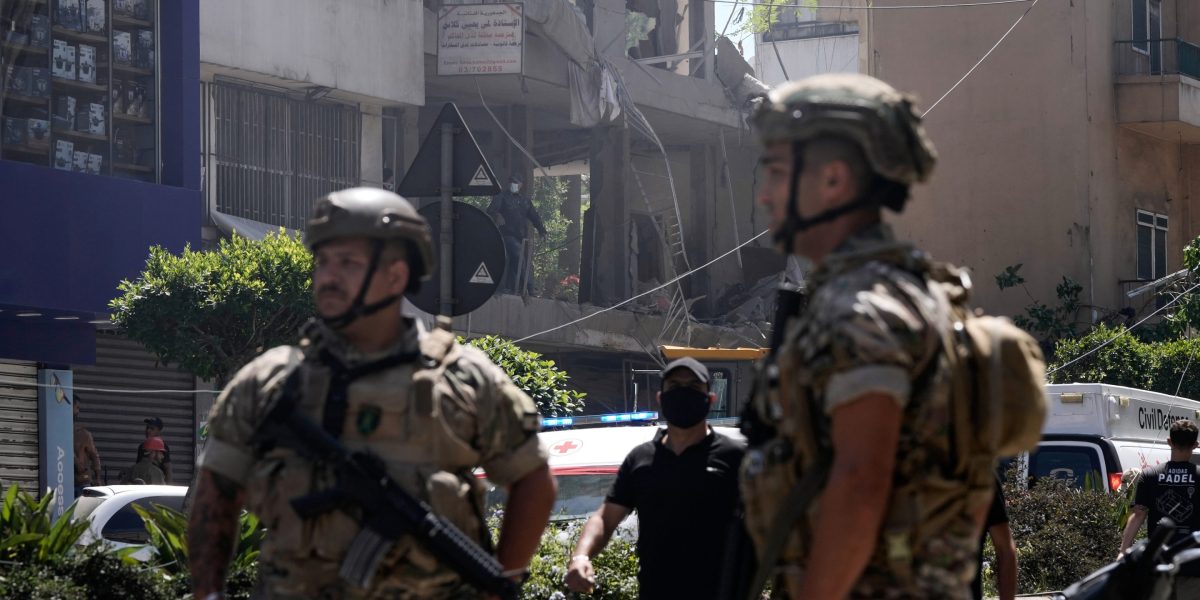
Israel carried out airstrikes on Hezbollah targets in Beirut on Sunday, according to the Israeli military, adding new strain to talks aimed at ending the U.S.-Iran war. Lebanon’s Civil Defense said rescuers recovered three bodies and pulled six wounded people from rubble after the strikes.
The Associated Press reported smoke rising over the Lebanese capital after the attack. An AP photographer at the scene said a five-story apartment building with shops on the ground floor was hit, with the two lower floors suffering the worst damage.
Residents in Beirut’s southern suburbs, many of whom had returned after weeks of relative calm, were seen leaving the area, according to the AP. Lebanese soldiers stood guard at the site in Dahiyeh, the AP reported.
Israel says Hezbollah fired first
Israeli Prime Minister Benjamin Netanyahu’s office said the strikes answered Hezbollah attacks on northern Israel. Israel’s military said Hezbollah fired three projectiles and released video in which a blast could be heard before smoke rose, according to the AP.
Netanyahu and Defense Minister Israel Katz said in a statement that Israel would not accept fire into its territory. The Israeli military later said it was preparing for possible incoming fire in the hours ahead, the AP reported.
Hezbollah, which is backed by Iran, had no immediate comment, according to the AP. The White House also did not immediately respond to the Israeli strikes, the AP reported.
President Donald Trump had said a U.S.-Iran deal could be signed Sunday, according to the AP. Trump has pressed Netanyahu to limit heavy attacks in Lebanon while negotiations are close to a deal, but Netanyahu has continued the campaign, the AP reported.
The AP reported that Israel’s government has been disappointed with the current form of the deal and has been sidelined in negotiations led by Pakistan and others. A previous Israeli strike on Beirut’s suburbs a week earlier triggered the most serious escalation between Iran and Israel since a fragile ceasefire began April 7, according to the AP.
Iran warns of a response
Iranian officials warned after the Beirut strikes that Israel’s actions could affect diplomacy. Mohammad Bagher Qalibaf, Iran’s parliamentary speaker and a lead negotiator for Tehran, wrote on X that if the U.S. could not meet its commitments, continuing the process would not be possible, according to the AP.
Gen. Mohammad Jafar Asadi, deputy commander of Iran’s Joint Command Headquarters, said the attacks would be answered, Iran’s official Mizan news agency reported, according to the AP.
Qatari mediators traveled to Tehran on Sunday to work on final terms, two regional officials told the AP on condition of anonymity because they were not authorized to speak publicly. Those officials said there was cautious optimism that Washington and Tehran were nearing an agreement that could stop fighting that has killed thousands and reopen the Strait of Hormuz.
Pakistani Prime Minister Shehbaz Sharif said Saturday that the agreement would be signed Sunday, while Iranian foreign ministry spokesperson Esmail Baghaei said it could happen in the coming days, according to the AP. Trump said the Strait of Hormuz would reopen immediately after the signing, the AP reported.
Nuclear issues remain unresolved
The proposed deal would not settle the hardest disputes between Washington and Tehran, including Iran’s nuclear program and billions of dollars in frozen funds, Pakistani and regional officials familiar with the talks told the AP. They said it would create a 60-day framework for technical discussions on those issues.
The International Atomic Energy Agency says Iran has 440.9 kilograms, or 972 pounds, of uranium enriched up to 60% purity, according to the AP. Weapons-grade uranium is enriched to 90%, and Iran has long said its nuclear program is peaceful, the AP reported.
Trump said on social media Saturday that when calm returns, the U.S. would downblend and destroy Iran’s enriched uranium, according to the AP. Iran has not publicly agreed to give up the uranium, which is believed to be buried below three nuclear sites badly damaged by U.S. strikes last year, the AP reported.
Trump was expected to discuss removing mines from the Strait of Hormuz with allies at the Group of Seven summit beginning Monday, according to the AP.
This story draws on original reporting from Fortune.