
German automakers hit by steep China sales drops
Volkswagen, Mercedes-Benz, BMW and Porsche reported second-quarter China sales declines of 30% to 41% as local rivals gained ground.
By Sofia Marchetti · World Affairs Correspondent
3 min read
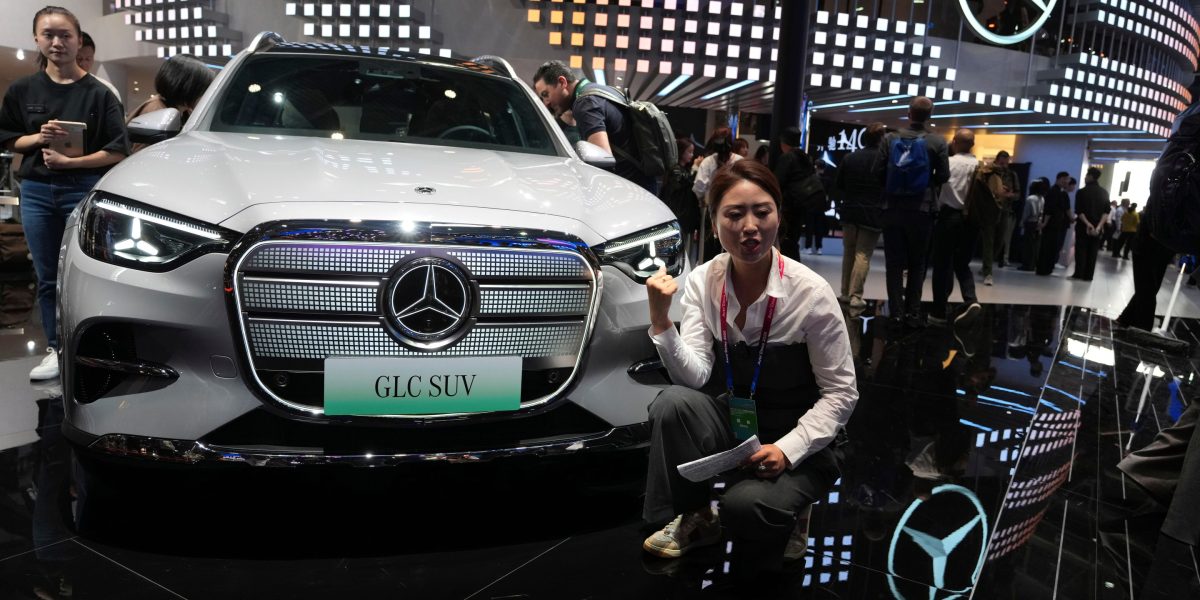
Germany’s largest carmakers suffered sharp sales declines in China in the second quarter, company data released over the past week showed, deepening pressure on groups that have long counted on the country for growth. Volkswagen, Mercedes-Benz, BMW and Porsche each reported China sales drops of 30% to 41% from a year earlier.
The declines came as China’s auto market weakened and domestic brands intensified competition, according to company statements and industry analysts. Lei Xing, an independent auto analyst, said the latest quarterly drops were among the steepest the German manufacturers have recorded in China.
For the first six months of the year, all four automakers reported China sales down by more than 20% year on year, according to the company data. The weaker performance in China has weighed on overall profit and, in some cases, offset stronger results in other regions.
Volkswagen Group said China deliveries fell 36.6% in the April-June period to 424,300 vehicles. The decline helped pull the group’s global deliveries down 8.6%, even though Volkswagen reported gains in Europe and the Americas.
The Wolfsburg-based group, which has invested heavily in China, said after the latest sales slump that it would cut its model range by as much as half. Porsche, which is part of Volkswagen Group, described conditions in China as challenging, while Mercedes-Benz pointed to a weaker overall market and macroeconomic environment in the country.
China’s broader economy has added to the pressure. The Associated Press has reported that a prolonged property downturn and slower economic growth have hurt consumer confidence, making shoppers more cautious about major purchases such as cars.
Industry data also show a weakening market. The China Association of Automobile Manufacturers said domestic passenger car sales fell 24% in the first half of the year to nearly 8.3 million vehicles.
AlixPartners expects sales of light vehicles, a category that includes passenger cars, to fall about 10% in China for the full year. Stephen Dyer, Asia-Pacific leader of the consultancy’s automotive practice, said last month that foreign automakers will have to compete hard for market share as Chinese brands become more favored by local buyers.
German manufacturers face a second challenge: the shift toward electric vehicles. Chris Liu of research and advisory firm Omdia said German auto groups remain stronger in internal combustion engine vehicles, including gasoline models, while electric vehicles are performing better than conventional fuel cars in China.
Chinese automakers have also benefited from lower-priced models and a long-running price war, according to the Associated Press. Dyer said Chinese brands often refresh their lineups more frequently than foreign competitors, giving them another edge in a fast-changing market.
The pressure is no longer confined to China. The Associated Press has reported that Chinese carmakers, including BYD, are expanding overseas and competing more directly with established European brands, including in Europe.
Xing said German automakers are taking much of the hit from the current market conditions. The latest sales figures show how quickly their position has weakened in a market that was once a central pillar of their global expansion.
This story draws on original reporting from Fortune.