
Indonesian court sentences Nadiem Makarim to 10 years in Chromebook case
The Gojek co-founder and former education minister was convicted over a pandemic-era school laptop procurement program, Bloomberg reported.
By Maya Lindqvist · Senior Technology Correspondent
3 min read
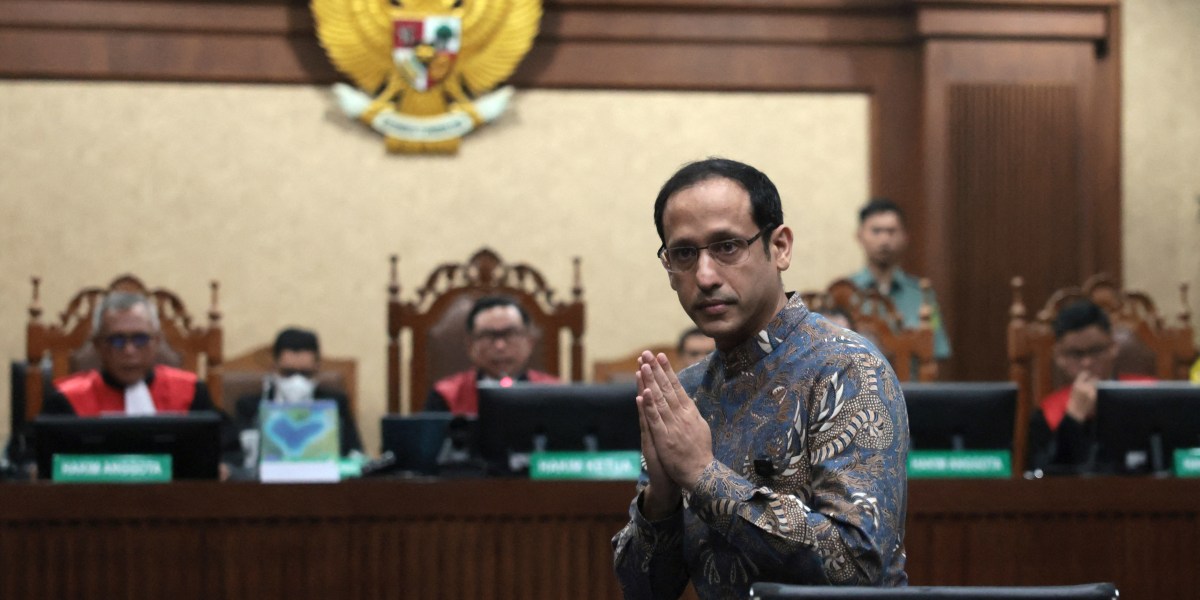
An Indonesian court sentenced Nadiem Makarim, the Gojek co-founder and former education minister, to 10 years in prison after finding him guilty in a corruption case tied to a school Chromebook procurement program. Bloomberg reported that the ruling is being watched closely by investors and policy professionals because it touches on how Indonesia treats disputed government decisions under anti-graft law.
The Central Jakarta District Court issued the sentence Tuesday, Bloomberg reported. Prosecutors had asked for an 18-year prison term.
Judges also ordered Makarim to pay more than 800 billion rupiah, or about $44.7 million, in financial penalties, according to Bloomberg. If he does not pay, he faces an additional five years in prison, the report said. Prosecutors had sought more than 5.7 trillion rupiah in penalties.
The case centered on the Education Ministry’s purchase of more than 1 million Chromebooks using Google’s ChromeOS for Indonesian schools from 2020 to 2022, Bloomberg reported. Prosecutors accused Makarim of approving an overpriced laptop and software program, disregarding internal assessments and receiving 809 billion rupiah as an alleged reward connected to the procurement.
According to Bloomberg, prosecutors pointed to Google’s investment in Makarim’s former company as evidence of a conflict of interest. Makarim, 41, denied the charges.
His defense argued that the government paid below-market prices and that the internal evaluations cited by prosecutors were out of date given the pressures schools faced during the Covid-19 pandemic, Bloomberg reported. His lawyers also said the alleged benefit was tied to ordinary administrative restructuring before an initial public offering and did not go to Makarim personally.
Bloomberg reported that Makarim’s lawyers also challenged the prosecution’s case on intent and enrichment. They argued prosecutors had not shown corrupt intent, personal gain or a direct connection between the school laptop program and Google’s investment in Gojek-linked entities.
Outside the court, dozens of supporters greeted Makarim before the hearing, Bloomberg reported. Many were Gojek drivers wearing the company’s green jackets. Supporters prayed with him, hugged him and shook his hand, and some sang in Indonesian calling for his release, according to the report.
Makarim, a Harvard Business School graduate, wore a batik shirt in court as judges read from sections of a decision running more than 1,100 pages, Bloomberg reported. The hearing lasted more than four hours.
The conviction comes amid broader debate over legal certainty in Indonesia, Southeast Asia’s largest economy, Bloomberg reported. Recent corruption cases have drawn criticism from those who say Indonesian courts risk treating business failures or contested policy choices as crimes.
Bloomberg cited recent sentences for former executives of state-backed venture capital firms over failed investments in agritech startup TaniHub as one case critics have challenged. The report also pointed to the jailing of former Trade Minister Thomas Lembong over sugar import permits from a decade earlier; Bloomberg reported he was later released after President Prabowo Subianto granted abolition.
Makarim left Gojek in 2019 to join the cabinet of then-President Joko Widodo, Bloomberg reported. He has warned that the prosecution could discourage professionals from taking public jobs and unsettle investors concerned about Indonesia’s legal climate.
This story draws on original reporting from Fortune.