
Hormuz shipping slows as U.S.-Iran strikes lift oil prices
Ship traffic through the Strait of Hormuz has thinned after new U.S. and Iranian attacks, raising pressure on oil markets and global trade.
By Maya Lindqvist · Senior Technology Correspondent
3 min read
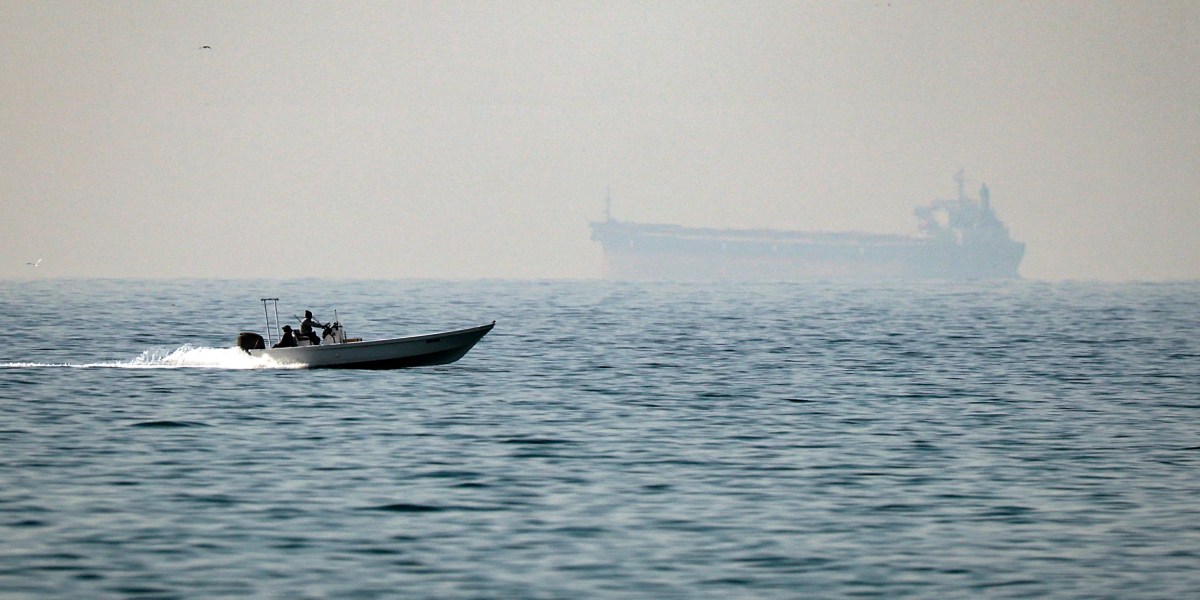
Ship traffic through the Strait of Hormuz has slowed sharply after a new exchange of U.S. and Iranian attacks, adding strain to a waterway central to global oil shipments. Market reports cited by Fortune showed crude prices rising as traders weighed the risk of a longer disruption.
Fortune reported that the U.S. struck 140 targets in Iran overnight during the weekend. Iran responded by targeting sites in Jordan, Bahrain, Kuwait and Oman, according to the same report, which cited live coverage from the BBC.
The Joint Maritime Information Center told the Financial Times that a southern route near Oman’s coast was still available to commercial vessels. The center said U.S. forces were ready to protect lawful commerce and freedom of navigation under international law, while also describing the threat level as “severe,” according to the Financial Times.
Traffic data pointed to a sharp pullback in normal movement through the strait. Shipfinder.com data cited by Fortune showed 23 transits in the previous 24 hours, while Bloomberg reported that some vessels still passing through the area were switching off their transponders.
Oil rises as risk builds
Brent crude reached $77 a barrel Monday morning, up from $71 a week earlier, according to Fortune. The move came as the report described markets as mostly lower, with U.S. stock futures down modestly and Asian shares under heavier pressure.
Fortune energy editor Jordan Blum reported that President Donald Trump faces a narrowing window to ease the crisis before the November midterm elections. Blum wrote that nearly 1 billion barrels of global petroleum reserves have been drawn down and are not being replaced, while refineries remain offline and China has not resumed large-scale oil imports.
Energy analysts told Fortune that even if the fighting does not return to full scale, they do not expect the Strait of Hormuz to regain normal shipping volumes for many months. Those analysts said oil could rise again toward $90 a barrel, though they did not expect the extreme $200-a-barrel scenarios feared in earlier market discussions.
Fortune’s Jason Ma reported that traders may be underpricing the danger. Sal Mercogliano, a Campbell University professor who studies military and maritime history, told Fortune that the U.S. and Iran are in what he called an “undeclared naval war” that could escalate.
Iran signals a long standoff
Sanam Vakil, Middle East director at Chatham House, told the Financial Times that Iran appears to be betting Trump will avoid higher-risk action and that Tehran can withstand a period of low-level conflict. Vakil described the situation as a “quagmire.”
Mohammad Bagher Ghalibaf, speaker of Iran’s parliament, posted on X on Sunday that “the era of one-sided deals is OVER,” according to Fortune. He wrote that Iran had warned its adversaries to keep their word or “pay the price.”
The shipping slowdown shows how quickly the conflict can spill into energy markets, even without a formal closure of the strait. For now, the Financial Times reported that one route remains open, but maritime authorities and analysts cited by Fortune said the threat to normal commerce remains elevated.
This story draws on original reporting from Fortune.