
Hegseth warns NATO allies of Pentagon review tied to Europe defense role
The U.S. defense secretary told NATO ministers that some allies could fail a six-month review of American forces in Europe.
By Maya Lindqvist · Senior Technology Correspondent
3 min read
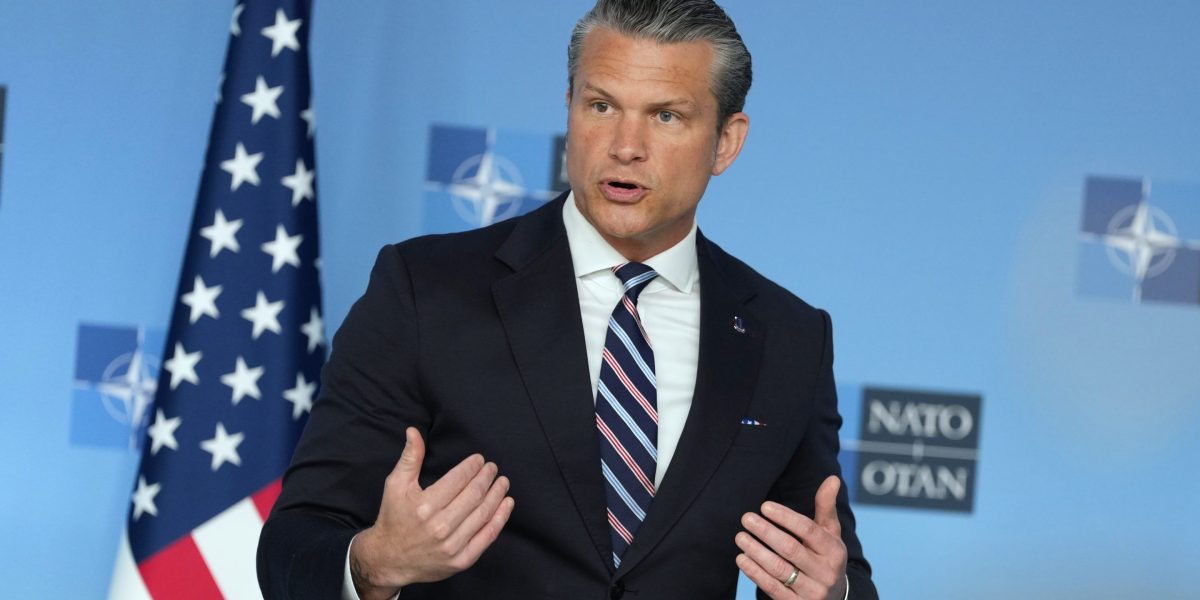
U.S. Defense Secretary Pete Hegseth used a NATO defense ministers’ meeting in Brussels on Thursday to announce a six-month Pentagon review of American forces in Europe, the Associated Press reported. The review could affect how the United States positions its military on the continent as Washington presses European allies to take a larger role in their own defense.
Hegseth told NATO counterparts the assessment would judge whether the alliance is shifting quickly enough toward Europe leading the defense of Europe. “It’s a review that some countries will fail and others will pass with flying colors,” Hegseth said, according to AP.
The warning added to uncertainty among European allies and Canada, AP reported, after U.S. officials and senior military officers had said they would coordinate closely with partners as the United States draws down some support. AP said the Trump administration recently told allies it would provide less military help if a NATO member came under attack, forcing them to look for equipment to fill possible gaps.
Hegseth criticizes allies over access and policy
At NATO headquarters, Hegseth also criticized European allies that denied U.S. forces access to bases, overflight routes or other support for strikes on Iran, AP reported. He called those refusals “shameful” and said the review would examine whether U.S. forces can count on access and overflight when needed.
AP reported that defense ministers and military officers listened quietly as Hegseth attacked European policies on migration, gender equality, climate change and defense spending. He said Europe had focused on those issues while defense budgets fell, according to AP.
AP said Hegseth’s remarks overstated the current situation in Europe. NATO Secretary-General Mark Rutte said Thursday that European allies and Canada spent $90 billion more on defense last year, a 20% increase from 2024, AP reported. AP also noted that many European countries have tightened border policies after accepting large numbers of migrants and asylum seekers more than a decade ago.
A brief appearance before Ukraine talks
AP described the Brussels stop as a rare visit to NATO by Hegseth, who skipped a meeting in February. He left before the defense ministers’ gathering ended and before Ukrainian President Volodymyr Zelenskyy was expected to ask allies for more weapons, according to AP.
Speaking to reporters at Brussels airport before flying back to the United States, Hegseth said he heard many countries commit to meeting NATO targets. He added that “a few outliers” remained and said Washington would be clear with them during the review, AP reported.
The review follows earlier U.S. signals that it would no longer make certain assets available in a NATO crisis, including an aircraft carrier and support ships, aerial refueling planes and dozens of fighter jets, AP reported. NATO’s supreme allied commander, an American, has been working on backup plans for Europe’s defense after that June 3 signal from Washington, according to AP.
The Trump administration says it needs to plan for two simultaneous conflicts and wants more resources available in case of a clash with China in the Indo-Pacific region, AP reported. Under NATO’s Article 5, allies agree that an attack on one is an attack on all, though AP noted the treaty does not require any particular ally to provide military support.
Nuclear role remains in place
AP reported that the United States has NATO’s largest armed forces and does not plan to remove its nuclear weapons from Europe. After Thursday’s meeting, NATO’s Nuclear Planning Group issued its first statement in 19 years, saying the alliance’s strategic nuclear forces remain the “supreme guarantee” of allied security.
Rutte played down the effect of the U.S. shift, AP reported, describing NATO’s force planning system as a planning tool rather than a prediction of what would happen in war. He said some European countries are already filling gaps, while other areas still need work.
This story draws on original reporting from Fortune.