
Anthropic CEO keeps one direct report as AI firms test management models
Dario Amodei says Anthropic’s structure lets him focus on strategy while his sister and cofounder manages other senior leaders.
By Hana Yoshida · Markets Reporter
3 min read
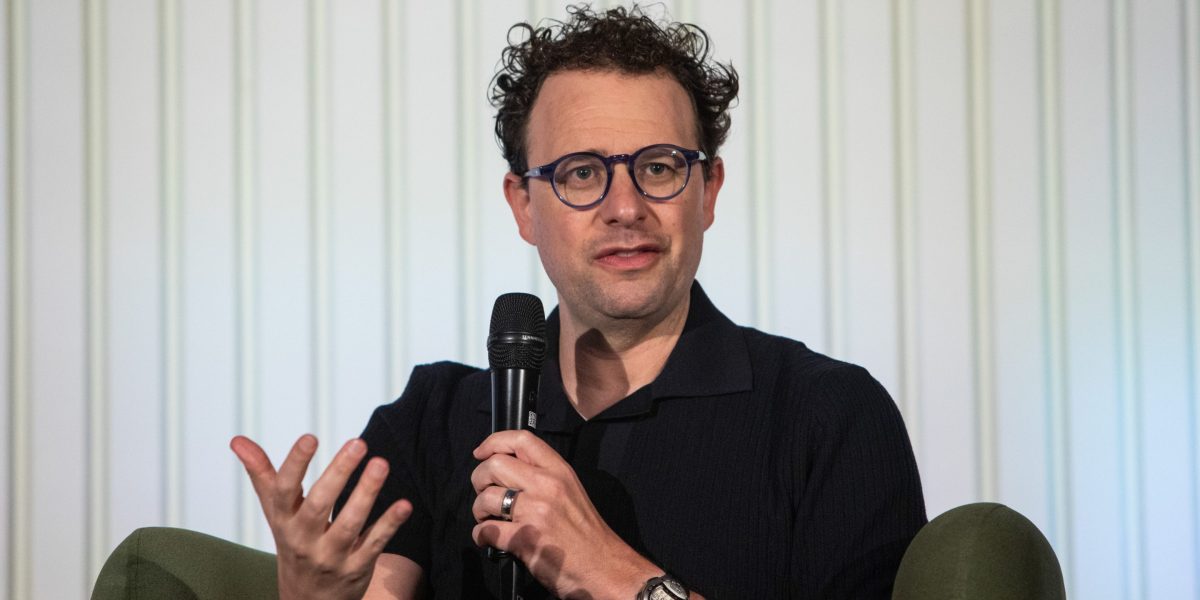
Anthropic CEO Dario Amodei has kept an unusually narrow management role while building one of the most closely watched AI companies, Fortune reported. The arrangement matters because Anthropic, the maker of Claude, is valued at $965 billion and is preparing for an IPO, according to Fortune.
Amodei directly manages only his chief of staff, Fortune reported. Other senior leaders report to Anthropic president Daniela Amodei, his sister and cofounder, who oversees the rest of the company’s leadership chain.
Dario Amodei told Bloomberg the setup is “incredibly freeing” and said it allows him to do his work more easily than he otherwise could. He also said the structure does not mean he works less than other executives, pointing to pressures such as high-stakes Pentagon negotiations over AI safety, according to Fortune.
The model is an outlier among large-company leaders. Harvard Business School research cited by Fortune found that the average CEO manages about 10 direct reports.
A narrow chain at a fast-growing AI company
Anthropic had 2,300 employees at the end of 2025, Fortune reported. Its structure places much of the company’s internal management under Daniela Amodei while Dario Amodei focuses on areas that include strategy and external demands.
Eric Y. Lee, an assistant professor of management at Texas A&M University’s Mays Business School, told Fortune that the right number of direct reports depends on a company’s size and complexity. Lee said Anthropic likely has a less complex top-management structure than Nvidia, which can make a narrower reporting setup easier to sustain.
Fortune contrasted Anthropic’s setup with Nvidia CEO Jensen Huang’s approach. Huang has roughly 60 direct reports, one of the broadest spans among Fortune 500 CEOs, according to Fortune.
Huang told Fortune in 2024 that he favors large-group sessions over traditional one-on-one meetings. He said executives can learn from feedback given to colleagues and can benefit from seeing him work through problems in real time.
AI adds pressure to rethink management
The question of how many people a manager should oversee has gained new attention as AI tools push companies to reconsider layers of bureaucracy, Fortune reported. U.S. Bureau of Labor Statistics data cited by Fortune shows the average American manager now supervises 12 direct reports.
Fortune reported that management experts see tradeoffs in both broad and narrow structures. Wider spans of control can reduce bureaucracy and improve communication, but they can also strain executives and raise concerns about micromanagement. Narrower setups can give CEOs more room for strategy and outside relationships, but they depend on trust in the managers below them.
JPMorgan Chase CEO Jamie Dimon has argued for small, empowered teams. In his annual shareholder letter, cited by Fortune, Dimon wrote that teams assigned to specific problems should be small and authorized to make decisions quickly.
Meta CEO Mark Zuckerberg has used a different model, Fortune reported. Zuckerberg reportedly manages a “core army” of 25 to 30 employees and said last year that people who report to him need to manage themselves, while adding that management remains important for the broader company.
This story draws on original reporting from Fortune.