
Goldman could gain beyond fees in SpaceX IPO, Fortune reports
SpaceX’s planned IPO may carry record-low bank fees by percentage, while share allocations could produce larger trading-related rewards.
By Maya Lindqvist · Senior Technology Correspondent
3 min read
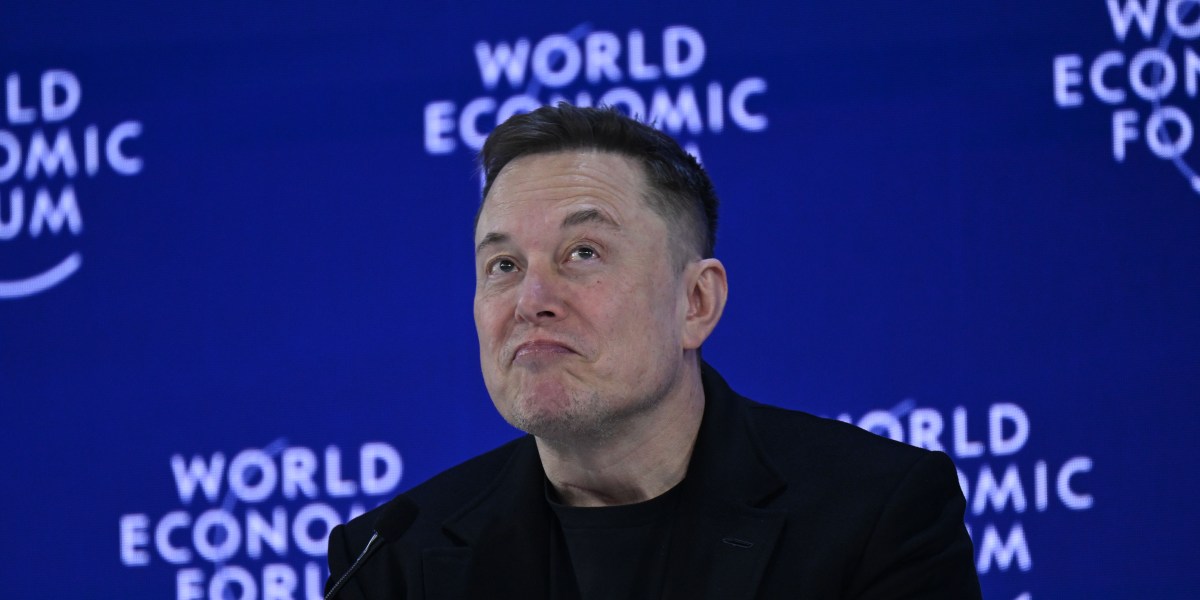
SpaceX’s planned public offering is expected to pay underwriters one of the smallest fee percentages ever seen in a conventional U.S. IPO, Fortune reported. The deal could still deliver Wall Street a record dollar payout because of the scale of the offering and the way banks benefit from allocating sought-after shares.
Fortune reported that SpaceX is expected to pay a gross spread of 0.75% or less to its underwriters. Jay Ritter, a University of Florida professor who studies IPOs, told Fortune that would match the lowest percentage on record for a conventional IPO.
For very large offerings, banks often receive between 1% and 3%, according to Fortune. Facebook’s 2012 IPO and Uber’s 2019 debut carried spreads of about 1.1% to 1.3%, Fortune reported.
The only other U.S. IPO with a spread that low, Ritter told Fortune, was General Motors’ 2010 return to the public market after its government bailout. Ritter said W.R. Hambrecht & Co. proposed auctioning GM shares for a 0.75% fee, and Goldman Sachs matched that rate to win the assignment.
SpaceX said in its latest amended S-1 that it plans to sell 555.6 million shares at $135 each, raising $75 billion and seeking a $1.75 trillion valuation, Fortune reported. The banks also have a 15% overallotment option, which Fortune said would lift the sale to 639 million shares and just over $86 billion if used in full.
That would be more than three times Alibaba’s $25 billion 2014 IPO, which Fortune said remains the largest U.S.-exchange IPO to date. At a 0.75% spread, the SpaceX underwriters would share about $646 million in fees, Fortune reported, compared with roughly $300 million for Alibaba, less than $100 million for Uber and about $200 million for Meta.
The underwriting group includes Goldman Sachs, Morgan Stanley, Allen & Co., William Blair, Societe Generale, Santander and Mizuho, according to Fortune. Ritter told Fortune that smaller firms may receive share allocations mainly for retail customers, with fees divided based on each bank’s allocation.
Fortune reported that the larger opportunity may come from “soft dollars,” or trading commissions above execution costs that clients direct back to banks. Ritter said money managers that receive underpriced IPO shares often return about 30% of first-day gains to underwriters through those arrangements, with the lead-left bank receiving much of the benefit.
Goldman Sachs is listed as the lead-left underwriter on SpaceX’s prospectus, Fortune reported. Morgan Stanley, BofA Securities, Citigroup and J.P. Morgan appear after Goldman as joint book-running managers.
Ritter told Fortune that Goldman will have the main authority to decide which institutional clients receive most of the shares. He said the joint book-runners should receive above-average allocations and a larger share of fees, but less control over where the shares go.
Fortune reported that SpaceX plans to direct an estimated 30% of shares to retail channels, compared with a typical 5% or less. The recipients include Charles Schwab, Morgan Stanley’s E*Trade and Robinhood, according to Fortune.
Ritter said a first-day gain is likely but not guaranteed. He told Fortune that about three-quarters of IPOs close their first session above the offer price, with an average increase of 19%.
SpaceX also reserved 5% of shares at the $135 offer price for employees, executives’ friends and family, and business contacts, according to the amended S-1 cited by Fortune. Ritter told Fortune that such a reserve suggests Elon Musk would want an initial gain, because employees would be displeased if they lost money immediately.
Fortune reported that those reserved-share buyers are exempt from lockup provisions that apply to pre-IPO shareholders, including Musk and other executives. That means they can sell once trading begins on Nasdaq, according to Fortune.
If SpaceX rose 20% on its first day to $162, investors receiving IPO shares would record $17.3 billion in paper gains, Fortune calculated. Fortune said that would surpass Alibaba’s $8 billion record for money left on the table, and a 30% soft-dollar return could produce more than $5 billion for Wall Street, with Goldman positioned to benefit most, according to Ritter.
This story draws on original reporting from Fortune.