
Goldman says AI spending is reshaping the market cycle
Goldman Sachs says a new capex boom tied to AI, energy and defense is replacing the buyback-heavy era that followed the financial crisis.
By Sofia Marchetti · World Affairs Correspondent
3 min read
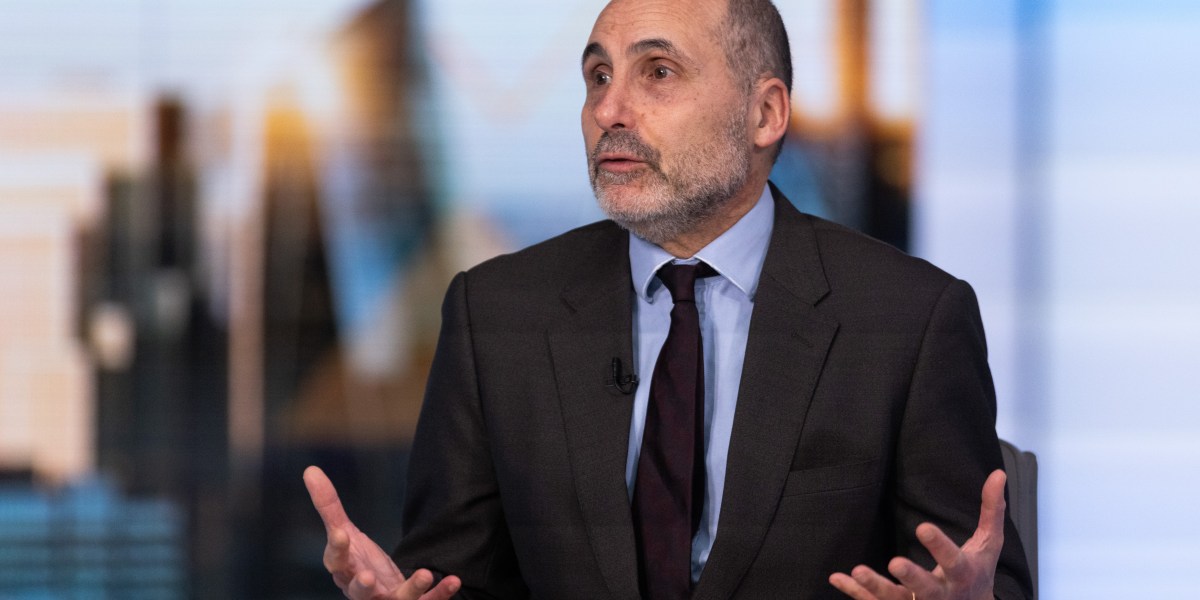
Goldman Sachs says global markets have entered a new investment cycle driven by heavy capital spending, higher real rates and a fractured trade order. The shift matters because the cash that companies once used for cheap borrowing and stock buybacks is increasingly being directed toward data centers, chips, power systems and other AI infrastructure.
In a research paper published Tuesday, Goldman chief global equity strategist Peter Oppenheimer and his team described what they call a “post modern cycle.” Their view is that the long period defined by low inflation, global supply chains and capital-light growth has given way to a more expensive, physical buildout across several industries.
From global labor arbitrage to shareholder returns
Goldman’s framework divides the postwar economy into three periods. The pre-1980 period was marked by inflation and volatile returns, while the era from roughly 1982 through the pandemic benefited from falling inflation, deregulation, lower corporate taxes and expanding globalization, according to the firm.
OECD data cited by Goldman show labor’s share of national income fell in 26 of 30 advanced economies between 1990 and 2009. The median labor share dropped from 66.1% to 61.7% during that span, while world trade grew at twice the pace of global GDP from 1995 to 2010, according to the report.
After the 2008 financial crisis, Goldman says the real economy recovered weakly while equity markets rallied. The S&P 500 rose more than 400% from March 2009 to 2022, Fortune reported, as companies used near-zero interest rates to fund stock repurchases rather than broader investment in factories, workers or supply chains.
Goldman’s strategists wrote that the strongest returns in that period came from long-duration growth stocks, while older industrial sectors, real assets and value stocks trailed. Fortune reported that the S&P 500 technology sector returned more than 1,000% in the decade after the financial crisis, while U.S. manufacturing employment did not regain its pre-crisis level.
AI buildout changes corporate spending
Goldman says the pattern began to change around 2022, as pandemic supply disruptions helped revive inflation and interest rates climbed at the fastest pace since the Volcker era. At the same time, the spread of large language models increased demand for computing infrastructure.
The five largest hyperscalers named by Goldman — Amazon, Meta, Google, Microsoft and Oracle — are expected to spend about $755 billion on capital expenditures in 2026, up 84% from 2024. Consensus forecasts cited by the firm put their 2027 capex at about $920 billion.
S&P 500 companies reported 38% year-over-year capex growth in the first quarter of 2026, compared with 1% growth in buybacks, according to Goldman. The firm wrote that demand for capital is rising for the first time in many decades.
Other market figures have described the same turn in industrial terms. Apollo Global Management chief economist Torsten Slok has called it an “industrial renaissance,” while the Trump administration has used the phrase “manufacturing renaissance,” according to Fortune.
Investors are being pointed toward capex winners
Goldman’s paper is aimed at investors and recommends exposure to companies that benefit from the capital spending cycle. Its basket includes about 50 global companies tied to AI infrastructure, energy security, power, defense and industrial investment, including ASML, Lam Research, Schneider Electric, Broadcom and Vistra.
That group is up roughly 25% this year, according to Goldman. The firm says the opportunity set is widening beyond the U.S. mega-cap technology trade that dominated the previous cycle, with industrials, energy, defense, real assets, gold, emerging markets and Japanese equities all contributing to recent global returns.
Goldman does not forecast how much of the new capex cycle will flow to workers. Fortune reported that the outcome will depend on policy choices such as taxes, union strength, antitrust enforcement and immigration, while the current spending surge is already directing large sums toward the physical systems that support artificial intelligence.
This story draws on original reporting from Fortune.