
GM targets grid storage growth with sodium-ion battery push
GM says sodium-ion batteries and vehicle-to-grid tools could help it serve data centers, utilities and EV owners facing higher power costs.
By Hana Yoshida · Markets Reporter
3 min read
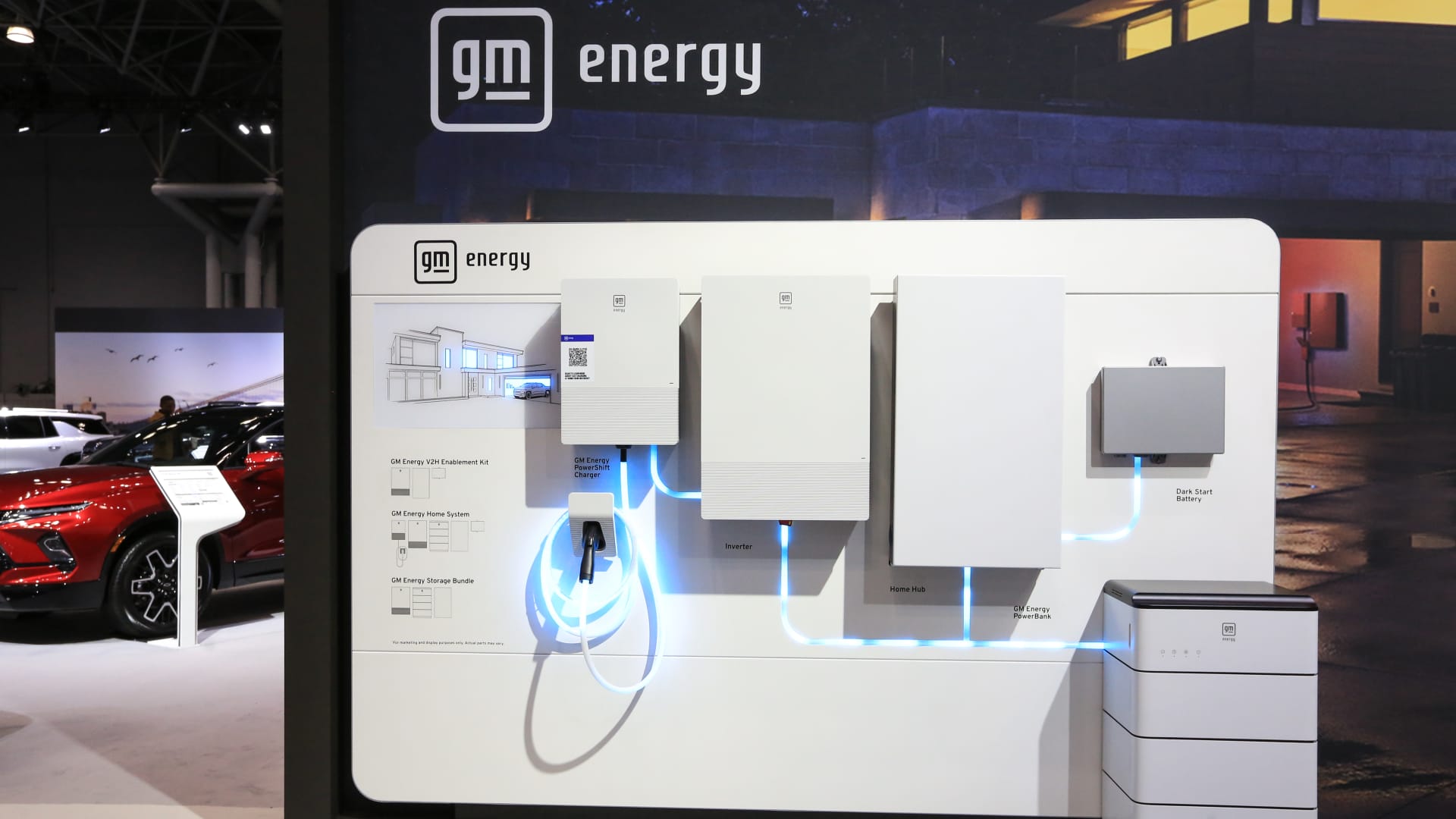
General Motors said Tuesday it is widening its energy business with plans for sodium-ion batteries, expanded vehicle-to-grid services and new charging support for electric vehicle owners. The push ties GM’s battery investments to rising power demand from artificial intelligence data centers and higher electricity bills for households.
The Detroit automaker said it is working with Denver-based Peak Energy to develop sodium-ion battery cells for stationary storage. GM said it expects the partnership to deliver cells for customer use after 2028.
Kurt Kelty, GM’s vice president of battery and sustainability, said in a company blog post that sodium-ion storage systems could run without active cooling and with less system complexity. GM said eliminating cooling needs could reduce both upfront equipment costs and operating expenses for large storage systems.
GM said sodium-ion batteries function in a broadly similar way to lithium-ion batteries, while offering potential advantages across wider temperature ranges and longer cycle life. Kelty said Peak Energy has already shown that the chemistry can support lower costs and improved reliability.
The company did not disclose financial terms of the Peak Energy partnership. A GM spokesperson declined to comment on the cost or other details of the agreement.
Peak Energy, founded in 2023, lists former employees of Tesla, Lockheed Martin and battery maker Northvolt among its leadership team, according to the company’s website.
GM said sodium-ion cells are part of a broader effort to use several battery chemistries for energy storage. The automaker said it is also working with companies including Redwood Materials to reuse large EV batteries in storage systems, and it is producing lower-cost lithium iron phosphate batteries through its Ultium Cells joint venture with LG Energy Solution.
Ultium Cells has about 90 gigawatt hours of production capacity at two battery plants, in Ohio and Tennessee, according to GM. In March, Ultium Cells announced a $70 million investment to begin making lithium iron phosphate batteries for energy storage systems at the Tennessee site.
GM has spent billions of dollars in recent years on EV battery research, development and production capacity. The company is now seeking more uses for that capacity after all-electric vehicle demand grew more slowly than automakers had expected.
Ford Motor and other automakers have also turned more attention to energy storage as a way to use battery plant capacity in the United States, according to CNBC.
For vehicle owners, GM said it plans to expand systems that let an EV send power back to the grid during peak demand or supply electricity to a home. The company said those tools could help customers cut energy costs and reduce strain on the grid.
GM said it is seeking utility partnerships across the country for vehicle-to-grid services and is already working with utilities in California and Michigan.
U.S. residential electricity prices have climbed nearly 48% since January 2020, rising from 12.76 cents per kilowatt-hour to 18.83 cents in March 2026, according to the U.S. Energy Information Administration. The agency has forecast prices of about 19 cents per kilowatt-hour starting in March 2027.
GM also announced an “Energy Pass” for EV customers, aimed at making public charging easier, including at Tesla Superchargers. The company said every all-electric vehicle it builds starting with the 2027 model year will include a North American Charging Standard port.
This story draws on original reporting from CNBC.