
Fort Lauderdale makes its case as South Florida’s quieter business hub
Fort Lauderdale’s downtown chief says the city’s growth rests on broad investment, waterways and the legacy of H. Wayne Huizenga.
By Maya Lindqvist · Senior Technology Correspondent
3 min read
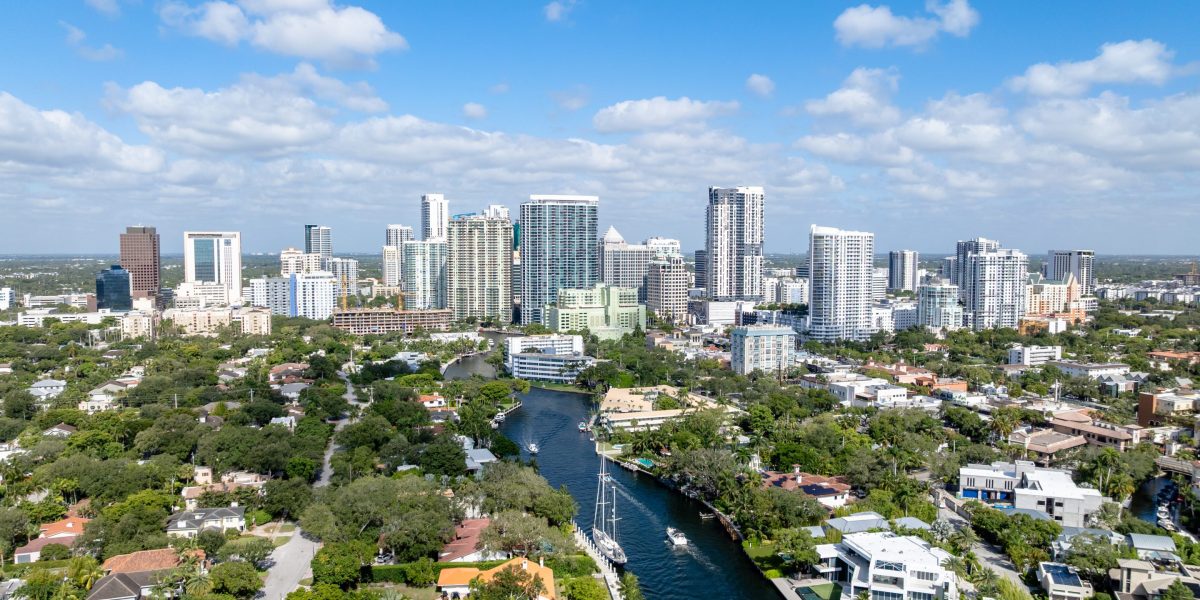
Fort Lauderdale is presenting itself as a South Florida business center that does not rely on a single billionaire promoter. In a Fortune commentary published June 12, Jenni Morejon, president and CEO of the Fort Lauderdale Downtown Development Authority, argued that the city’s investment story has been building for years with less public attention than Miami or West Palm Beach.
Morejon said she is often asked whether Fort Lauderdale needs its own version of Ken Griffin or Stephen Ross, two prominent figures associated with business development in nearby markets. Her answer was that Fort Lauderdale’s growth comes from a wider base of investors, executives and residents rather than one marquee backer.
She pointed to H. Wayne Huizenga as the central figure in Fort Lauderdale’s modern business history. According to Morejon, Huizenga, South Florida’s first homegrown billionaire, built Waste Management, Blockbuster and AutoNation from Fort Lauderdale headquarters.
Huizenga also owned the Miami Dolphins and founded the Florida Marlins and Florida Panthers franchises, Morejon wrote. He died in 2018, leaving what she described as a lasting imprint on Fort Lauderdale without turning the city into a personal branding campaign.
Morejon also cited Rajiv Jain, chairman of Fort Lauderdale-based GQG Partners, as an example of the city’s executive base. She wrote that Jain has described Fort Lauderdale as a place where business leaders can remain close to Miami while avoiding its intensity.
Waterfront assets are a major part of the city’s case, according to Morejon. She said Fort Lauderdale has 165 miles of navigable waterways and more than $12 billion in waterfront investment.
The Fort Lauderdale International Boat Show, which Morejon called the world’s largest in-water boat show, draws more than 100,000 visitors and produces nearly $1.8 billion in regional economic impact over five days, she wrote. Morejon also said more superyachts dock in Fort Lauderdale each year than in Miami or West Palm Beach.
The downtown economy has expanded beyond tourism and marine industries, Morejon said. She wrote that Fort Lauderdale’s two-square-mile urban core generates $43 billion in annual economic impact, with nearly half of jobs in finance, law, technology and professional services.
Morejon said that share is higher than in West Palm Beach, Austin or Nashville. She also highlighted Hines’ T3 office building in FAT Village, part of a $512 million mixed-use redevelopment that she said will include downtown Fort Lauderdale’s first new ground-up office building in five years.
Luxury retail and hospitality are also moving into the area, according to Morejon. She wrote that an authorized Rolex retailer recently won unanimous approval for a five-story flagship on Las Olas Boulevard, near the area’s first planned five-star boutique hotel.
Morejon framed civic investment as another sign of momentum. She said Huizenga Park reopened earlier this year after a $15 million renovation backed by more than 100 donors influenced by Wayne Huizenga’s legacy.
Downtown Fort Lauderdale is also attracting more families, according to Morejon. She wrote that the number of families with children under 13 living downtown has risen 83% since 2018, a trend she described as evidence that residents are putting down roots as the city grows.
This story draws on original reporting from Fortune.