
Ford tops mass-market quality study as recall costs remain in focus
Ford led J.D. Power’s initial quality ranking for mainstream brands, while CEO Jim Farley said the automaker must prove gains through coming launches.
By Sofia Marchetti · World Affairs Correspondent
3 min read
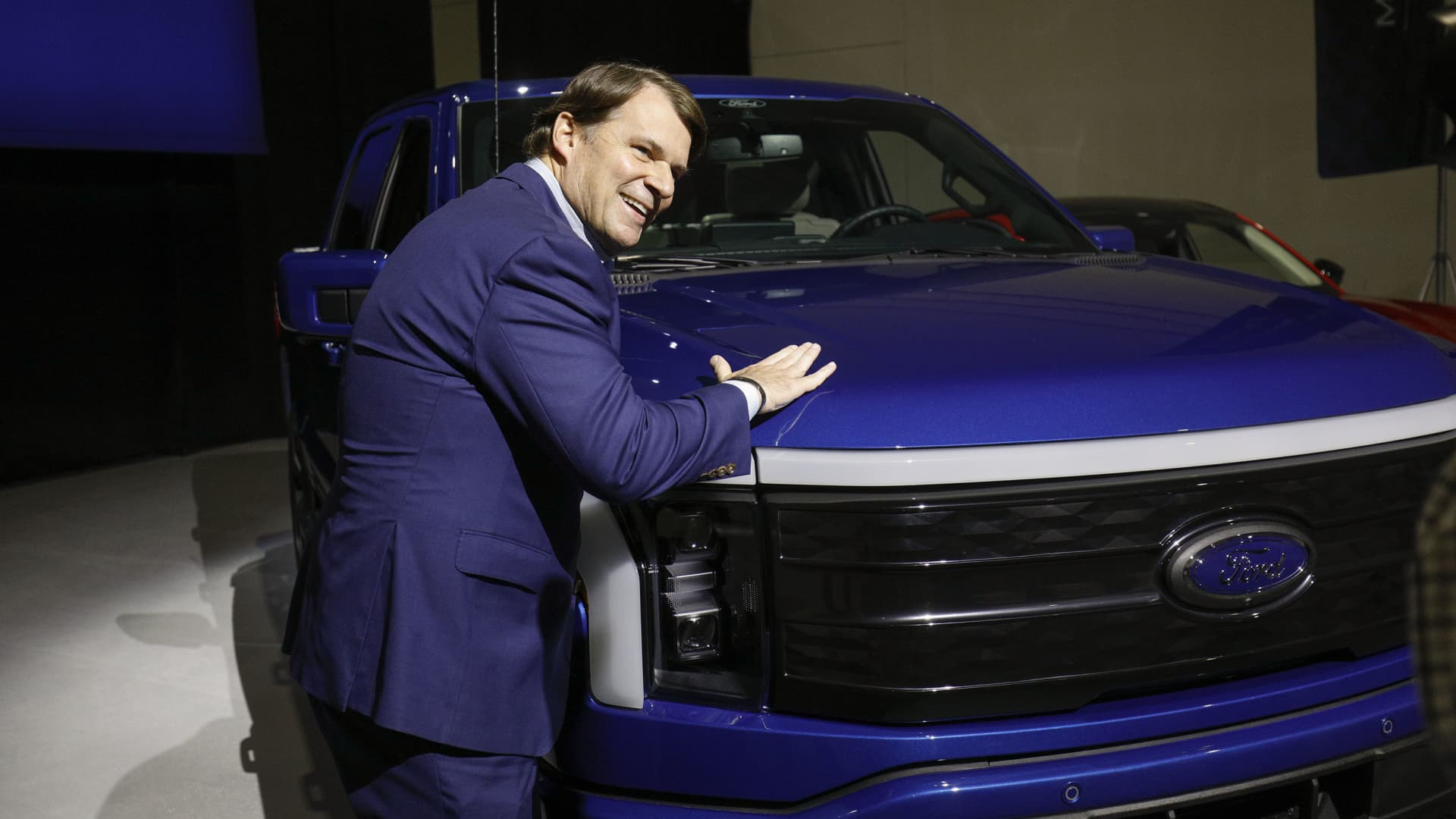
Ford has landed at the top of J.D. Power’s U.S. initial quality ranking for mass-market brands, giving the automaker a public marker of progress after years of costly recalls. The result matters because CEO Jim Farley is preparing Ford for a broad North American product refresh while investors keep pressing for lower warranty costs.
Farley told CNBC that Ford has drawn lessons from its quality problems and must apply them as it introduces new vehicles across its North American lineup over the next couple of years. He said the company’s upcoming launches need to be executed without mistakes.
Ford has led the U.S. in recalls since 2024, CNBC reported, citing federal recall data and company history. So far in 2026, the automaker has issued 53 recalls covering more than 12 million vehicles, after 153 recalls involving 13 million cars and trucks in 2025, according to National Highway Traffic Safety Administration data cited by CNBC.
Initial quality improves
J.D. Power named Ford the top mainstream brand in its 2026 U.S. Initial Quality Study, which measures owner-reported problems during the first 90 days of ownership. Ford said it was the first time since 2010 that the brand led mass-market automakers in the study.
Ford ranked third among all brands, behind Porsche and Genesis, and ahead of Lexus, according to J.D. Power. CNBC reported that Ford improved in nearly every category measured, including software, infotainment and powertrains.
Ford shares rose 2% after the J.D. Power results were released June 25, CNBC reported, making it the company’s second-best trading day of the month.
Farley, who spent nearly 19 years at Toyota before joining Ford, told CNBC he was proud that an American automaker could lead on initial quality but said the company still has work to do. He said Ford must cut warranty costs and future recalls while improving its reputation for durability.
Warranty costs under scrutiny
The gains come after quality problems weighed on Ford’s earnings during Farley’s nearly six years as chief executive, CNBC reported. The company said warranty costs reached $4.8 billion in 2023.
Ford said it lowered warranty and material costs by $1.5 billion in 2025, adjusted for volume and mix, and is aiming for another reduction in 2026. Barclays analyst Dan Levy wrote in a May 15 note cited by CNBC that warranty expenses had been a drag on earnings, and that Ford appeared to have made progress, though more improvement was still needed.
Ford’s recall count continued to rise this week. The company recalled 741,195 SUVs and F-150 pickups from model years 2018 through 2021 over a park system issue, according to a report cited by CNBC.
Ford’s longer-term quality ratings remain weaker. In J.D. Power’s U.S. Vehicle Dependability Study released in February, Ford and Lincoln ranked 18th and 19th, below the industry average, according to CNBC.
Changes inside Ford
Farley told CNBC that Ford has changed how it looks for problems during vehicle development. The company has hired 350 technical specialists since 2023, added more regular review meetings, worked more closely with suppliers and expanded testing throughout development.
Ford also tied executive compensation more closely to quality measures, CNBC reported, including for executives hired from Whirlpool and Johnson Controls. Farley said Ford brought back experienced engineers after earlier cost-cutting reduced expertise in supply chain, manufacturing and engineering, and said those veterans are helping train artificial intelligence tools used to spot defects.
Farley declined to say when Ford would stop leading the U.S. in recalls, telling CNBC he cannot control issues in older vehicles or competitors’ quality performance. He said the company’s current work should sharply reduce future recalls for current and upcoming products, but that quality will have to be judged over years and through multiple vehicle launches.
This story draws on original reporting from CNBC.