
Ford presses for import penalties as USMCA talks resume
CEO Jim Farley told CNBC that automakers building more vehicles in the U.S. should get better treatment under a revised North American trade deal.
By Daniel Okafor · Business Editor
3 min read
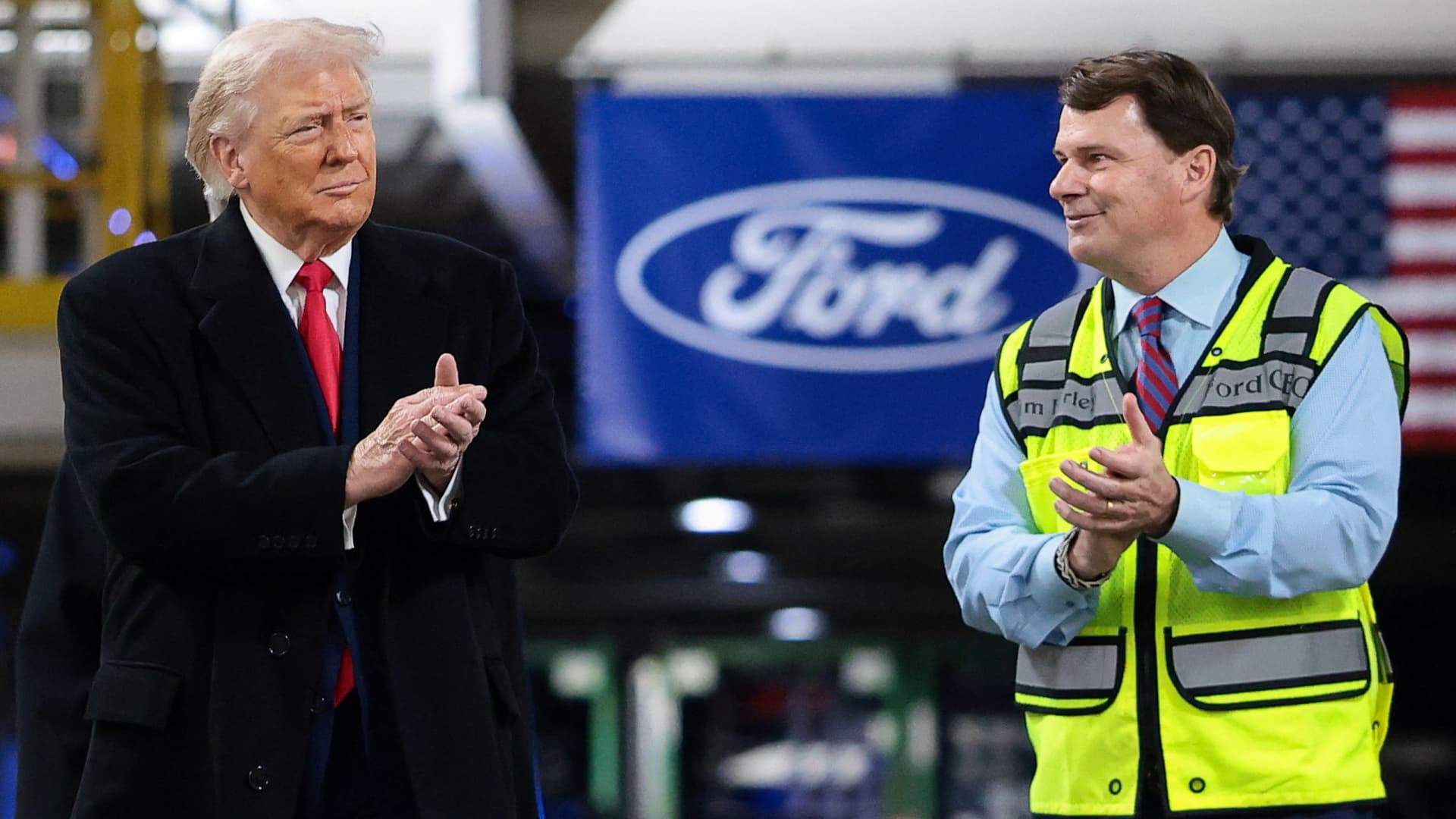
Ford CEO Jim Farley is calling for revised USMCA rules that favor automakers with heavier U.S. production and put more pressure on companies that depend on imports. His push comes as negotiations reopen over the North American trade pact, a process closely watched by an auto industry deeply tied to cross-border supply chains.
Farley told CNBC in a Wednesday phone interview that Ford wants a “more level playing field” in any new agreement. He said companies that build most of their vehicles domestically should benefit, while rivals that sell large numbers of imported vehicles in the U.S. should face more hurdles.
Farley singled out competition from U.S. manufacturers importing from Japan and South Korea, as well as global companies bringing vehicles from those countries. CNBC reported that production in those markets is often less costly because of labor costs.
Ford says its U.S. manufacturing footprint is larger than that of any other automaker. The company reported that it assembled more than 2 million vehicles in the United States last year, including 311,000 vehicles shipped to more than 60 overseas markets.
Ford imported 378,000 vehicles in 2025, equal to 17% of its 2.2 million U.S. sales, according to industry data cited by CNBC. By comparison, General Motors imported 1.17 million vehicles, or 41% of its U.S. sales, while Toyota imported more than 1.19 million vehicles, or 47% of its domestic sales.
Import figures sharpen Ford’s argument
GM and Toyota ranked first and second in U.S. sales, respectively, and were also the two largest vehicle importers in 2025, according to the industry data. Hyundai Motor was the biggest importer from South Korea, followed by GM, CNBC reported.
Hyundai plans to raise the share of its U.S.-sold vehicles that are built domestically to about 80% by 2030, according to CNBC. Ford, meanwhile, is leaning on its lower import share and its unionized U.S. workforce as it presses its case in Washington.
Farley told CNBC that Ford leads in U.S. auto production, imports relatively few vehicles, exports the most and employs the most United Auto Workers members among automakers. He said the company is proud of the balance between what it builds in the U.S. and what it brings in from abroad.
Trade talks raise industry concerns
The Trump administration has chosen not to renew the current trilateral trade pact with Canada and Mexico, CNBC reported. Instead, the administration plans annual reviews that could eventually result in the agreement ending by 2036.
The auto sector accounted for about 18% of U.S. trade with Canada and Mexico last year, according to industry data cited by CNBC. That makes vehicle production, parts sourcing and tariff treatment central issues as the talks proceed.
Automakers and other industry participants are concerned that reopening the agreement could add uncertainty, CNBC reported. That uncertainty could weigh on investment decisions and hiring if companies cannot predict future trade rules.
A coalition of U.S. trade groups representing most automakers, dealers and suppliers said Wednesday that it supports preserving a trilateral framework. In a statement, the groups urged leaders of the United States, Canada and Mexico to reach agreement quickly on an extension that maintains the current partnership, restores preferential treatment for qualifying goods and keeps the stability the industry has relied on for the past six years.
This story draws on original reporting from CNBC.