
FIFA’s 2026 World Cup model shifts revenue up and costs to host cities
FIFA is set to take in an estimated $8.9 billion as U.S. host cities face local bills, shortfalls and weaker-than-forecast hotel demand.
By Sofia Marchetti · World Affairs Correspondent
4 min read
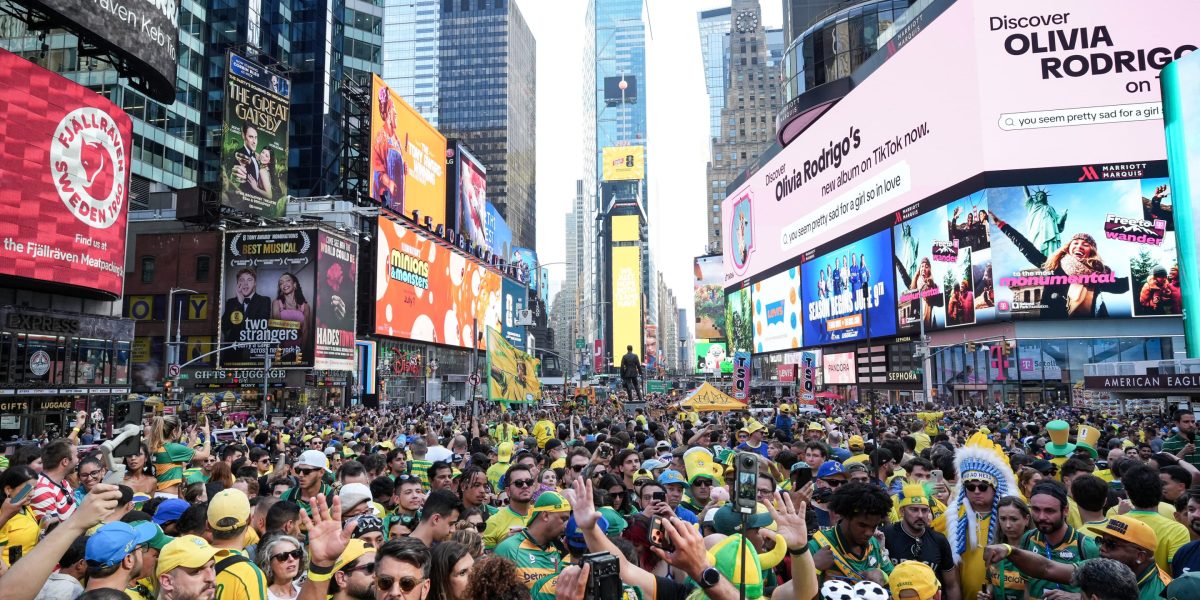
FIFA is expected to collect about $8.9 billion from the 2026 World Cup, while the 11 U.S. host cities could face a combined shortfall of as much as $250 million, according to Fortune and The Independent. The gap stems from a new operating structure that gives FIFA control of major revenue streams while local governments cover many event costs.
Fortune reported that FIFA, rather than a local organizing committee, is running the tournament directly for the first time in World Cup history. Under that setup, FIFA controls money from media rights, sponsorships, ticketing, hospitality and merchandise, while host contracts assign cities and states costs such as security, transportation, stadium work, administration and public fan areas.
The 2026 tournament has also expanded to 48 teams and 104 matches across the United States, Canada and Mexico. FIFA President Gianni Infantino has described it as the equivalent of “104 Super Bowls,” according to Fortune, and the event puts him on track to meet a 2016 campaign promise to sharply increase FIFA’s income.
Ticket pricing adds to FIFA’s haul
Fortune reported that FIFA is using dynamic pricing at a World Cup for the first time, allowing ticket prices to rise or fall with demand. Ticket face values cited by Fortune range from a federation-only $60 entry point to $7,875 for a Category 1 seat at the final.
Victor Matheson, a sports economist at the College of the Holy Cross, told Fortune that FIFA has little incentive to protect long-term relationships with U.S. ticket buyers because the tournament may not return to the country for decades. He said FIFA can “squeeze all of the money” from current demand in a way a local sports team might avoid.
Andrew Zimbalist, an economist at Smith College, told Smith College News that host cities face major expenses without matching revenue. He said cities hosting four to eight games can face costs “well over $100 million” and argued that they are unlikely to gain economically because FIFA keeps the revenue.
New York numbers show the strain
New York City Comptroller Mark Levine estimated this spring that the city would receive no more than $55 million in extra tax revenue even if FIFA’s forecast of 1.2 million regional visitors came true, according to Fortune. Levine’s office projected roughly $70 million in added city spending for policing, emergency management and small-business support.
A spokesperson for Mayor Zohran Mamdani disputed the comptroller’s view, pointing to an expected $1.7 billion in direct spending and saying the estimate did not capture the full value of the event, according to Fortune. Fortune reported that the $1.7 billion figure, and FIFA’s claim of $432 million in state and local tax revenue, refer to the broader New York-New Jersey region rather than New York City alone.
Hotel demand has not matched early expectations in several host markets. The American Hotel & Lodging Association found in early May that 80% of surveyed hoteliers across the 11 U.S. host markets reported bookings below initial forecasts, with many citing visa barriers and geopolitical concerns, according to Fortune.
Fortune also reported that FIFA had reserved large hotel blocks for official use, creating what the hotel association called an artificial early demand signal, before releasing about half that inventory back to the market.
Local sponsors and fan zones
Yahoo Sports reported that FIFA’s commercial rules limited local sponsorship options for host cities by protecting categories tied to FIFA partners. The Independent reported that the 11 U.S. hosts face a combined funding gap of up to $250 million.
New York has chosen free fan zones in all five boroughs, while Fortune reported that Los Angeles and Toronto are charging admission to help cover costs. New Jersey replaced a planned Liberty State Park festival with community events across 21 counties backed by $5 million in economic-development funding, according to Fortune.
Transportation costs have also drawn scrutiny. Fortune reported that New Jersey initially set a $150 round-trip fare from Manhattan to MetLife Stadium before cutting it twice, while NJ Transit said moving fans would cost $62 million and outside grants covered only $14 million.
This story draws on original reporting from Fortune.