
Experts say workplace habits are slowing enterprise AI returns
Panelists at Fortune Brainstorm Tech said companies must invest more in workers and trust, not just AI tools, to get broader business gains.
By Sofia Marchetti · World Affairs Correspondent
3 min read
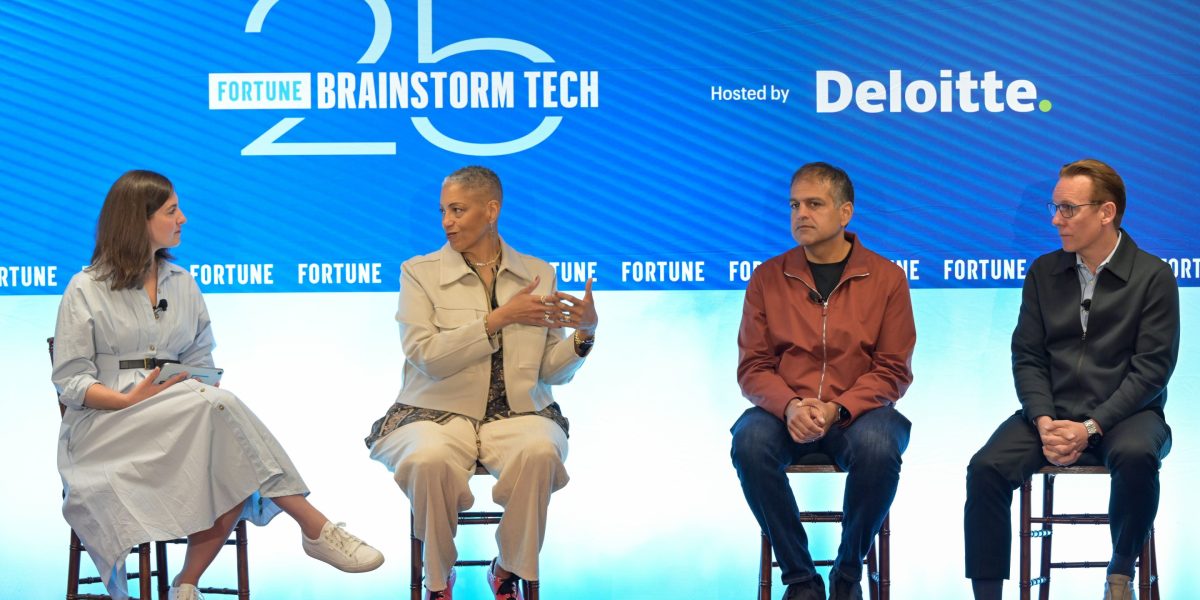
Corporate leaders debating enterprise AI at Fortune Brainstorm Tech said companies are spending heavily on tools while underinvesting in workers asked to change how they work. Their warning points to a practical obstacle for AI adoption: old work habits, weak trust and narrow productivity metrics may limit returns.
Fortune reported that Amazon recently shut down an internal AI leaderboard that tracked “tokenmaxxing,” a practice in which employees sought to show heavy use of AI processing power. According to Fortune, employees found ways to inflate their productivity scores, turning the measure into a flawed proxy for useful work.
At the Aspen, Colorado, conference, panelists said the Amazon episode reflected a wider problem in corporate AI rollouts. They argued that many companies are adding costly technology to existing processes instead of changing how teams make decisions, serve customers or build products.
China Widener, Deloitte’s vice chair of technology, media, and telecommunications, said companies are devoting far more money to technology than to people. “For every dollar spent, only about seven cents is going to humans, and 93 cents is going to the technology,” Widener said, according to Fortune.
Chris Bedi, chief customer officer and enterprise AI adviser at ServiceNow, said most enterprise AI projects remain focused on internal efficiency. Bedi said roughly 90% of use cases target productivity or cost control, instead of revenue growth, according to Fortune.
A PwC study cited during the discussion found that 20% of companies are capturing nearly three-quarters of AI’s total economic value. Panelists tied that uneven result to the gap between deploying software and changing the organization around it.
Bedi urged executives to move beyond basic productivity scorecards that count time saved. He said leaders should focus on broader organizational results, according to Fortune, rather than treating AI success as a count of minutes or hours removed from a task.
Phil Wiser, former executive vice president and chief technology officer at Paramount, proposed a more hands-on model. Wiser said companies could create centralized engineering groups that work directly inside business units, helping teams rethink specific functions instead of leaving each department to apply AI on its own.
Wiser also said younger workers remain wary of AI because they often encounter low-quality AI-generated material in daily life, according to Fortune. He said the industry has struggled to explain how AI improves people’s lives because much of the message centers on corporate profit.
Widener framed the hardest part of adoption as a human problem. She said professionals are being asked to give up methods that may have helped them succeed for two decades, and that executives need to earn trust while explaining how AI supports human capability.
“If you have a trust problem,” Widener said, “you’re going to have a culture problem.”
The panel’s message was that enterprise AI returns depend on management choices as much as technical capacity. Companies that measure usage without changing incentives, training workers and redesigning workflows may find that higher AI activity does not translate into stronger business performance.
This story draws on original reporting from Fortune.