
Electricity bills climb as utilities seek new rate increases
PowerLines says utilities sought $9.4 billion in rate hikes in early 2026 after a record year, with data centers only one factor behind rising bills.
By Daniel Okafor · Business Editor
3 min read
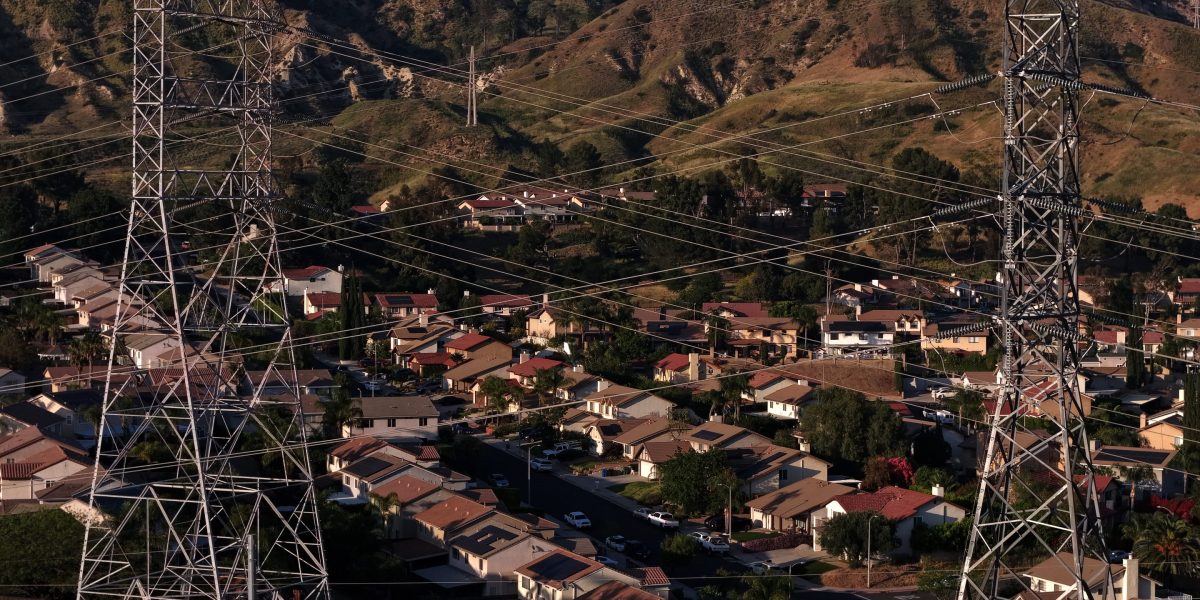
U.S. electricity bills are rising faster than overall inflation, and more increases may be headed to households as utilities press regulators for higher rates. PowerLines, a nonprofit focused on utility regulation, said utilities asked state commissions for $9.4 billion in rate increases in the first quarter of 2026.
Retail electricity prices rose 7% in 2025 and are up nearly 40% since 2021, according to Fortune. The Bureau of Labor Statistics reported wholesale electricity costs were 6.1% higher than a year earlier, nearly twice the broader inflation rate cited by Fortune.
PowerLines said the first-quarter requests followed $31 billion in proposed rate hikes in 2025, a record and more than double the $15 billion sought in 2024. The group said almost half of the 2025 requests were still awaiting approval in early 2026, leaving more potential increases in the pipeline.
Democratic members of the Joint Economic Committee said in a March report that Americans spent an average of $110 more on electricity in 2025 than in 2024. Fortune reported that rising bills have become a political issue for state officials and a focus of local opposition to new data center projects.
Data centers draw scrutiny, but costs vary by region
Charles Hua, founder and executive director of PowerLines, told Fortune that data centers have become the most visible explanation for higher bills, especially in places where they are being built. He said they are not the largest reason bills have increased over the past five years.
PowerLines said utilities in the Western U.S. accounted for $4.4 billion of the $9.4 billion in requested first-quarter rate increases. Southern utilities sought $2.7 billion, while the Northeast accounted for $1.2 billion and the Midwest for $1.1 billion, according to the group.
Hua told Fortune that wildfire damage and risk were major reasons Western utilities sought higher rates. In the South, he pointed to damage from Hurricane Helene in 2024; PowerLines said Georgia Power requested more than $900 million in rate increases after the storm, and Fortune cited reporting that the utility took on hundreds of millions of dollars in debt tied to recovery.
Data centers can still have sharp local effects, according to the reports cited by Fortune. Dominion Energy asked Virginia regulators to approve $70 million in additional revenue next year tied to construction and operation of a 3-gigawatt natural gas plant and related transmission infrastructure for growing power demand, including data centers.
Bloomberg found that electric bills in neighborhoods near data centers rose as much as 267%, according to Fortune. In the PJM Interconnection, which serves 13 states in the Northeast and Midwest, an independent market monitor said data center-driven demand had already raised consumer power bills by $13.8 billion.
Grid spending and utility profits add pressure
PowerLines also pointed to heavy utility capital spending as a driver of bills. Fortune reported that investor-owned utilities’ capital spending plans through 2030 rose 27% over the past year to $1.4 trillion, covering new generation, transmission, repairs and maintenance.
The Edison Electric Institute, a trade group for investor-owned utilities, said its members invested $1.3 trillion over the past decade in grid improvements, according to Fortune. Hua said grid modernization is needed, but he told Fortune that how much of the cost reaches customers depends in large part on utility and regulatory decisions.
Investor-owned utilities provide about three-quarters of U.S. electricity, according to the Energy Information Administration figure cited by Fortune. The Energy & Policy Institute, a watchdog group, said profits at 110 publicly listed utilities rose from $38.8 billion in 2021 to $52.5 billion in 2024, while average profit margins increased from 12.8% of revenue over that period to a preliminary 14.6% in 2025.
Rep. Kathy Castor of Florida, the ranking Democrat on the House Energy and Commerce Subcommittee on Energy, said at a recent hearing that grid-enhancing technologies could help cut costs. She said barriers remain because utility incentives reward selling more power and making large capital investments rather than using the grid more efficiently.
This story draws on original reporting from Fortune.