
Economist says AI is not the main culprit in Gen Z job struggles
Apollo’s Torsten Slok says weak hiring for recent graduates began before ChatGPT and reflects broader economic pressures.
By Maya Lindqvist · Senior Technology Correspondent
3 min read
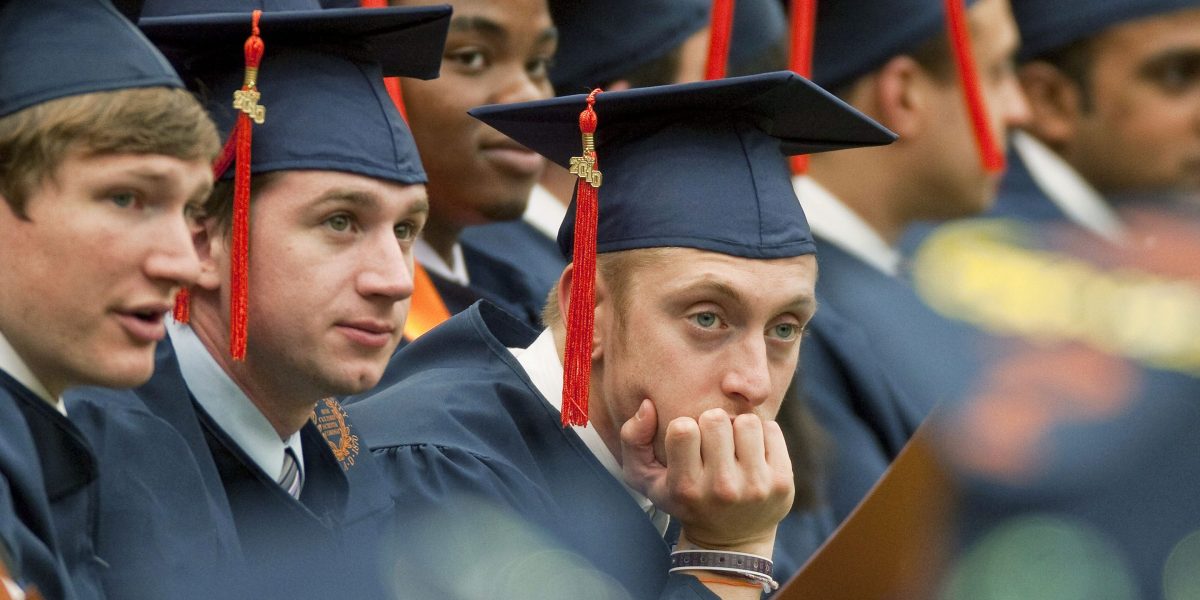
Recent college graduates are facing a tougher job market, but Apollo chief economist Torsten Slok says artificial intelligence is not the clearest explanation. His argument matters because anxiety over AI has become a defining fear for young workers even as labor data points to older economic pressures.
In a recent Apollo blog post, Slok said the unemployment gap between recent graduates and the broader workforce began to widen around April 2022, months before OpenAI released ChatGPT in November of that year. He said that timing makes it difficult to blame the hiring squeeze mainly on generative AI.
Federal Reserve Bank of New York data cited by Fortune show the unemployment rate for recent college graduates at 5.6%, little changed from a year earlier. The same data put overall unemployment at 4.2%, which Fortune reported is the highest level in four years.
Slok said graduates often cluster in sectors that are exposed to AI, but those same sectors also respond strongly to higher interest rates, trade uncertainty and changes in immigration. In his view, the weak market for entry-level workers is more likely tied to broad hiring caution than to technology that many employers were still starting to adopt when the gap appeared.
AI fears are high among young workers
Surveys show that many young workers see AI as a threat. A January iCIMS Workforce Report found that 51% of Gen Z respondents viewed AI as the biggest risk to their job security, according to Fortune.
Glassdoor’s 2026 Worklife Trends Midyear Check-In found that discussion of AI on its platform had turned more negative. Fortune reported that 53% of AI-related comments were negative and 43% were positive, compared with 41% negative and 55% positive the previous year.
Research on AI’s effect on employment remains mixed. Fortune cited a Stanford study published last year that found AI had a significant and uneven effect on entry-level workers, including a 13% relative decline in employment for early-career workers.
Yale Budget Lab, however, found no meaningful shift in churn or unemployment duration for jobs with high AI exposure or no AI exposure, according to Fortune. That finding suggests any AI-related labor market changes have not yet appeared clearly in broad employment measures.
Cal Newport, a computer scientist and author of Deep Work, has blamed some of the anxiety on technology leaders. In a New York Times opinion essay cited by Fortune, Newport said public warnings from Silicon Valley about AI may be heightening public fear while serving companies’ business interests.
Other pressures on hiring
Slok has pointed to several forces that could be weighing on entry-level hiring. In a February analysis cited by Fortune, he said employment weakness in AI-exposed industries such as warehousing and storage, payroll services and transportation support tracked closely with the Federal Reserve’s rate increases that began in early 2022.
Pantheon Macroeconomics analysts Samuel Tombs and Oliver Allen argued last year that tariffs were holding down wage growth as companies tried to protect margins from higher import costs, Fortune reported. Laura Ullrich of the Indeed Hiring Lab told Fortune that uncertainty can slow employers’ decisions, including hiring.
Immigration policy may also be affecting job growth. A National Foundation for American Policy brief cited by Fortune found falling labor force participation among U.S.-born workers age 16 and older, and NFAP senior fellow Mark Regets said research generally shows immigration increases job opportunities for U.S.-born workers.
A Federal Reserve Bank of St. Louis report published this week found that young workers can be hit harder when openings become scarce. Its researchers said the labor market can look stable overall while becoming less welcoming to new entrants, who are often younger workers.
This story draws on original reporting from Fortune.