
DNA identifies Revolutionary War soldier buried as unknown
Researchers say remains found at South Carolina’s Camden battlefield belong to Pvt. John Pumphrey, a Maryland teenager killed in 1780.
By Maya Lindqvist · Senior Technology Correspondent
4 min read
Researchers have identified a Revolutionary War soldier whose remains were found on a South Carolina battlefield, giving a name to a man buried for centuries as an unknown. FHD Forensics founder Allison Peacock said DNA work and archival research showed the remains belong to Pvt. John Pumphrey, a Maryland soldier killed at the Battle of Camden on Aug. 16, 1780.
The identification comes as the United States approaches its 250th anniversary. Peacock, whose company worked on the case, described the timing to The Associated Press as unusually fitting.
Bones found at Camden
Archaeologists surveying the Camden battlefield in 2020 found human remains exposed at the site, according to the report. Investigators eventually documented 14 sets of remains, including 12 identified as Continental soldiers; the other two were linked to the British side and reburied at the battlefield.
The battle was one of the Continental Army’s worst losses, according to the AP. British forces under Gen. Charles Lord Cornwallis defeated troops led by Maj. Gen. Horatio Gates, and many of the roughly 900 dead were left on the field.
The Richland County Coroner’s Office, which had previously worked with Texas-based FHD Forensics, asked the company to assist. Peacock said the case resembled modern unidentified-person investigations, though it was unclear whether remains more than 240 years old would yield DNA useful for genetic genealogy.
Pumphrey’s remains had been labeled Camden 9B, meaning they were the second set recovered from burial nine. After examination, the Continental soldiers were reburied with military honors, and Camden 9B’s marker identified him only as an unknown Revolutionary War soldier from the Battle of Camden.
DNA points to a Maryland private
Samples from two soldiers were sent to Astrea Forensics in California for DNA extraction and sequencing, according to the AP. Peacock said teeth, often useful in old cases, did not produce results in this investigation.
Kelly Harkins Kincaid, Astrea’s co-founder and scientific adviser, said old remains can be difficult because DNA from soil microbes and the surrounding environment mixes with human genetic material. She said the case involved the oldest sample her company had used for building a family tree, though she has worked with DNA far older for other purposes.
Astrea was able to recover autosomal, X chromosome and Y chromosome DNA from the petrous part of the temporal bone near the base of the skull. Peacock’s team uploaded the profile to FamilyTreeDNA and GEDmatch and found about 20,000 genetic matches to review, she said.
One maternal-line match was Russ Hudson, a retired federal agent in Gettysburg, Pennsylvania. Hudson helped search historical records, and researchers developed a profile of Pumphrey as an orphan from Anne Arundel County, Maryland, who entered military service while still young.
Hudson said he learned Pumphrey may have gone to Baltimore and enlisted in the militia at about 13. Researchers have not found a birth record, and Peacock said Pumphrey’s exact age at death remains unclear, though his knee growth plates had not fully closed.
War record and next steps
Peacock said researchers found that Pumphrey served in the 7th Maryland Regiment and was at Valley Forge with George Washington. She said his unit also took part in major northern battles, including Brandywine, Germantown and Monmouth, before the campaign that ended at Camden.
Researchers have not determined how Pumphrey died. Peacock said no specific injury was found on the remains, leaving open the possibility of a wound to soft tissue that would not be visible after more than two centuries.
FHD Forensics is continuing work on another soldier, labeled Camden 11A. Peacock said she discovered she is related to that person after comparing her DNA to the remains, something she routinely does when taking a case.
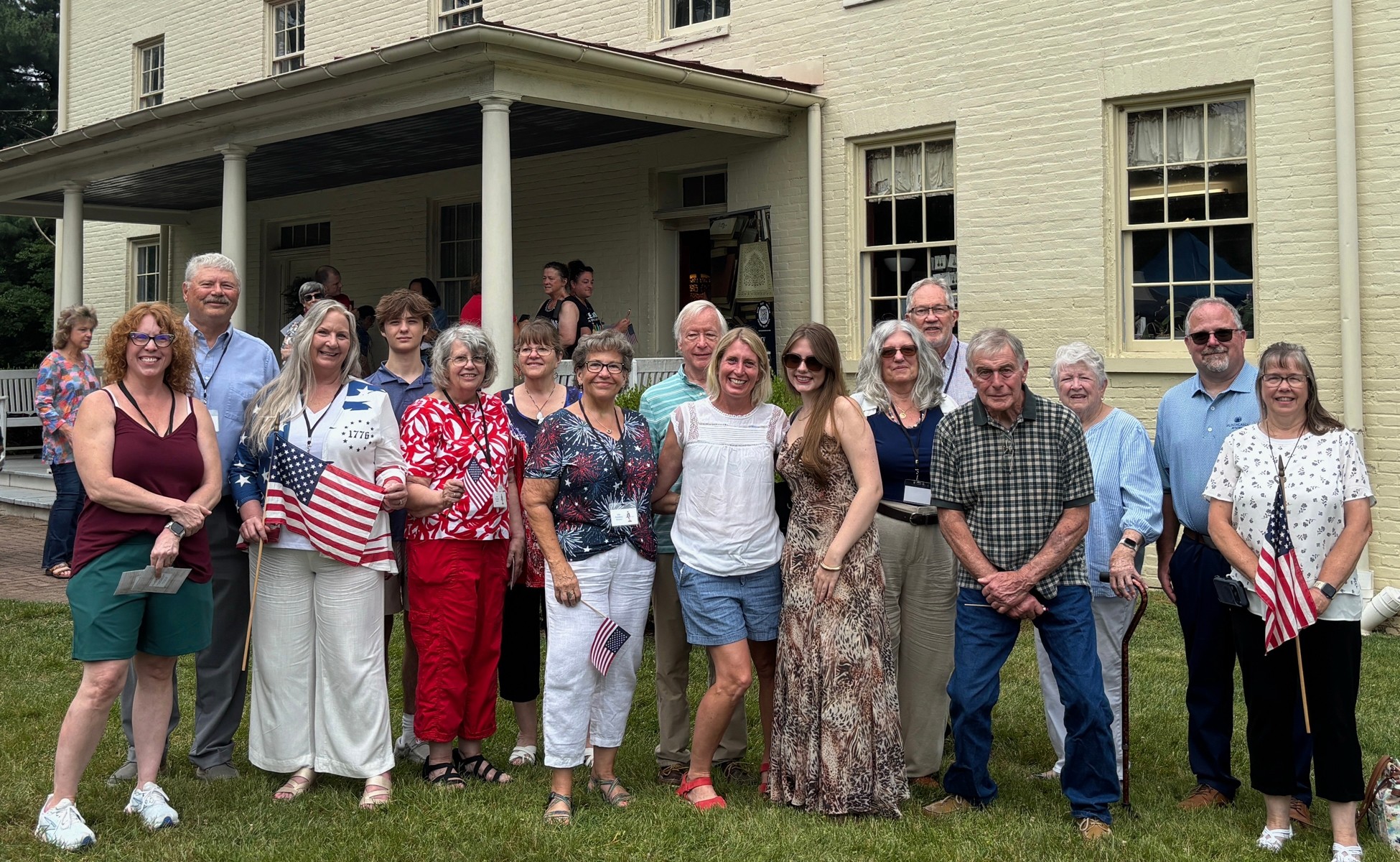
Last month, relatives gathered at the Benson-Hammond House in Anne Arundel County after Peacock said the research was strong enough to identify Camden 9B as Pumphrey. Becky Berman of Daytona Beach, Florida, identified by the AP as Pumphrey’s first cousin 10 times removed, said the discovery and identification were exciting given the difficulty of the task.
Hudson said he wants the U.S. government to confirm the research and replace the gravestone that still marks his fifth great-uncle as unknown. He told the AP that Pumphrey and others gave their lives for the new nation.
This story draws on original reporting from Fortune.