
Companies test Chinese AI models as U.S. tools strain budgets
DoorDash, Cursor and other companies are trying lower-cost Chinese AI models while weighing security and data-control risks.
By Maya Lindqvist · Senior Technology Correspondent
3 min read
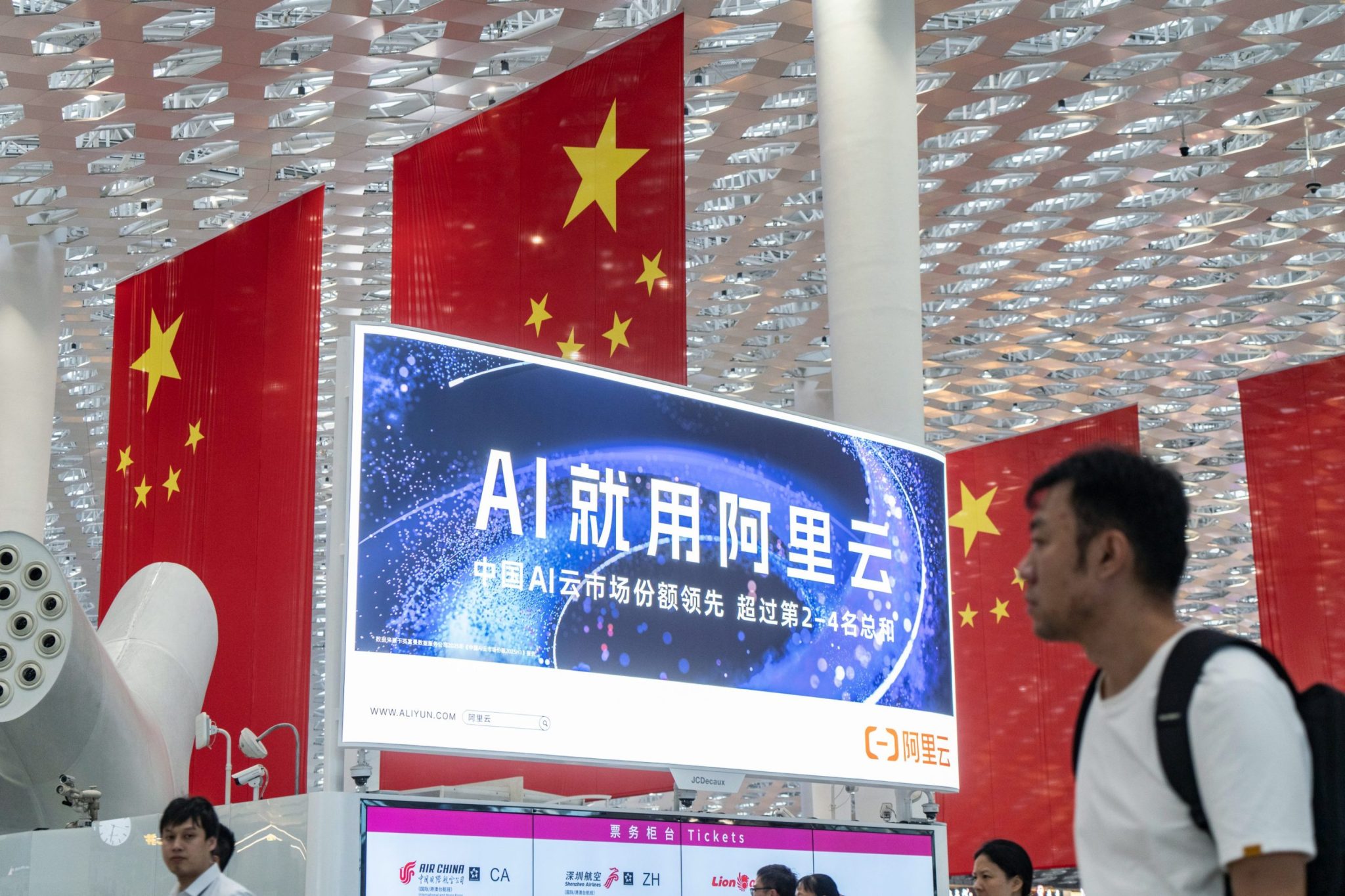
Some businesses are testing Chinese AI models as the cost of using leading U.S. systems rises. The shift matters because it shows how price, performance and data control are shaping corporate AI choices even as Washington frames the field as a U.S.-China contest.
U.S. companies including OpenAI, Google and Anthropic have built some of the most advanced AI models, but they also rank among the more expensive options. As token and usage costs climb, consumer-facing companies and startups are looking at cheaper open-source alternatives from China.
DoorDash is one example. Co-founder and chief technology officer Andy Fang said Wednesday on X that the company plans to launch DoorDash CLI, a limited-beta experimental tool that would let users place DoorDash orders through an AI agent or directly from a terminal.
Fang said earlier this month on X that a model from Chinese startup Moonshot AI offered “better quality” at a “cheaper cost.” Moonshot has drawn attention for Kimi, one of the Chinese models being tried by developers and AI companies.
Other startups have also used Chinese models. Cursor used Moonshot’s Kimi in building its Composer 2 coding agent, while Lindy has dropped Anthropic tools in favor of DeepSeek’s V4 models, the Financial Times reported.
Large companies are also experimenting. CNBC has reported Airbnb’s interest in Chinese AI models, and Siemens has announced AI work involving Chinese providers; both have been cited among companies looking at Alibaba, DeepSeek and similar systems as they try to reduce AI spending.
Cost, capability and control
Yasir Atalan, deputy director and data fellow in the Futures Lab at the Center for Strategic and International Studies, told Fortune that the move toward Chinese models is driven by three factors: lower prices, improving model quality and the appeal of open-source systems.
Atalan said recent high-performing U.S. models appear costly when compared with Chinese alternatives. He also said open-source models appeal to companies and countries that do not want to send enterprise data to outside providers.
Running an open-source model on a company’s own hardware can give businesses more say over how sensitive information is handled. Atalan told Fortune that local hosting can keep data on a company machine rather than sending it to another firm.
That approach can be expensive in other ways. Atalan said companies may need high-end computers with costly GPUs, memory and storage to run models themselves.
Security concerns remain
Some security executives warn that the savings may carry risks. Snehal Antani, co-founder and chief executive of Horizon3.ai, told Fortune in a statement that startups using these models could face data-sovereignty problems if proprietary code or user data is exposed to foreign surveillance.
Antani also warned about possible weaknesses in model integrity and reasoning. Those concerns have become part of the debate as companies test lower-cost AI tools for work involving software, operations and customer-facing services.
Atalan said the trend should not be read as a broad replacement of U.S. models. He told Fortune that companies may use an open-source model for one task while keeping Anthropic’s Claude or another U.S. model for different work.
Few companies have publicly confirmed their use of Chinese AI models. Still, the models are easy for developers to find through GitHub and Hugging Face, where open-source systems can be uploaded, downloaded and run.
A March 16, 2026, Hugging Face study found that Chinese open-source models made up 41% of downloads on its platform. For many businesses, Atalan said, adoption may come down to whether a model is cheap, capable and able to run locally, rather than where it was built.
This story draws on original reporting from Fortune.