
Companies build guardrails as AI agents take on operating work
Executives at Fortune Brainstorm Tech said enterprise AI needs supervision, memory and better worker training to succeed at scale.
By Sofia Marchetti · World Affairs Correspondent
3 min read
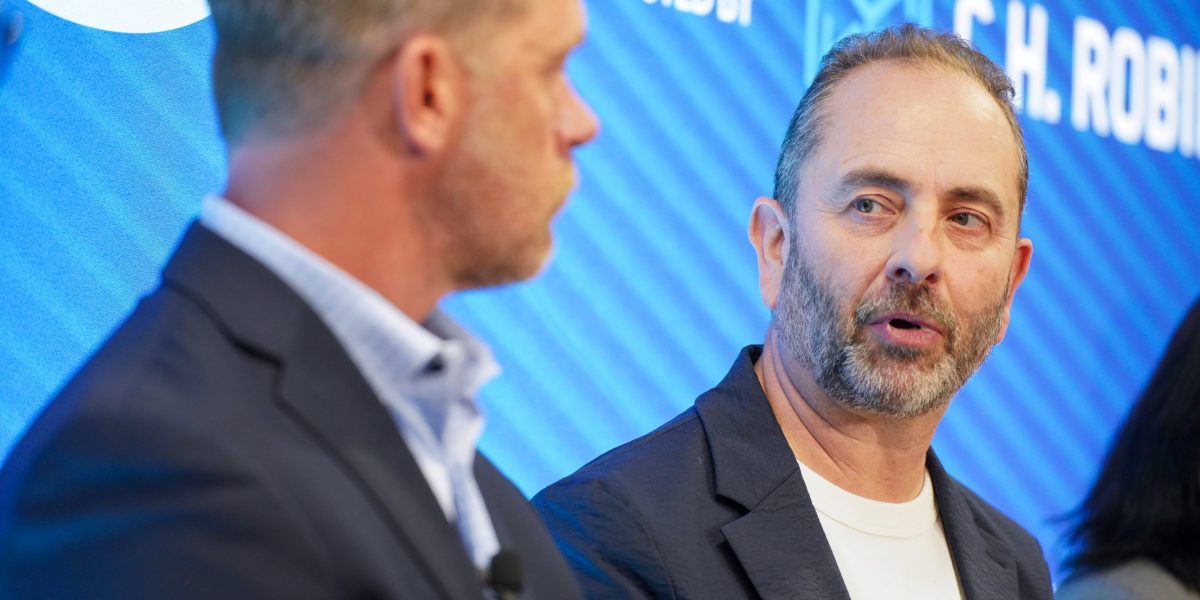
Corporate AI projects are moving into day-to-day operations, and executives at Fortune Brainstorm Tech 2026 said that shift requires more than stronger models. Speakers from C.H. Robinson, Gap, Upstart and MinIO said companies need guardrails, memory systems and new training approaches as AI agents take on work once handled by people or traditional software.
Fortune reported that the executives described AI as an active part of business processes rather than a tool used only for analysis. They said enterprise systems increasingly need a central oversight layer that can sit above AI models, enforce company rules, support compliance and reduce errors.
Mike Neill, chief technology officer at C.H. Robinson, said the logistics company is using AI to process thousands of customer emails written in natural language. According to Neill, those messages had been difficult to automate with conventional software because customers describe shipping needs in varied ways.
Neill said C.H. Robinson uses an AI classifier to identify what customers want and route work through an automated process. He said the system can cut response times to as little as 32 seconds and can help with tasks including booking orders and securing appointments.
AI agents need memory, executives said
Executives at the conference said AI agents will need longer-term memory and a better grasp of context before they can be used widely in production environments. Garima Kapoor, co-founder and co-CEO of MinIO, said agents must be able to retain customer preferences instead of starting fresh with each exchange.
Kapoor said keeping that kind of memory on costly GPU hardware would be hard for growing companies to sustain. She pointed to rising demand for software that shifts AI memory into less expensive storage systems, allowing agents to refer back to earlier interactions.
Kapoor also drew a line between generative AI and agentic workloads. She said generative AI is centered on prompting, while agentic systems make decisions based on data moving through a business process.
Gap warns about an ‘AI hangover’
Sven Gerjets, chief technology officer at Gap, said companies also face a workforce challenge. He warned that basic technical instruction, such as prompt engineering training, can disappoint employees if it leaves them expecting AI to solve complex retail problems immediately.
Gerjets called that loss of confidence an “AI hangover,” according to Fortune. He said Gap is trying to change how employees think about AI, encouraging them to treat it as a digital coworker that can help them reason through uncertain tasks rather than as a passive application.
Gerjets said employees can get more value from AI when they ask it for help in situations where they are unsure how to proceed. His comments reflected a broader point from the panel: companies may need to change management habits and workplace culture alongside their technical systems.
Fortune reported that the discussion took place during its annual Brainstorm Tech conference, where enterprise AI deployment was a central theme. The executives’ message was that adoption at scale depends on controls and human behavior as much as model performance.
This story draws on original reporting from Fortune.