
Comcast split puts deal hopes up against regulatory and debt hurdles
Comcast plans to separate NBCUniversal and Sky from Xfinity, but executives rejected speculation that the move is meant to tee up mergers.
By Sofia Marchetti · World Affairs Correspondent
4 min read
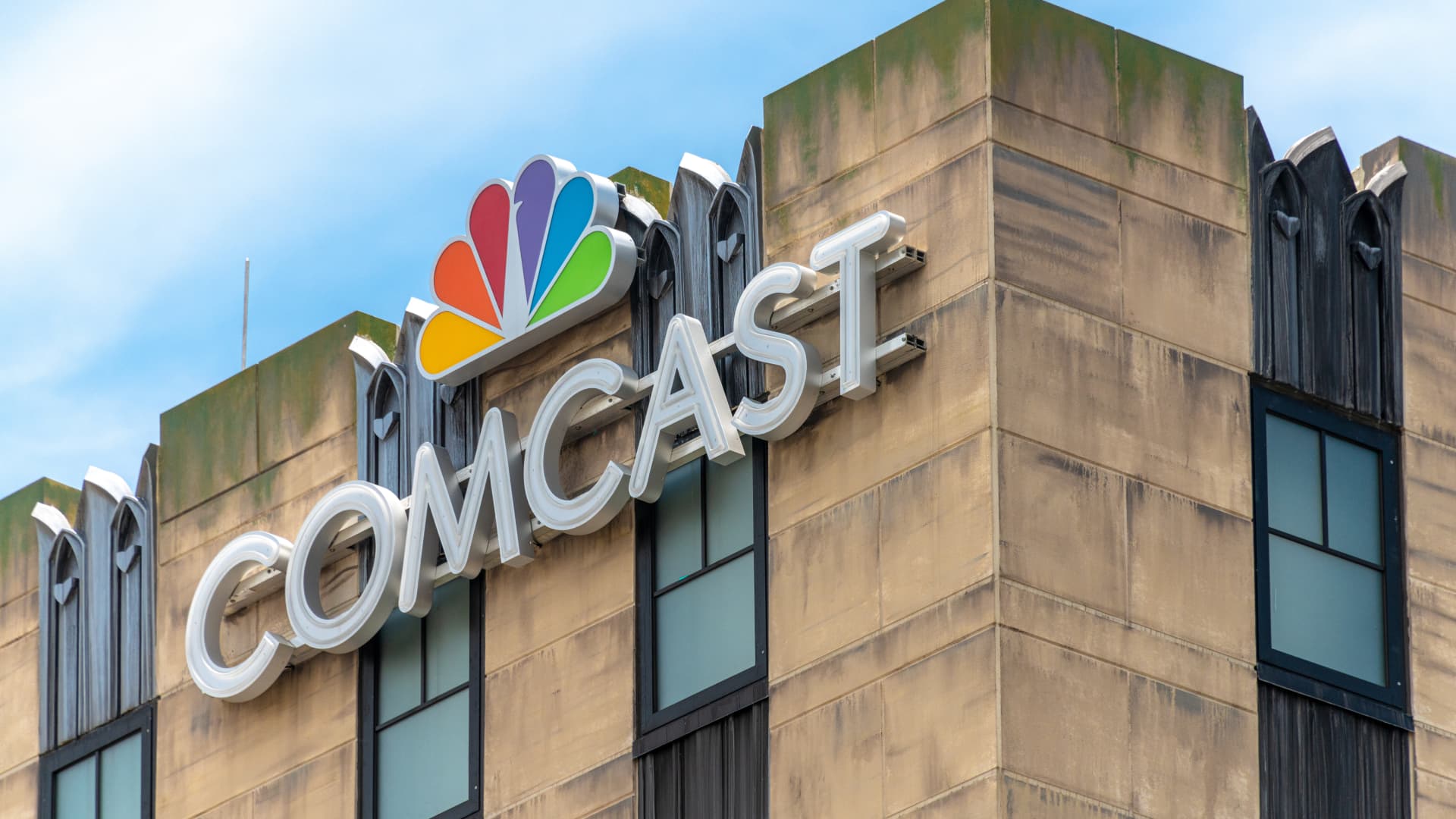
Comcast said Monday it plans to separate its Xfinity cable business from NBCUniversal and Sky, a move that gives each side a clearer mandate and has renewed Wall Street speculation about media and telecom mergers. CNBC reported that the split could leave both new companies with limited deal options because of regulatory barriers, debt concerns and a shrinking list of logical partners.
Comcast co-CEO Brian Roberts pushed back on the idea that the separation is meant to prepare the company for acquisitions or sales. On an investor call, Roberts said investors should “absolutely not” view the move as a setup for deals, according to CNBC.
Roberts, Comcast’s controlling shareholder and the son of founder Ralph Roberts, will not run either company after the split, Comcast said. The company said he will remain actively involved in leadership of both businesses.
Co-CEO Mike Cavanagh also rejected the deal thesis for NBCUniversal and Sky, CNBC reported. Comcast said Cavanagh will become CEO of the media company, while former Comcast finance chief Michael Angelakis will lead the cable assets after the separation.
Media combinations face limits
CNBC reported that the plan follows Comcast’s earlier spinoff of cable networks into Versant Media Group, CNBC’s parent company. A person close to the matter told CNBC that Comcast executives had discussed separation at points since at least 2019 but had not seriously considered a full NBCUniversal split until recently.
Forrester research director Mike Proulx told CNBC that Comcast’s move resembles Warner Bros. Discovery’s decision to pursue a split before entering a sale process that drew bids from Netflix and Paramount Skydance. Proulx said Peacock could make NBCUniversal more attractive as an acquisition target.
Major media combinations would be hard to pull off, CNBC reported. Because NBCUniversal includes the NBC broadcast network, a merger with another national network owner would face obstacles, putting Disney, which owns ABC, and Paramount Skydance, which owns CBS, in difficult positions as potential partners.
CNBC reported that Fox has avoided traditional media acquisitions since separating from its entertainment assets and recently agreed to buy Roku for $22 billion. Netflix showed interest in Warner Bros. Discovery assets, CNBC reported, but its focus was on studios and streaming rather than linear television networks.
That leaves few obvious buyers for NBCUniversal and Sky, according to CNBC’s analysis. CNBC reported that the media company would likely be difficult for a smaller player to absorb because it includes Universal theme parks, a streaming service and a large content library.
Cable merger hopes also face barriers
On the cable side, investors looked immediately to Charter Communications, CNBC reported. Charter shares rose 10% Monday after Comcast’s announcement, a move CNBC said signaled investor interest in a possible combination of the two largest U.S. cable companies.
Comcast and Charter have both invested in broadband and mobile businesses while facing stronger competition from wireless and satellite providers, CNBC reported. The companies also work together through a joint venture that lets Charter cable TV customers use Comcast’s Xumo streaming devices.
MoffettNathanson analyst Craig Moffett told CNBC that a Comcast-Charter deal would face a difficult approval process. He said the Justice Department had been prepared to block Comcast’s 2014 attempt to buy Time Warner Cable, and that any future deal could also require state-level approvals that may be hard to win in states such as Massachusetts, Illinois and Maryland.
Debt could be another constraint, CNBC reported. A person close to the matter told CNBC that Charter’s pending merger with Cox would leave it with more than $100 billion in debt after assuming Cox’s debt, and that a later tie-up with Comcast could create a heavy combined debt load.
Moffett also told CNBC that broadband offers fewer scale benefits than cable television once did because cable systems operate locally. He said owning systems in one region does not meaningfully change costs in another.
Jonathan Miller, chief executive of Integrated Media, told CNBC the split may still create future flexibility even if no transaction is close. CNBC reported that Comcast expects the separation to take about a year, and that U.S. tax rules can require additional waiting periods before certain acquisitions of newly spun-off companies.
This story draws on original reporting from CNBC.