
Neuroscientist warns classroom tech push has weakened student learning
After billions spent on school devices, researchers are raising concerns about screens, attention and falling test performance among Gen Z students.
By Hana Yoshida · Markets Reporter
3 min read
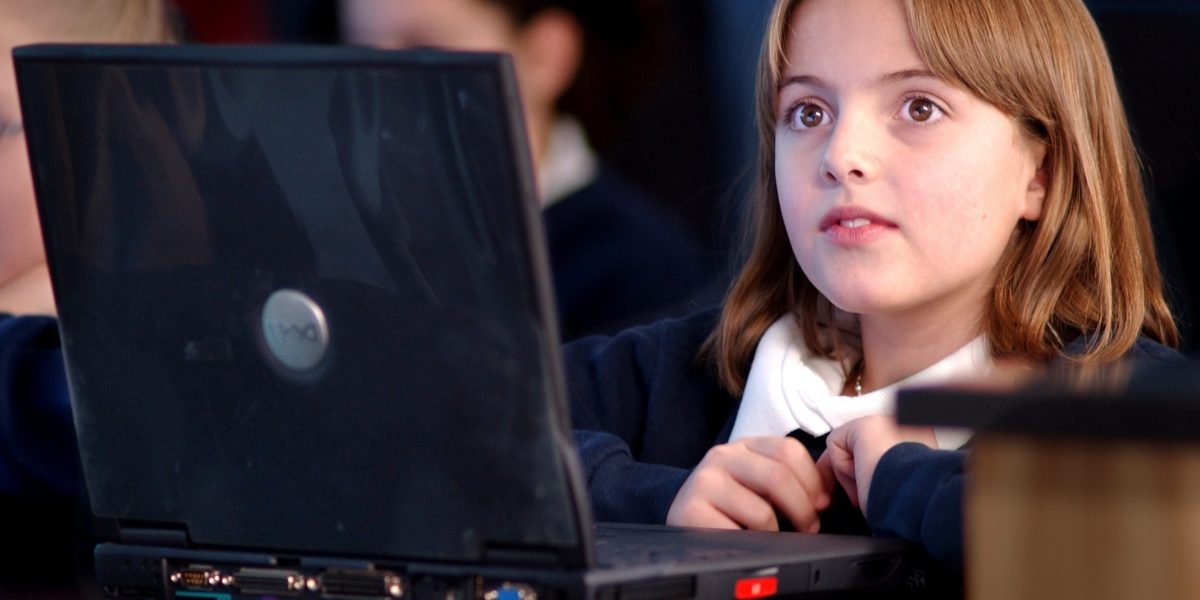
U.S. schools’ long shift from books to screens is facing renewed scrutiny after a neuroscientist told senators that heavier classroom technology use has coincided with weaker student performance. Jared Cooney Horvath, in written testimony to the U.S. Senate Committee on Commerce, Science, and Transportation, said Gen Z has posted lower standardized-test results than prior generations despite broad access to digital tools.
The debate follows years of public investment in school devices. Bloomberg reported that the U.S. spent more than $30 billion in 2024 on laptops and tablets for schools, part of a push that began in some places more than two decades ago.
Maine was an early model. NPR has reported that the state launched a statewide laptop program in 2002 under then-Gov. Angus King, who promoted the effort as a way to expand students’ access to information. A 2005 study said the Maine Learning Technology Initiative had distributed 17,000 Apple laptops to seventh graders in 243 middle schools by that fall; Fortune reported that the program reached 66,000 laptops and tablets by 2016.
Test scores and screen time
Horvath cited Program for International Student Assessment data on 15-year-olds and other standardized tests in arguing that academic measures such as literacy and numeracy have declined over roughly the past decade. He said the data showed a relationship between more computer time in school and lower scores.
Horvath told the Senate committee that the issue is not whether schools should reject technology, but whether digital tools fit how students learn. He argued that broad, poorly controlled use of devices has weakened learning conditions rather than improving them.
Fortune reported in 2017 that Maine’s public-school test scores had not improved during the first 15 years of its laptop program. Then-Gov. Paul LePage described the initiative as a failure while the state continued contracts with Apple, according to Fortune.
Attention is a central concern
Researchers cited by Fortune pointed to distraction as a major problem. A 2021 EdWeek Research Center poll of 846 teachers found that 55% said students used educational technology for one to four hours per day, while another quarter said use reached five hours daily.
A 2014 study of 3,000 university students found that students using computers were off task nearly two-thirds of the time. Horvath said interruptions and task switching make learning harder because students must regain focus, and research cited by Fortune links task switching with weaker memory formation and more errors.
Jean Twenge, a San Diego State University psychology professor who studies generational differences, told Fortune that many social media and gaming apps are built to keep users engaged for long periods. Fortune also cited a Baylor University-led study published in November 2025 that found TikTok required less effort to use than Instagram Reels and YouTube Shorts by blending familiar recommendations with unexpected content.
Policy responses are growing
Horvath suggested Congress could set effectiveness standards for classroom technology and fund research into which tools help students. He also urged stronger limits on data collection, profiling and behavior tracking involving minors.
Some states and schools have moved against phone use during the school day. Fortune reported that, as of August 2025, 17 states had banned cellphones during instructional time and 35 states had laws limiting classroom phone use. The National Center for Education Statistics said more than 75% of schools had policies barring nonacademic cellphone use, though enforcement has varied.
Horvath told Fortune that students educated in device-heavy classrooms should not be blamed for the results. He described the problem as a policy failure and said the generation now entering adulthood was placed inside an experiment it did not choose.
This story draws on original reporting from Fortune.