
BYD leans on Stella Li as it chases global auto crown
The Chinese EV maker is expanding overseas as it targets Toyota’s scale, with its top international executive at the center of the push.
By Sofia Marchetti · World Affairs Correspondent
4 min read
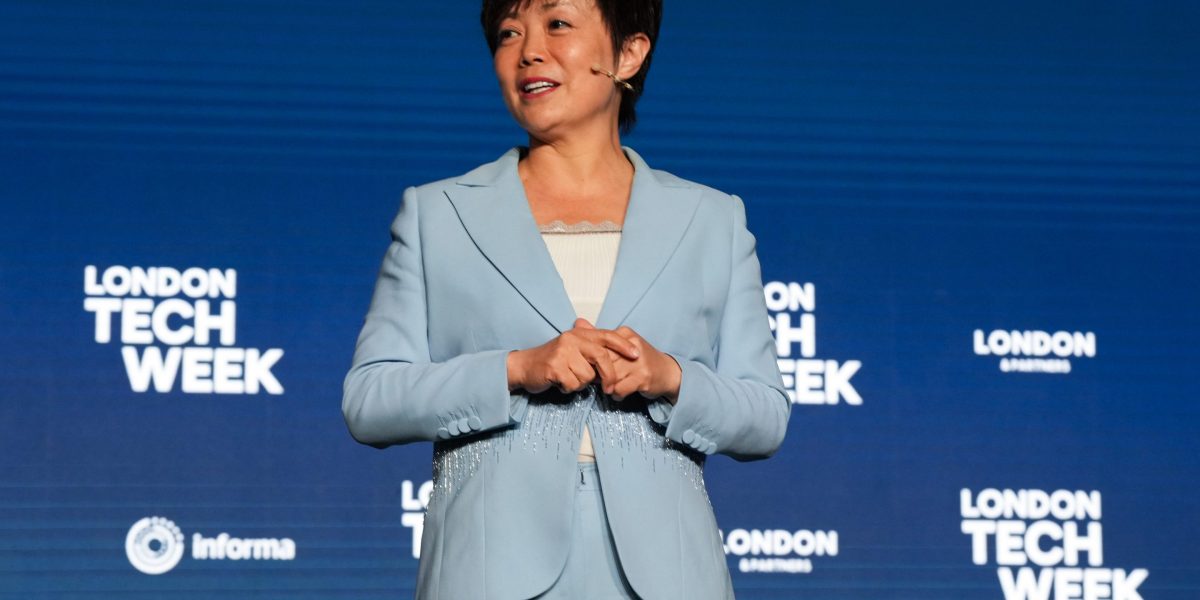
BYD is pitching a plan to become the world’s largest automaker within five years, a goal its chief executive Wang Chuanfu linked to faster overseas growth, according to Fortune and Reuters. The push puts Stella Li, BYD’s executive vice president and CEO of America, at the center of a global expansion that now carries both opportunity and political risk.
Fortune reported that Li has spent three decades helping turn BYD from a mobile phone battery maker into the world’s top seller of electric vehicles. In an interview with Fortune, Li said she spends about 70% of her time traveling to meet officials, hire local leaders, set pricing and shape product plans by market.
BYD’s sales growth has been rapid, according to company figures cited by Fortune. The company stopped selling pure internal-combustion models in 2022, sold 4.27 million vehicles globally in 2024 and reached 4.6 million new-energy vehicle sales in 2025, Reuters reported.
Fortune reported that overseas sales more than doubled in 2025 to just over 1 million vehicles as BYD expanded in Europe, Southeast Asia and Latin America. Electric Cars Report said BYD sold more than 160,000 vehicles abroad in May, up 80% from a year earlier, and Fortune reported the company is targeting 1.5 million overseas sales in 2026.
Li’s role in the expansion
Fortune reported that Li helped build BYD’s first international operations after joining Wang, including BYD Europe in 1998, before the company moved into the U.S. and Japan. Li told Fortune that when she first met Wang, BYD was working from a two-room apartment and modest factory space, but she was struck by the company’s ambition and production discipline.
Li also told Fortune that early Western customers were skeptical, including at trade shows and boardroom meetings where she was often one of the few senior women in the room. Fortune reported that Li became the first woman to win World Car Person of the Year in 2025 and has twice appeared on Fortune’s list of China’s Most Powerful Women.
Fortune reported that Li saw a turning point after a battery conference in Paris in 1999, where she pushed to return the next year as a speaker. She told Fortune that her 2000 speech arguing China would become the largest market for mobile phones and batteries helped BYD build relationships with Motorola and Nokia; by 2002, those customers helped support BYD’s Hong Kong listing.
Expansion brings scrutiny
BYD’s overseas build-out has drawn regulatory and labor scrutiny, according to Fortune. Reuters reported that European Union authorities have examined possible unfair Chinese subsidies tied to BYD’s Hungary plant, while China Labor Watch alleged labor-rights violations at the Szeged site involving subcontracted Chinese migrant workers.
BYD Hungary said it prioritizes labor rights and compliance with Hungarian and European law, according to Fortune. Li told reporters in London that assembly at the Hungary plant is due to begin in the fourth quarter and said BYD has paused work on a planned Turkey plant while it focuses on Hungary, Fortune reported.
In Brazil, labor prosecutors accused BYD and contractors of trafficking workers and subjecting them to conditions analogous to slavery, according to Fortune. Fortune reported that BYD denied the allegations, called them misleading and culturally biased, and later settled with authorities through payments and commitments to improve conditions without admitting wrongdoing.
BYD also faces barriers in the United States, which Fortune described as largely closed to the company because of tariffs and political resistance to Chinese-made vehicles. The Pentagon added BYD to a list of companies it says aid China’s People’s Liberation Army, The Hill reported, a designation Fortune said carries limited immediate legal penalties but can warn investors and precede tougher restrictions.
Rhodium Group analysis cited by Fortune found subsidies explain 5% of BYD’s cost advantage over Tesla in China. Rhodium attributed more of the gap to vertical integration and lower overhead, saying BYD makes about 80% of Tier-1 components in-house, compared with about 37% for Tesla.
Fortune reported that Li is also looking beyond cars to robotics, an area where BYD and Tesla are both showing interest. Li told Fortune that BYD’s in-house work on batteries, semiconductors and other components could help if humanoid robots become commercially scalable.
This story draws on original reporting from Fortune.