
Black Friday 2026 shoppers plan to seek deals as inflation weighs
Survey plans and early online spending point to deal-seeking shoppers, but final Black Friday and holiday sales are not yet known.
By Hana Yoshida · Markets Reporter
3 min read
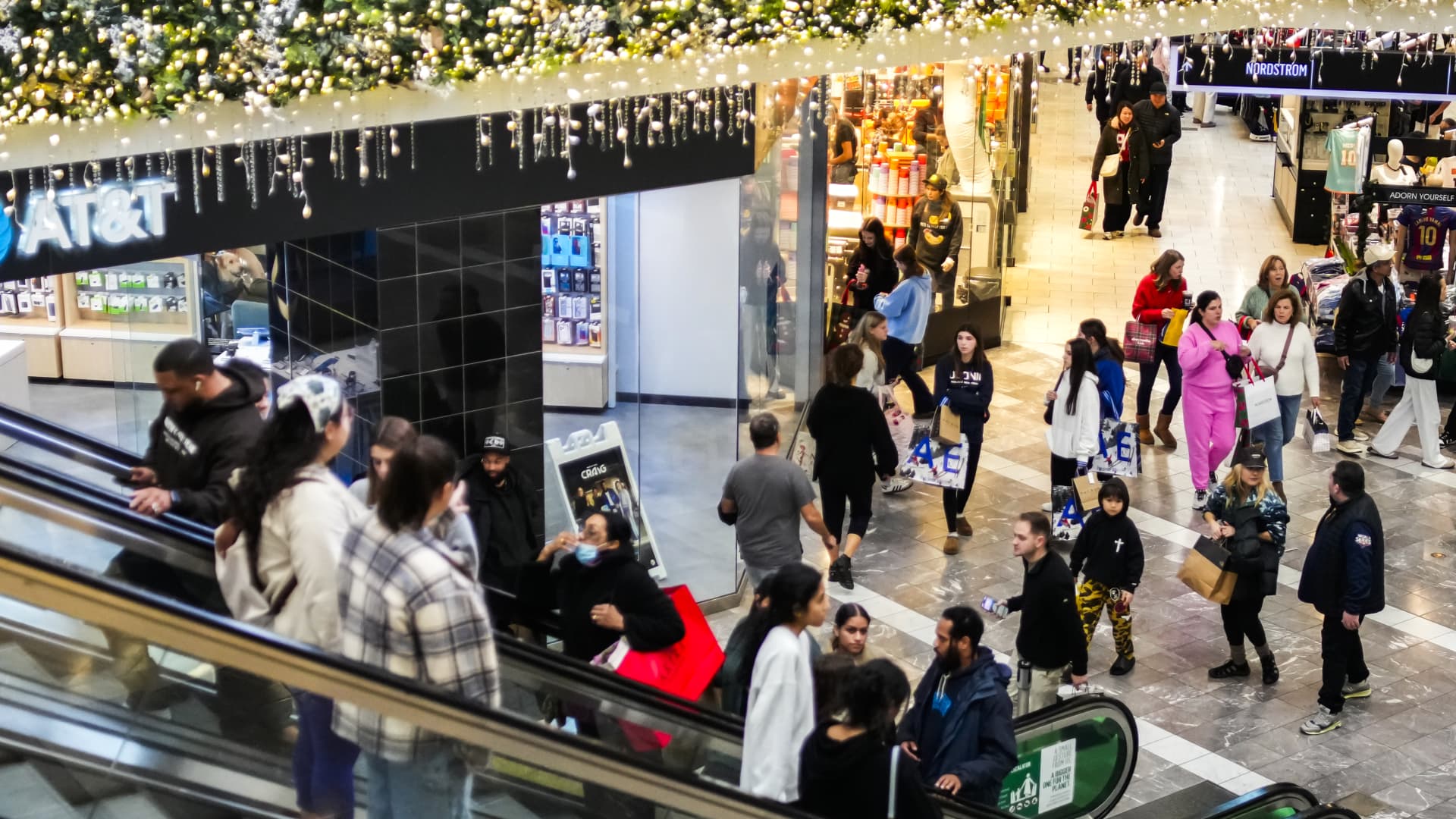
Black Friday 2026 deals are drawing shoppers who have become more careful with their money amid inflation, volatile gasoline prices and uncertainty in the labor market. Early online spending and consumer surveys suggest promotions may concentrate purchases into the Black Friday and Cyber Monday period, though they do not establish final holiday sales.
CNBC reported that online shoppers spent $82.5 billion in the first 22 days of November, according to Adobe data, up 9.1% from a year earlier. That is reported activity rather than a forecast, but it comes as consumers face weaker sentiment and slower retail-sales growth in October.
The pressure on household budgets remains clear. CNBC said the Consumer Price Index rose a seasonally adjusted 0.4% in October, while the personal consumption expenditures price index was up 3.8% from a year earlier. The Conference Board’s Consumer Confidence Index had fallen to its lowest level since 2014 in September, with respondents pointing to inflation and the job market.
Why are shoppers seeking Black Friday 2026 deals?
According to Deloitte’s survey of 1,200 consumers conducted in mid-October, 87% said they planned to shop Black Friday and Cyber Monday sales, up from 82% in 2025 and the highest expected participation since 2016. Respondents expected to spend $624 on average during the holiday period, about the same as a year earlier, CNBC reported.
Brian McCarthy, Deloitte’s retail strategy lead, told CNBC that consumers had deferred some purchases, become more focused on promotions and put more spending into holiday deal periods. That is an interpretation of shopping behavior, rather than proof that lower confidence has caused a rise in Black Friday spending.
Planned spending across gifts and nongifts was estimated at $1,049 per consumer, up 5.9% from $990 a year earlier, according to Conference Board figures reported by CNBC. After adjusting for inflation, the increase was 3.2%.
What do the early sales figures show?
Retailers’ discounts may help explain the appeal of promotional periods. Salesforce reported that U.S. discount rates in November were 8% higher than a year earlier, CNBC said. Salesforce also projected $84 billion in U.S. online sales and $357 billion globally for Nov. 24 through Nov. 30, each 6% above the prior year; those figures remain forecasts.
The outlook is not uniform across all shoppers or retailers. CNBC reported that Walmart and Lowe’s had cited slower sales, smaller baskets and less spending on big-ticket or discretionary items, even as retailers generally expressed confidence about holiday demand. Deloitte also found that 40% of Gen Z respondents planned to use buy now, pay later for holiday purchases, a figure that applies to that surveyed group rather than all consumers.
The available evidence points to shoppers looking harder for value, not necessarily abandoning holiday purchases. Final sales results will show whether those intentions and early online gains held through the full Black Friday and Cyber Monday stretch.
This story draws on original reporting from CNBC.