
Bessent says US gold is accounted for and no longer backs the dollar
The Treasury secretary said U.S. gold holdings top $1 trillion at market value, while casting Fort Knox as a legacy reserve in a fiat-currency era.
By Hana Yoshida · Markets Reporter
3 min read
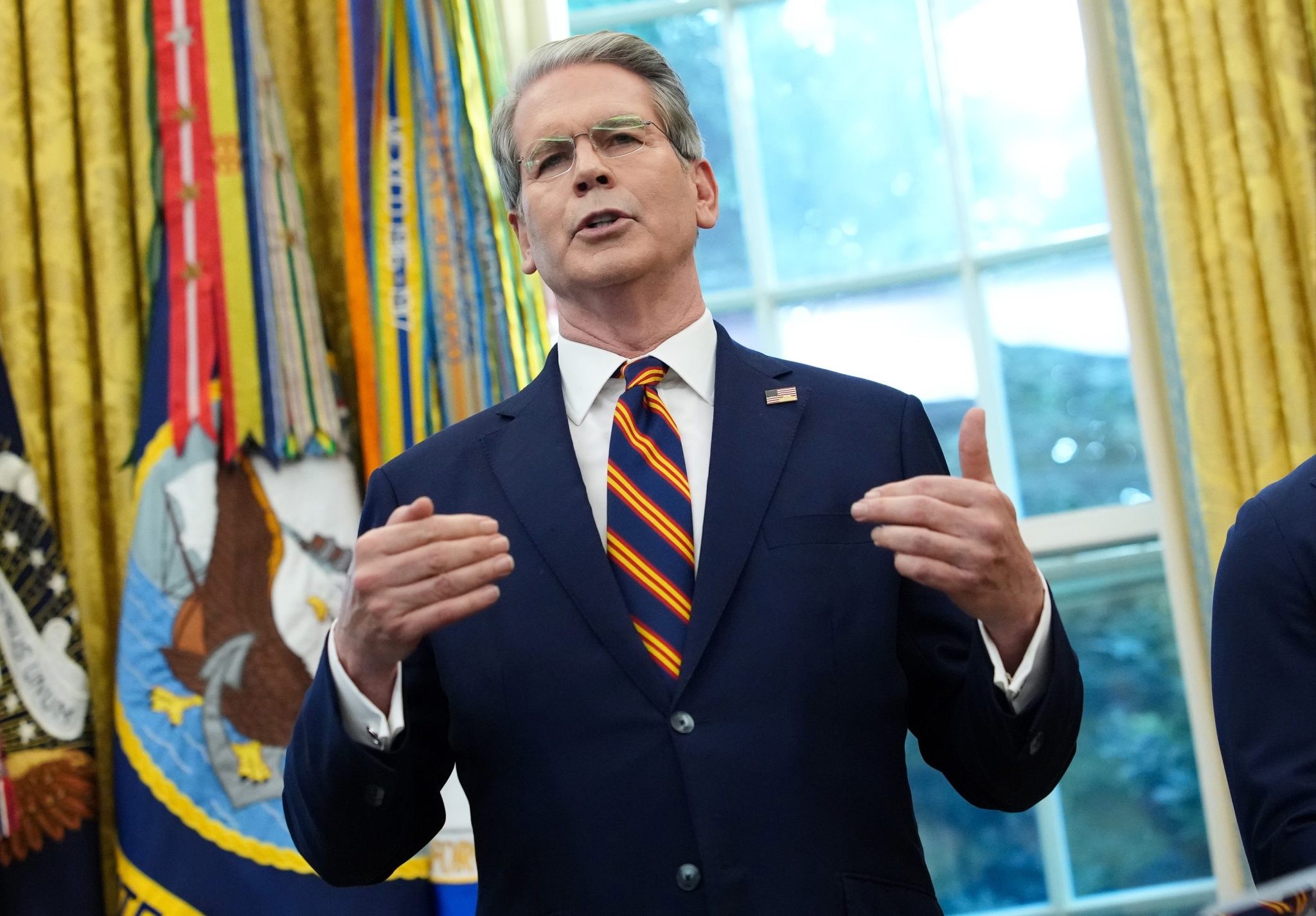
U.S. Treasury Secretary Scott Bessent said the country’s gold is accounted for and valued at more than $1 trillion at current market prices. The remarks addressed calls from President Donald Trump and Elon Musk for a Fort Knox review, while underscoring that gold no longer determines the dollar’s value.
Bessent said on Fox News that the treasurer had visited Fort Knox and that “all gold is present and accounted for.” He added that the United States has the world’s largest gold stockpile, worth more than $1 trillion at market value.
Trump said in a May interview that he wanted to open the Fort Knox vault to confirm the reserves were still there. The Associated Press reported that Trump and Musk, then head of the Department of Government Efficiency, had called for an audit as they discussed conspiracy claims that gold had been stolen.
Fort Knox, established in Kentucky in 1918, served as a major military installation through both World Wars and the Vietnam War, according to EBSCO. The U.S. Mint says the Fort Knox Bullion Depository began holding much of the nation’s gold reserves in 1937 and now contains about 147.3 million ounces, worth about $608 billion.
Gold’s old role
Fort Knox once stood as a symbol of U.S. monetary strength because the dollar was tied to precious metal reserves. Federal Reserve history says the Gold Reserve Act of 1934 was part of the framework that linked the dollar to gold.
That system changed under President Richard Nixon. Federal Reserve history says Nixon ended gold convertibility in 1971, moving the United States into the fiat-currency system that Bessent described in his Fox News appearance.
“We used to be backed by silver, sometimes gold,” Bessent said, before the United States shifted in the 1970s to money that did not require gold or silver in a vault. He said any outstanding claims tied to silver or gold would still be covered by metal held at Fort Knox if needed.
The older gold framework also shaped the postwar monetary order. The State Department’s history of Bretton Woods says the system linked other currencies to the U.S. dollar, while the dollar was pegged to gold at $35 an ounce.
By the 1960s, that arrangement was under strain. Research cited by Fortune says the Vietnam War added to U.S. inflation, more dollars entered circulation, and foreign governments worried that U.S. gold holdings could not support the amount of currency outstanding. Columbia Law School scholarship says France repatriated gold between 1963 and 1966 amid concerns about U.S. debt and the dollar.
Pressure on dollar dominance
After the gold standard ended, the dollar’s global role was reinforced through oil trade. Fortune reported that the United States reached a 1974 arrangement with Saudi Arabia under which Saudi oil would be sold in dollars, while the United States provided military support.
That system helped create demand for dollars and U.S. Treasuries as oil-producing countries accumulated dollar reserves, according to Fortune. More recently, EBC Financial Group has said the dollar’s share of global foreign exchange reserves has fallen to 57%, down from 71% in 1999.
Fortune reported that after the Strait of Hormuz closed at the end of February, industry experts said some ships passed through by paying in Chinese yuan. Reuters reported that France withdrew 129 tons of gold from the Federal Reserve Bank of New York between July 2025 and January, moved reserves to Paris and booked a $15 billion gain through a sale of its previous cache; French officials denied a political motive.
EBC market analyst Sana Ur Rehman wrote in a May client note that France’s move, along with Canada’s plan for a $25 billion sovereign wealth fund, pointed to allies reducing reliance on the U.S. dollar. Ur Rehman attributed that shift in part to tariffs and trade uncertainty that have weakened trust in the currency.
This story draws on original reporting from Fortune.