
AWS chief says AI will change jobs as Amazon keeps hiring graduates
Matt Garman pushed back on predictions of sweeping office-job losses and said Amazon plans to hire 11,000 interns and recent graduates this year.
By Sofia Marchetti · World Affairs Correspondent
3 min read
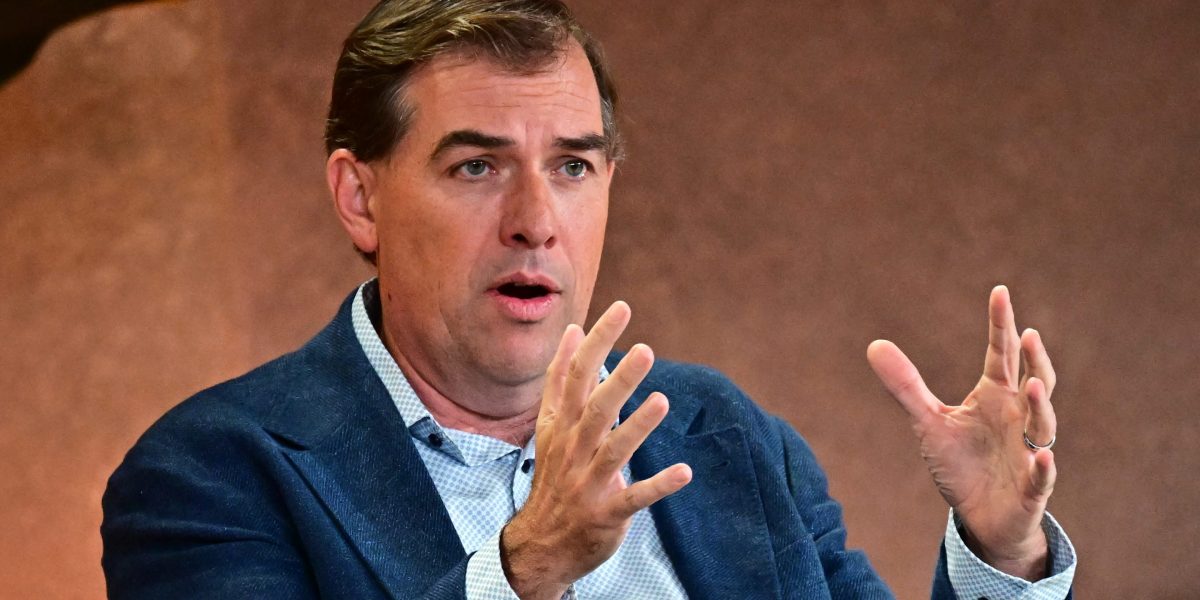
Amazon Web Services CEO Matt Garman said artificial intelligence is more likely to alter white-collar work than erase it, pushing back against forecasts of broad entry-level job losses. His argument matters for young workers because Amazon says it is still hiring heavily from universities, even as AI tools take on more routine office and coding tasks.
Garman made the case on an episode of the Platformer podcast released Tuesday, according to Fortune. He rejected predictions that AI could remove as many as half of entry-level office roles, including warnings previously made by Anthropic CEO Dario Amodei, saying an economy could not function if that many jobs disappeared.
Garman said some roles may vanish, but he drew a distinction between jobs being eliminated and jobs being redesigned. He compared the shift to the spread of Microsoft Excel, which reduced the need for manual calculation work while forcing employees to learn new tools, Fortune reported.
Amazon’s hiring plans are part of Garman’s case. He said the company plans to bring on 11,000 interns and recent graduates this year, and that Amazon now employs more software developers than it did two years ago, despite the rise of more capable AI coding systems.
Amazon still sees value in entry-level workers
Garman’s view is shaped in part by his own career, Fortune reported. He joined Amazon in 2005 as an MBA intern while studying at Northwestern University’s Kellogg School of Management, then spent nearly two decades in the company’s cloud division before becoming AWS chief executive in 2024.
He said entry-level employees are attractive to companies because they cost less than more experienced workers, can be trained in a company’s culture and are often open to new tools. Garman also said younger workers can bring energy and ideas that long-established teams may lack, according to Fortune.
Amazon’s expectations for new hires have shifted as AI changes work, Garman said. Rather than focusing only on existing technical ability, he said the company is placing more weight on whether candidates can learn quickly, stay curious and reason through problems.
The transition has still come with job cuts. Fortune reported that Amazon CEO Andy Jassy has said AI-related efficiency gains will reduce parts of the company’s corporate workforce over time, and that Amazon cut 14,000 corporate roles last year. At the end of 2025, Amazon had about 1.58 million full- and part-time workers worldwide, including about 350,000 corporate employees, according to figures cited by Fortune.
Other tech leaders defend graduate hiring
Garman is not the only executive arguing that companies should keep recruiting young workers during the AI boom. Cognizant CEO Ravi Kumar S. recently told Fortune that the IT services company hired 20,000 entry-level college graduates in 2025 and expects that figure to rise in 2026.
IBM has also said it plans to triple its entry-level hiring, according to Fortune. Nickle LaMoreaux, IBM’s chief human resources officer, said earlier this year that companies risk weakening their future talent pipelines if they pull back too far from junior hiring.
Some AI executives have softened earlier warnings about job displacement. Fortune reported that OpenAI CEO Sam Altman said earlier this year that he expected more entry-level white-collar jobs to have been eliminated by now than has actually happened.
This story draws on original reporting from Fortune.