
Argentina IMF debt outlook improves as Georgieva praises Milei austerity
Kristalina Georgieva said Milei’s austerity drive has rebuilt confidence as Argentina prepares for principal repayments starting next year.
By Daniel Okafor · Business Editor
3 min read
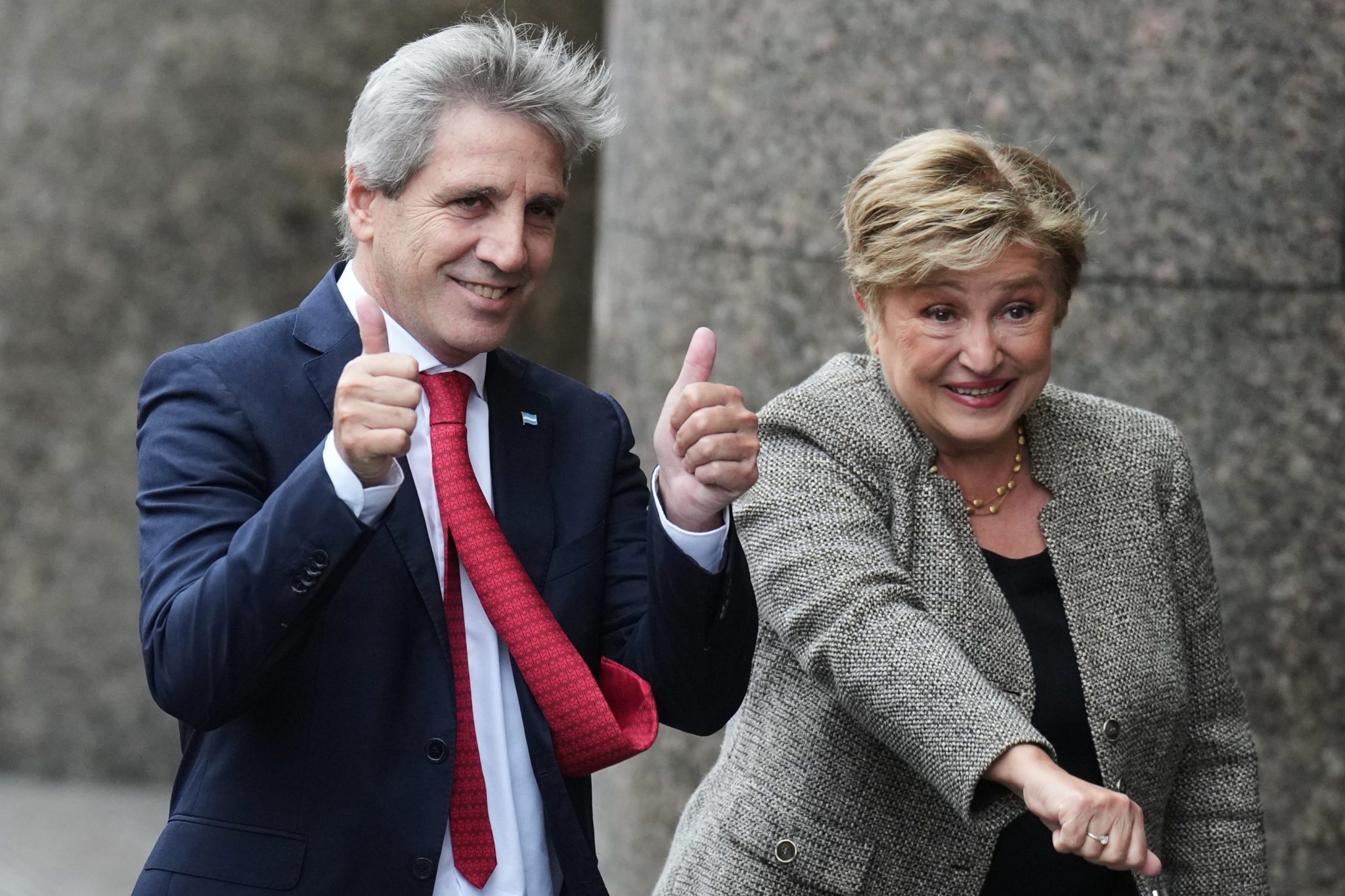
Argentina IMF debt concerns have eased enough that International Monetary Fund Managing Director Kristalina Georgieva said Monday the country is in a stronger position to meet its obligations. Her comments matter because Argentina is the IMF’s largest borrower, with about $58 billion outstanding, and faces a heavier repayment schedule starting next year, the Associated Press reported.
Georgieva spoke in Buenos Aires beside Economy Minister Luis Caputo during the first visit by an IMF chief to Argentina in eight years. She credited President Javier Milei’s spending cuts and economic overhaul, saying the government’s work and the “perseverance and sacrifice of the Argentine people” had helped improve the country’s standing with markets.
Argentina has long carried a reputation for sovereign debt trouble. Georgieva said that when she became IMF managing director in 2019, one of the early questions before the fund was whether Argentina could keep servicing its debts.
“That is not the question we should be asking today,” Georgieva said, according to AP.
Can Argentina repay its IMF debt?
Georgieva said she was confident Argentina can meet its debt payments and added that she does not see a need for more IMF disbursements before the 2027 presidential election. Argentina is due to begin repaying principal on its IMF loans in September of next year, in addition to interest payments, while broader foreign-currency debt obligations are expected to climb sharply in 2027, AP reported.
Caputo has said Milei’s government expects to cover those payments through multilateral lending, privatization proceeds and domestic borrowing, rather than by returning to international capital markets. Investors are watching that plan closely because Argentina’s access to financing remains central to the durability of Milei’s program.
Georgieva said Argentina may be on track to join emerging-market countries that borrowed from the IMF, changed economic policy and then stopped needing new fund loans.
What has changed in Argentina’s economy?
Argentina’s market indicators have improved during Milei’s presidency, AP reported. Bond prices have risen, central bank reserves have grown and inflation has dropped.
Annual inflation has slowed to 33%, down from 210% when Milei took office in late 2023. Moody’s upgraded Argentina’s sovereign credit rating last week, after earlier upgrades by S&P and Fitch, AP reported.
Georgieva said the country now presents a healthier picture and that market confidence has returned. She is scheduled to visit Vaca Muerta on Tuesday, a major unconventional oil and natural gas reserve that is expected to become an important source of foreign currency for Argentina in coming years, AP reported.
The improved financial outlook has not erased political risk for Milei. AP reported that his approval ratings have declined as austerity has coincided with weak consumer spending, stagnant wages, higher household debt and a modest rise in unemployment.
Those pressures have raised questions among investors about Milei’s 2027 reelection prospects and whether his reforms would survive under another government. Asked about that risk, Georgieva said the answer was to build strong policies now that can win confidence both in Argentina and abroad.
Georgieva also said Argentina still needs progress in construction, credit for small businesses and mortgages, and the reduction of informal employment.
This story draws on original reporting from Fortune.