
American Airlines pushes premium strategy to narrow profit gap
CEO Robert Isom is targeting better reliability, richer cabins and new long-haul jets as American trails United and Delta in profit.
By Hana Yoshida · Markets Reporter
4 min read
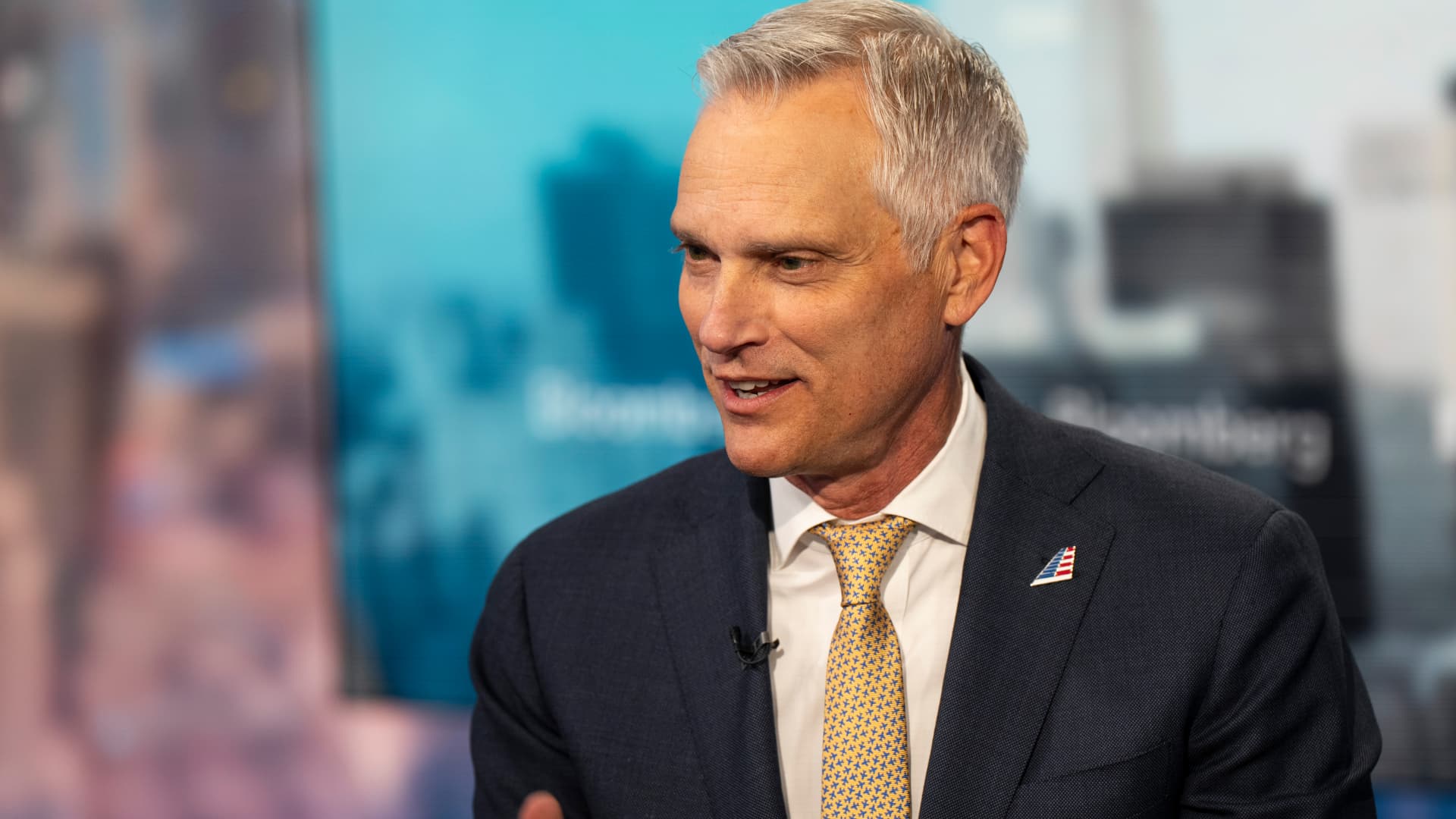
American Airlines is trying to lift revenue from higher-paying travelers after falling well behind its biggest rivals in profit. CEO Robert Isom told CNBC the carrier is working to narrow its margin gap with United Airlines and Delta Air Lines through better operations, upgraded cabins, larger lounges and a new wide-body aircraft order.
The gap is large despite American’s scale. CNBC, citing Cirium data, reported that American is flying about 6,500 flights a day this year, more than its closest competitor, while United made about $3 billion more than American last year and Delta earned nearly $5 billion more.
Isom did not give CNBC a deadline for closing the gap. He described American as a global premium carrier with the largest North American footprint, and said the company’s long-term plan includes catching up on margins.
Premium seats and lounges move to the center
American executives told CNBC the company’s plan depends on expanding its loyalty business, improving customer experience, strengthening its route network and selling more premium products. The airline is refurbishing aircraft interiors and taking new planes with more high-end seats.
Isom said the cabin refresh will soon extend to American’s Boeing 787-8 Dreamliners, while updated Boeing 777-300ER cabins could enter service in the coming weeks. CNBC reported that a lie-flat business-class seat can sell for close to $10,000 on some long-haul international routes, compared with $2,000 or less for a seat in the rear cabin.
The airline also has joined carriers adding Starlink satellite Wi-Fi from SpaceX. Executives have said they are still weighing whether to restore seatback screens across much of the narrow-body fleet, according to CNBC.
At Dallas Fort Worth International Airport, American’s largest hub, Chief Customer Officer Heather Garboden told CNBC the airline plans a 37,000-square-foot Admirals Club in Terminal C, which would be the biggest in its system. The carrier also plans a grab-and-go Provisions lounge in the airport’s future Terminal F and a Flagship check-in area in Terminal D as DFW undergoes a $12 billion renovation.
Operations remain part of the challenge
American ranked sixth among 11 U.S. airlines for punctuality in the first half of the year, with a 76.6% on-time rate, according to Cirium data cited by CNBC. Delta and United ranked second and third, respectively.
Under Isom and Chief Operating Officer David Seymour, American is trying to improve reliability by spreading out schedules at major hubs and using artificial intelligence to forecast maintenance issues, CNBC reported.
Labor groups have pressed the company over service and performance. Julie Hedrick, president of the Association of Professional Flight Attendants, told CNBC in a statement that American expects fewer flight attendants to deliver more personalized service as 70-seat business-class cabins are introduced. CNBC reported that American cut flight attendant staffing on those aircraft from 13 to 11 in 2020.
Dennis Tajer, a spokesman for the Allied Pilots Association, told CNBC the airline is a “giant — with a limp.” The pilots union represents about 15,000 American aviators.
Jet order and balance sheet loom
Isom told CNBC that buying new wide-body aircraft is central to American’s next stage, with both Boeing and Airbus under consideration for an order as soon as this year. American’s current wide-body fleet is all Boeing, and some of its 777s average more than 20 years old, CNBC reported.
The company did not disclose the likely size of the order. CNBC reported that new aircraft for American would probably arrive early or midway through the next decade.
American also remains burdened by debt. CNBC reported that the airline has about $35 billion in debt, down from roughly $54 billion after the pandemic, and that strengthening the balance sheet remains a priority.
Analysts expect improvement. American is forecast to earn 64 cents a share on an adjusted basis this year, up nearly 80% from 2025, according to estimates cited by CNBC. Wall Street expects adjusted earnings of $2.58 a share in 2027.
Isom also dismissed the idea of a merger with United after United CEO Scott Kirby suggested one earlier this year. Isom told CNBC that advisers, interested parties and politicians saw no realistic path for such a deal.
This story draws on original reporting from CNBC.