
Amazon global 500 rise puts Bezos’s AI chip bet in focus
Amazon tops the Global 500 by revenue as Jeff Bezos points to AWS, AI chips and customer focus as the next tests for growth.
By Maya Lindqvist · Senior Technology Correspondent
3 min read
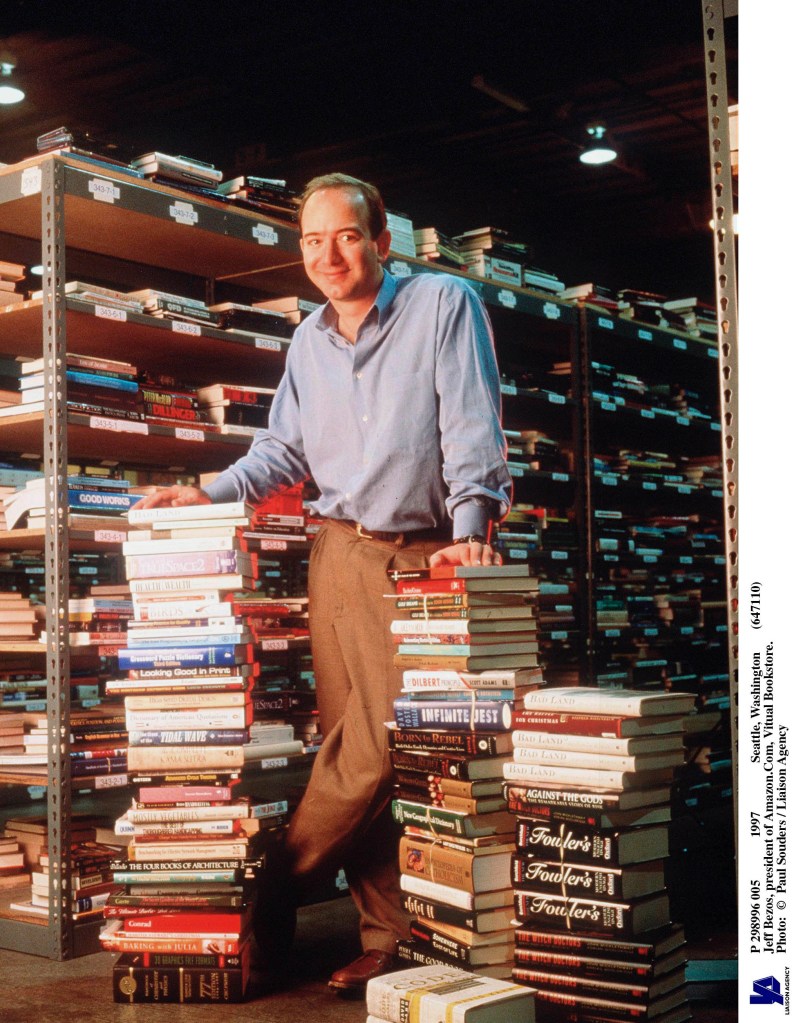
Amazon global 500 leadership marks a new point in the company’s 30-year run from online bookseller to the world’s largest company by revenue, according to Fortune. Jeff Bezos told Fortune the milestone was not a total surprise, though he said Amazon’s size should matter less than how well it serves customers.
Fortune reported that Amazon has also taken the top spot on the Fortune 500, ending Walmart’s long run as the largest company by revenue. Bezos, who founded Amazon in 1995 and stepped down as chief executive in 2021, remains executive chair while Andy Jassy runs the company.
Why is Amazon No. 1 on the Global 500?
Fortune said Amazon reached No. 1 because its revenue now exceeds that of every other company on the ranking. The company’s growth has come from retail, Prime, third-party marketplace services and Amazon Web Services, the cloud unit that became one of its most profitable businesses.
Bezos told Fortune that “customer obsession” remains Amazon’s central idea. He said customers are unlikely to ask for slower deliveries or higher prices, so Amazon can keep putting effort into speed, selection and lower costs.
Amazon’s early growth was far from certain. Bezos told Fortune he spoke with about 60 investors before launch to raise $1 million, with 22 agreeing to invest roughly $50,000 each. Amazon went public in 1997 at $18 a share and a valuation near $440 million; Fortune said the company is now valued at $2.6 trillion.
The company did not become profitable until the early 2000s, after expanding beyond books. Fortune reported that AWS, launched in 2006, produced $45.6 billion in operating income in 2025 on revenue of $128.7 billion, up 20% from the previous year.
How does AI fit into Amazon’s next phase?
Amazon is now putting large sums behind artificial intelligence infrastructure. Fortune reported that the company spent $131 billion on capital expenditures in 2025 and expects to spend about $200 billion in 2026, largely tied to AWS and generative AI.
Bezos told Fortune that Amazon’s chip and silicon business is lining up to become the company’s next major pillar, alongside Marketplace, Prime and AWS. Fortune reported that Amazon has struck a multibillion-dollar deal with Meta involving Graviton chips and has agreed to invest as much as $25 billion in Anthropic, which is expected to buy more than $100 billion in Amazon cloud services.
Jassy told Fortune that AI will change customer experiences and create new ones, and said chips are often central to computing power. On Amazon’s first-quarter earnings call, Jassy said AWS’s AI revenue run rate topped $15 billion in the first three years of the current AI wave.
What risks does Amazon face?
Fortune reported that Amazon still faces pressure in retail, cloud computing and AI. Amy Webb, a futurist and professor at NYU Stern School of Business, told Fortune she would be watching whether the next decade can match the pace of the previous one.
Amazon also faces legal scrutiny. Fortune reported that the Federal Trade Commission and 17 states sued Amazon in 2023, accusing it of illegally suppressing competition, with a trial expected in 2027. Stacy Mitchell of the Institute for Local Self-Reliance told Fortune that Amazon’s dominance has harmed competition and consumers.
Labor concerns remain part of the company’s story. Fortune reported that warehouse workers have pushed to unionize and seek better conditions, while Amazon says it has invested billions of dollars in worker safety. Fortune also reported that Amazon has cut nearly 30,000 corporate jobs in the past year.
Bezos told Fortune that Amazon’s main risk would be losing the habits that made it grow: serving customers, inventing and avoiding short-term tradeoffs. He said the company could coast for a time if it abandoned those principles, but would eventually lose ground.
This story draws on original reporting from Fortune.