
Amazon CTO says AI coding raises the bar for software engineers
Werner Vogels told Fortune that engineers should broaden their skills as AI tools make code review and judgment more important.
By Hana Yoshida · Markets Reporter
3 min read
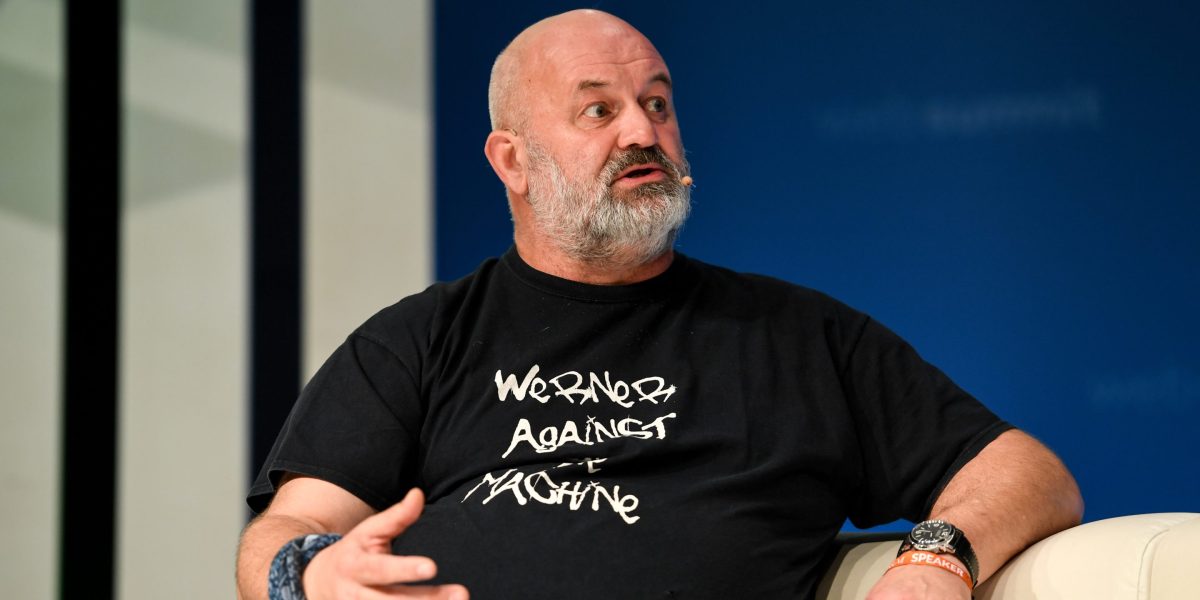
Amazon chief technology officer Werner Vogels says AI coding systems are changing software work, and developers need broader skills to keep up. In an interview with Fortune at the UN’s AI for Good Summit in Geneva, Vogels said engineers will have to be better at checking machine-generated work as more code is produced from natural language prompts.
Fortune reported that tools such as Claude Code can turn instructions written in ordinary language into software, reducing the amount of code engineers write by hand. The practice, often called “vibe-coding,” has also let non-engineers and beginners build prototypes quickly, though Fortune said results have varied.
Vogels told Fortune that the shift makes review, verification and judgment more valuable inside software teams. AI systems can produce errors, and he said someone remains responsible for catching them, especially in regulated sectors or systems where safety is at stake.
According to Fortune, Vogels said companies cannot excuse failures to regulators by blaming AI. His point was that accountability stays with the people and organizations deploying the software, even when AI helps write it.
The “Renaissance developer”
Vogels told Fortune that engineers who want to succeed in this period should become what he calls “Renaissance developers.” Fortune described the idea as a mix of strong technical depth and wider curiosity across other fields.
Vogels compared the model to Leonardo da Vinci, whose studies outside engineering informed his inventions, according to Fortune. He described the approach as “T-shaped”: deep knowledge in one area, paired with enough breadth to understand the wider systems and users connected to that work.
Fortune reported that Vogels gives similar advice inside Amazon. He said he tells his engineers to spend one afternoon a week away from routine tasks so they can read a research paper or try a new tool.
The advice reflects a broader debate in software engineering as AI coding assistants become more capable. Fortune reported that the tools are raising concern that entry-level programming jobs could shrink as more basic coding tasks are automated.
Advice for junior engineers
Vogels told Fortune he sees much of the concern about junior engineers being displaced as noise. He said the rapid pace of new models and systems, along with geopolitical competition over AI leadership, can leave even him confused at times.
For early-career developers, Vogels said the answer is to build skills beyond writing code. Fortune reported that he now places more weight on collaboration and teamwork when hiring than on raw command of programming languages.
Examples he cited included open-source work and evidence that a candidate can contribute well inside a group, according to Fortune. Vogels said programming languages can be learned in a month or two by people who know how to learn.
The comments came during a week of AI policy discussions in Geneva. Fortune reported that the UN’s AI for Good Summit gathered governments, industry leaders, researchers and civil society groups to discuss how AI could be used to support the UN’s Sustainable Development Goals.
Fortune also reported that global leaders met before the summit at the UN’s Global Dialogue on AI, which brought together all 193 UN member states for talks on possible international rules. UN Secretary-General António Guterres used that forum to call for global AI regulation, with particular focus on lethal autonomous weapons, according to Fortune.
This story draws on original reporting from Fortune.