
Altman urges global AI rules as rivals gain on OpenAI
The OpenAI chief proposed a U.S.-led standards body while data cited by Deutsche Bank shows ChatGPT’s lead narrowing.
By Maya Lindqvist · Senior Technology Correspondent
3 min read
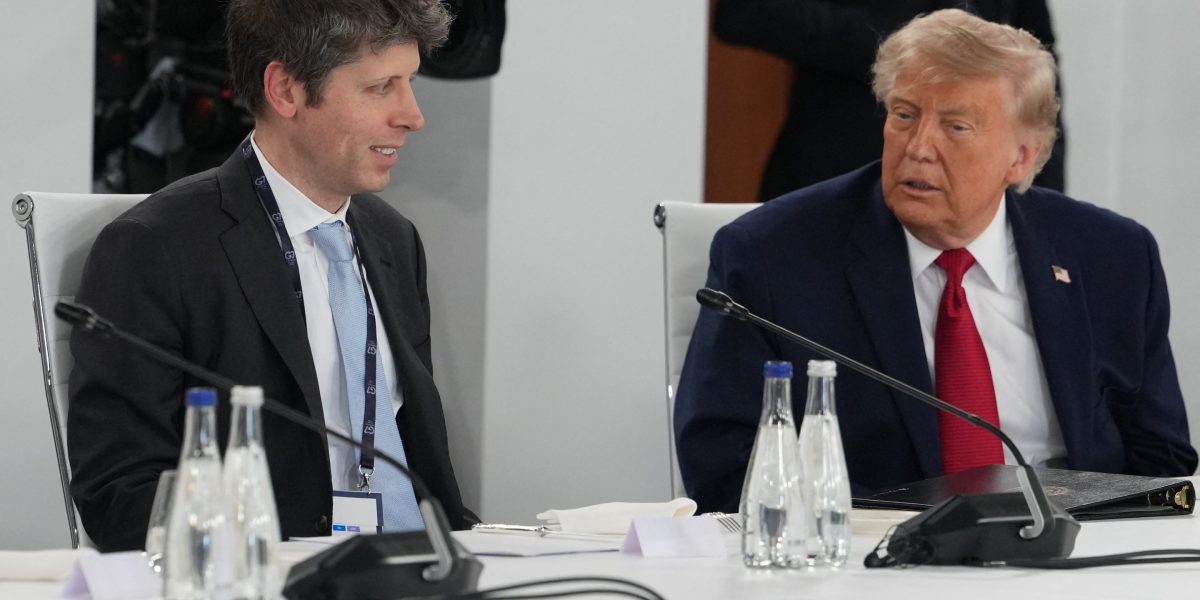
OpenAI CEO Sam Altman is calling for a U.S.-led international body to set shared rules for artificial intelligence, according to an opinion piece he wrote for the Financial Times. The push comes as data cited by Deutsche Bank Research Institute indicates ChatGPT is losing some of its lead to rival AI services from Anthropic and Google.
Altman argued that governments and technical experts should help create common standards for AI systems and assess their risks, according to the Financial Times. He said such a forum could also make AI available to countries and companies that agree to follow its rules.
Altman looks to existing global models
In the Financial Times piece, Altman pointed to aviation safety systems, international financial standards and the International Atomic Energy Agency as examples of cross-border bodies that help govern risky or complex industries. He said an AI forum could include government representatives, independent experts and other participants.
Altman also argued that a governance system could limit pressure on AI labs to race ahead in ways that compromise safety, according to the Financial Times. The proposal places OpenAI’s chief executive in the middle of the debate over whether AI oversight should be handled mainly by national governments, companies or a broader international structure.
OpenAI faces pressure from Anthropic and Google
OpenAI has said it is on track for $25 billion to $33 billion in annualized revenue in its latest disclosure, according to Fortune. Anthropic said in May that it was on course to reach $47 billion and expected to become profitable in 2029, one year before OpenAI, Fortune reported.
Adrian Cox of the Deutsche Bank Research Institute said Anthropic passed OpenAI in business subscriptions in May, citing data from Ramp. Cox also cited Similarweb data showing monthly visits to ChatGPT fell below a majority of the generative AI market for the first time in May, a sign that users are becoming more willing to switch among AI models.
Fortune identified Google’s Gemini and Anthropic’s Claude as the main consumer-facing challengers gaining attention against ChatGPT. The data cited by Cox does not show OpenAI collapsing, but it does point to a more competitive market than the one that followed ChatGPT’s launch.
AI profits remain concentrated in tech
Torsten Sløk of Apollo Global Management highlighted a gap between the profitability of the Magnificent Seven technology companies and the rest of the market, according to Fortune. Sløk’s analysis showed margins rising sharply among AI hyperscalers while other companies have improved more slowly.
In a recent Apollo blog cited by Fortune, Sløk questioned whether productivity gains from AI are taking longer to appear outside the technology sector. He said software and tech companies can add AI to products and internal processes quickly, while sectors such as health care, banking, energy, manufacturing, transportation, education, legal services and the public sector tend to move more slowly.
Sløk warned that weak returns on AI spending at non-tech companies could limit future revenue for AI providers, according to Fortune. He said falling token costs could leave too little revenue for all hyperscalers even if demand for computing power rises.
Tech shares were already under pressure, according to market data cited by Fortune. The Nasdaq 100 closed down 1.54%, and Henry Allen and colleagues at Deutsche Bank told clients that another slide in chip stocks, including a 6.27% drop in the Philadelphia semiconductor index, was the main drag.
This story draws on original reporting from Fortune.