
Airline chiefs weigh fuel shock as bookings hold up
At IATA’s annual meeting in Rio, executives said higher fuel costs are cutting profits while travel demand and aircraft orders remain resilient.
By Daniel Okafor · Business Editor
3 min read
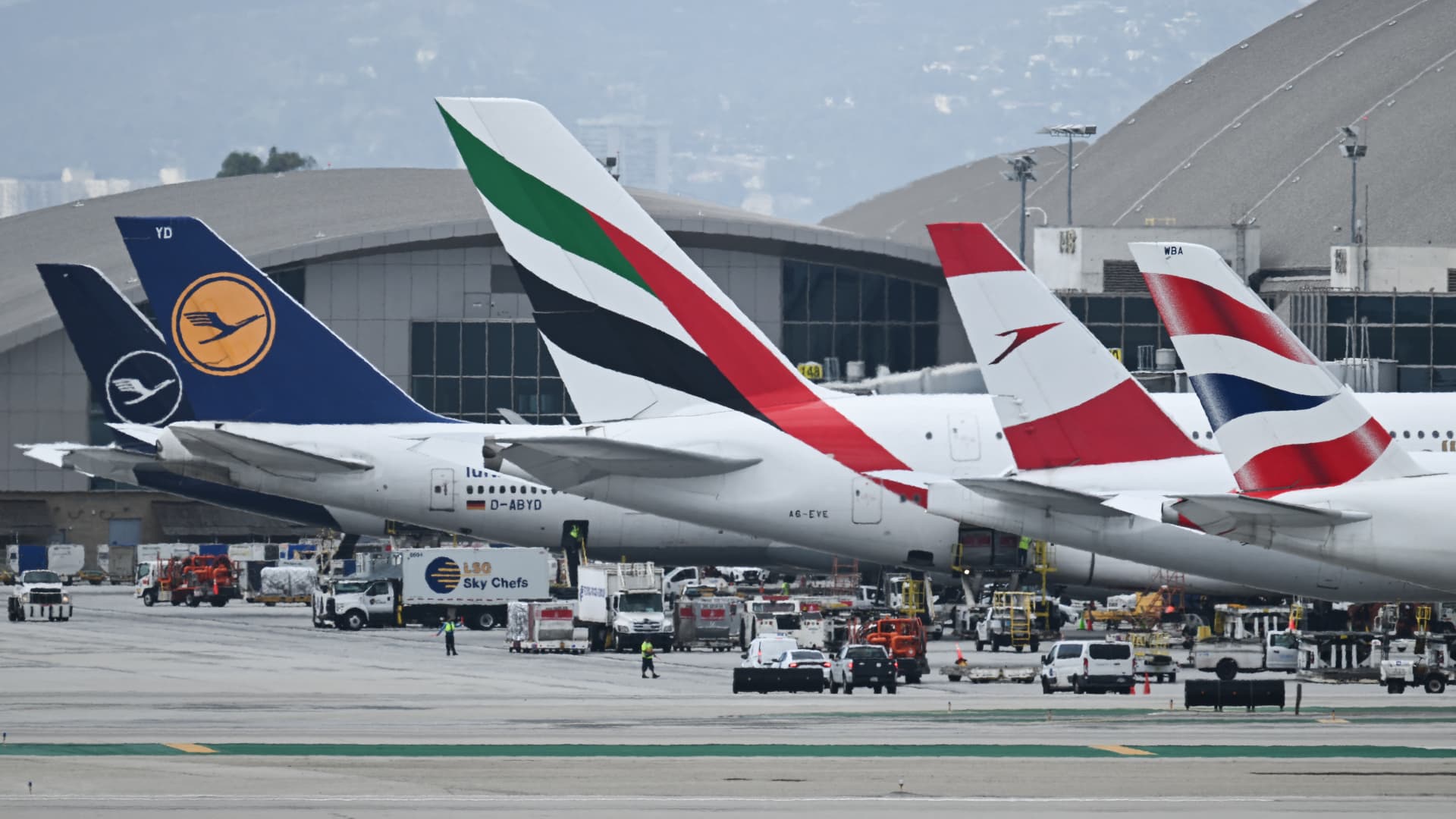
Airline executives gathered in Rio de Janeiro this week with fuel costs surging and industry profits under pressure. The International Air Transport Association said carriers still see solid demand, but warned that higher costs are testing travelers, shippers and weaker airlines.
CNBC reported that hundreds of industry leaders attended IATA’s annual assembly in Brazil, where the agenda included fuel prices, lower profit forecasts, engine reliability problems and difficult emissions targets. Near the end of the meeting, CNBC reported that Iran and Israel traded strikes for the first time since an April ceasefire, adding to the disruptions airlines have faced since U.S. and Israeli strikes on Iran began on Feb. 28.
Fuel costs squeeze margins
IATA said global airlines are absorbing a $100 billion increase in fuel costs this year. The group linked the rise to the Iran war and the effective closure, for much of the period, of the Strait of Hormuz, a key shipping route.
Willie Walsh, IATA’s outgoing director general, said net profit for the industry is expected to fall to $23 billion in 2026 from $45 billion in 2025. He said net margins are projected to drop to 2% from 4.2%.
CNBC reported that higher fares have not fully offset the fuel increase. Airspace closures tied to Middle East attacks have also reduced some travel, adding to the expected profit decline.
Demand has held, with questions after peak season
Airline leaders told CNBC that passengers are still booking flights. Antonoaldo Neves, group chief executive of Etihad Aviation Group, said Etihad initially saw weaker demand after Middle East turmoil but that ticket volumes are now about in line with pre-conflict levels on a seasonally adjusted basis.
United Airlines CEO Scott Kirby told CNBC bookings have remained resilient even though fares are up about 20% and may climb further if fuel prices rise. Kirby said he was surprised by the strength of demand and added, “I think the economy is stronger than people think.”
Walsh said current trends point to a strong northern summer peak season. He also said the main uncertainty is how long travelers and shippers can bear higher connectivity costs.
Kamil Al-Awadhi, IATA’s vice president for Africa and the Middle East and a former Kuwait Airways CEO, told CNBC that if prices stay where they are, fewer people will be able to afford travel.
Jet orders continue despite higher costs
CNBC reported that aircraft makers are not seeing a pullback in orders tied to fuel prices. Airbus and Boeing remain sold out of some popular aircraft models into the early years of the next decade.
Neves told CNBC that Etihad wants to add more aircraft beyond its existing order book of dozens of planes. He did not give a precise figure, saying only that the number was more than 10.
A spokesman for Embraer told CNBC one risk is that customers may choose not to use options to expand existing orders, though the company has not seen that happen so far.
Weaker airlines face more pressure
CNBC reported that Spirit Airlines told U.S. bankruptcy court this spring that the fuel spike was the final blow after years of problems, including an engine recall, a failed merger, changing consumer preferences and heavy debt. Walsh said high fuel costs could push other carriers into collapse.
Executives are also pressing engine makers over reliability, CNBC reported. WestJet CEO Alexis von Hoensbroech said newer engines deliver fuel savings but require unscheduled maintenance more often than earlier generations, while GE Aerospace and Rolls-Royce said they are working on fixes and adding overhaul capacity.
This story draws on original reporting from CNBC.